The 18th century was a transformative period in English history. As the empire expanded across the globe, English society underwent substantial change. Enlightenment thought took hold of an ever growing middle class created by global trade. As society changed, so too did the art it produced. In portraiture, as a longstanding and dominant medium for cultural expression, these societal shifts are especially evident. English portraits emerged as a means of representing daily life and societal ideals. These portraits became carefully constructed means of representing status, intellect, and cultural value. As the medium became more accessible to the general population, portraiture shifted from an art form of societal elites to one that the English middle class sought to adapt to define their own status. Artists such as Joshua Reynolds, Thomas Gainsbourogh, and George Romney became the artistic representatives of an English population more and more able to enter into the artistic realm. George Romney’s Portrait of John Bigge Thornton, serves not only as an excellent piece of art, but as a strong example of the changing dynamics within 18th century English portraiture.
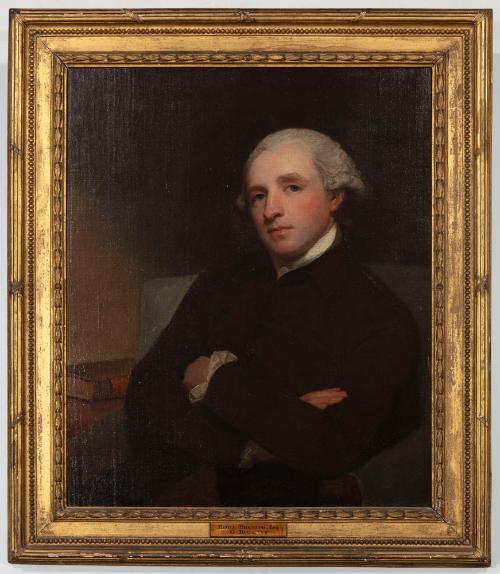
Fig. 1: Portrait of John Bigge Thornton by George Romney
Before analyzing 18th century English portraiture further, it is important to provide a visual analysis of the key piece of this essay. Romney’s Portrait of John Bigge Thornton. The portrait is of a medium size with dimensions of 30 × 25 in. sitting in an ornate gold frame (36 5/8 × 32 1/4 × 2 1/8 in.). Romney chose to use oil paint on canvas as his medium, utilizing mainly shades of brown, black, and white. Romney paints with smooth and subtle strokes of his brush throughout the painting. He uses multiple layers of oil paint to build up the image, ultimately crafting a painting that is free from visible brush strokes. The subject, John Thornton, sits slightly to the right of the middle of the frame. He sits comfortably, leaning back into his chair at an angle with a sense of calm sophistication. His arms are crossed, left over right, helping to keep himself still while he sat for his portrait. Thornton wears simple and elegant clothing. He sports a plain brown jacket, with frilly cuffs protruding from his wrists and a white collar extending slightly above the top of his jacket. His face is clearly designed to draw the viewer’s eye when they first see the portrait. It is the brightest part of the painting, as Thornton’s pale pink skin is a lone instance of bright color in the frame. His ashy gray wig is brushed back, curling at the ends above his ears. His head is tilted slightly to the left, and he turns his head slightly to face the viewer. Thornton’s facial expression is fascinating, and his dark brown eyes stare directly into those of the viewer. He raises his left eyebrow slightly with a knowing look, and his lips remain closed softly. The setting of the portrait is equally interesting. The area around Thornton is plain, save for the soft blue chair he sits in, and a dark brown and red book sitting closed on the wooden table behind him. The area behind his head remains dark and blank, providing contrast to his brightly lit face. The portrait is lit from outside of the frame, casting subtle shadows on the right side of Thornton’s face. While small details such as these may seem to be unimportant, the broader scope of this essay will reveal that it is precisely these details that make the painting such a strong example of 18th century English portraiture.
It is further important to understand the context of this essay’s central portrait. The portrait currently resides in the Wellin Art Museum at Hamilton college, as a part of the Beinecke Collection of the Lesser Antilles. Begun in 1778 by English portrait artist George Romney, Thornton sat for the painter five times, though the portrait was ultimately left unfinished. This was due to the death of Thornton in 1780, and left Romney unable to add the finishing touches to the portrait. Interestingly, the painting was not commissioned by Thornton. Instead, it was paid for by Thornton’s close friend, the romantic poet and biographer William Hayley. The painting would eventually be bought by former Hamilton College trustee Walter Beinecke. Beinecke would eventually donate the portrait, alongside numerous other works, to the college. The portrait was donated as a part of Beinecke’s personal collection of works associated with European colonization of the Lesser Antilles, a series of islands in the Caribbean. The addition of the portrait to the Beinecke collection provides one of the most intriguing aspects of its history. When the portrait was added to the collection, it was as a portrait of Henry Thornton—there remains a plaque at the bottom of the frame identifying it as such. Henry Thornton was an English economist, banker, and philanthropist, whose work as an abolitionist helped to end the British Atlantic slave trade. This misidentification placed the portrait in direct connection to the rest of the Beinecke Collection, which contains numerous depictions of slavery and the post-slavery era in the European colonies of the Caribbean. John Thornton however, has little ties to the rest of the collection. As a rising English lawyer, John Thornton had no known ties to the Lesser Antilles. The portrait would eventually be correctly identified, but remains a part of the Beinecke collection at Hamilton. This makes the portrait a uniquely separate part of the collection, tied to the Caribbean purely by chance.
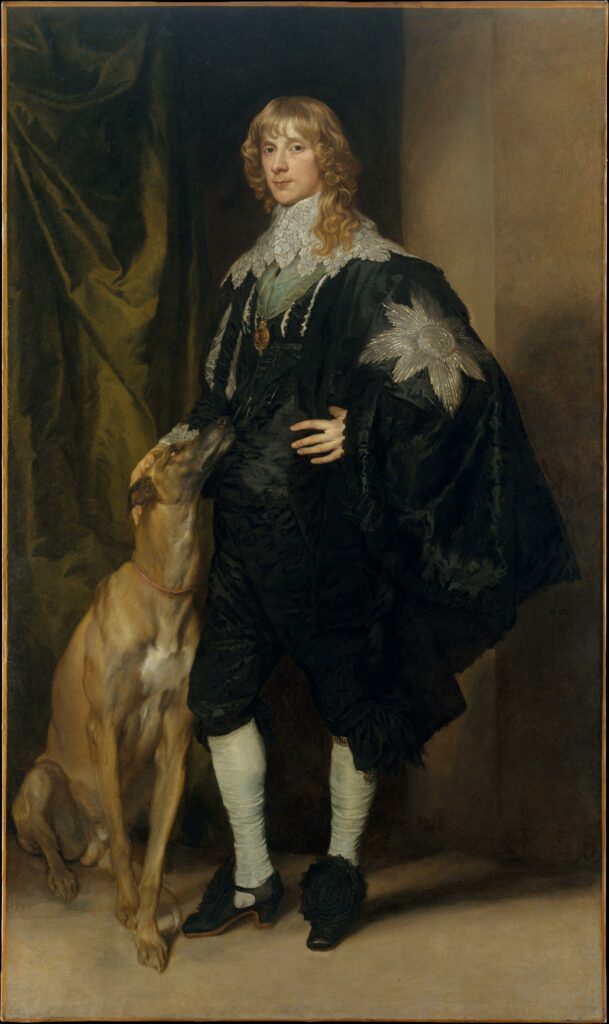
Fig. 2: James Stuart (1612-1655), Duke of Richmond and Lennox by Anthony van Dyck
The transformation that English portraiture in the 18th century cannot be fully understood without an examination of the century prior. Portraits of the 17th century were almost exclusively commissioned by societal elites such as royalty or the aristocracy. These were portraits designed to flaunt a subject’s elitism and societal status. As art historian Mark Roskill points out, portraits commissioned at the time were made by a small group “which prized grace and elegance as hallmarks of breeding and quality, and which at the same time welcomed the trappings of grandeur,” (Roskill, pg. 173-174). This meant portraits of the time were large and filled with as many signals of status as could be packed into the frame. One excellent example of this can be seen in Anthony van Dyck’s famous portrait, James Stuart (1612-1655), Duke of Richmond and Lennox. The portrait is massive, rising over seven feet tall and four feet across, and depicts the English nobleman James Stuart alongside his hunting companion. His clothing oozes opulence, with intensely detailed fabrics and clothing pieces draped over his figure. This opulence extended to the artists themselves, who were brought from around Europe to paint the English elite. Portraits of the time often placed their subjects inside their lavishly decorated homes, or performing acts of leisure in the countryside—van Dyck’s portrait here combines both, as the dog alongside Stuart is likely a hunting companion. This is not to say that the stylistic conventions were limited to England. In Spain, portraitists also sought to portray his subjects in glamorous luxury. Historian David Pullins specifically mentions “Velázquez’s remarkable series of portraits associated with the royal hunting lodge known as the Torre de la Parada,” (Pullins, pg. 20). These conventions of 17th century portraiture laid the groundwork for the changes that would come in the next hundred years.
In the 18th century, England underwent a massive cultural shift and the changes of the era would be reflected in the portraiture of the time. As the British Empire expanded across the globe, newfound opportunities for profits and social mobility emerged. This took its most prominent form with an impressive expansion of the English middle class. Suddenly, there existed countless merchants, bankers, traders, and other professionals with money to spend. Portraiture, throughout its history in England, had been seen as a way of representing status and achievement within society. The commission of a portrait of oneself was a way for the rising middle class to showcase their newfound wealth and cultural literacy in a country where such values were highly prized. This created a boom in the painting of portraits in the 18th century, driven mainly by the middle class. One example of this can be seen in Horace Wallace, a rising politician and writer in England in the 1700s. In a letter to a friend in 1781, Wallace speaks to this boom in portraiture, writing, “I desired him to copy for me a portrait of Mr Browne Willis…and he struck off fifty copies of Mr Tyson’s copy for me, but as the sketch,” (Wallace, pg. 285). Another change in the portraiture of the 18th century came in the form of a market transformation. Artists of the time often used commissioned portraits to make a living. This led to the standardization of many aspects of a portrait. As art scholar and curator Louise Lippincott and art historian Alan Davison write, “By and large, portraits were manufactured in an environment formed by stiff competition, division of labor, standardized product, and standardized prices… the economics of portrait painting drove many of the genre’s manifest features,” (Davison, pg. 236.) The sudden abundance of portraiture in the 18th century also led to increased imagery of class differences. Aristocratic portraits maintained their standard depictions of elaborate clothing, surrounded by symbols of power and prestige. These portraits contained columns, books, or expansive landscapes representative of their subjects’ wealth, education, and authority. Middle class patrons instead looked for portraits that celebrated their newfound status. These portraits drew from aristocratic traditions, but instead included objects linked to the sitter’s trade or achievements, taking the form of globes for merchants or scientific instruments for intellectuals.A final change in 18th century portraiture was more artistic in nature. Newer 18th century portraits took inspiration from earlier landscape paintings. Art historian Tim Barringer provides an example of this change, writing, “the Scottish artist Joseph Bartholomew Kidd, commissioned by the Tharp family to paint Good Hope, probably in early 1836, provided a valedictory contribution to this genre, which adapted the format of English estate portraits, themselves modeled on the classical landscapes of the seventeenth-century,” (Barringer, pg. 282). These dramatic cultural and societal shifts of 18th century England forever changed English portraiture, transforming a medium of the elite to one accessible to much of the rest of the population.
The changes in English portraiture in the 18th century are exemplified by this essay’s central artwork, George Romney’s Portrait of John Bigge Thornton. Clothing often served as a class signal within portraits of the time, and Romney’s portrait is no different. Thornton’s clothes in the painting are not ornate or extravagant, but they are professional and sophisticated. He also wears a powdered wig, a signal of status within English society. These fashion choices place Thornton squarely within the growing English middle class as a rising professional, and allows him to assert himself as a member of this new area of English culture. Compared to earlier English portraiture, figures wearing such clothing are almost entirely absent. The objects in the background of the portrait are also representative of typical 18th century English portraiture. In the painting, Thornton is placed in front of a table with a closed book sitting on its tabletop. Thornton was an educated man, and a lawyer, slowly working his way up in English society. In this context, the book likely serves as a way of representing Thornton’s rising status to the viewer. It makes clear that he is an educated figure, sophisticated and well read, and that he would like to be perceived as such. The book also serves to portray Thornton as an enlightened figure. The book is the only object visible in the background of the portrait. However, it is possible that Romney would have added more objects designed to signal Thornton’s status if he had not died before the completion of the portrait. With the enlightenment spread across Europe in the 18th century, Romney’s placement of a book alongside Thornton shows that he is a man of reason and logic. Finally, Thornton’s pose acts as an example of the way 18th century English portraits acted in a market context. He is seated, with his arms crossed across his chest and body turned slightly away from the viewer. Poses of this kind were extremely common at the time, and Romney was used to painting in this manner. This speaks to the commodification of the portrait, as artists sought to maintain their livelihood, they stuck to simple poses that could be repeated over and over without much differentiation. In these ways, George Romney’s Portrait of John Bigge Thornton, acts as a strong example of the changes in English portraiture in the 18th century.
The pricing of Portrait of John Bigge Thornton also reveals knowledge about the portrait’s subject. The increase in demand for portraits in the 18th century created a new market for the medium. Popular artists such as Joshua Reynolds and Thomas Gainsborough were able to charge high prices for their talents, while less fashionable painters attracted customers with lower prices. John Thornton’s portraitist, George Romney, fell into the latter category. Despite his widespread popularity and recognition as a talented artist, Romney catered to a clientele of less wealthy patrons. British art historian David Wilson describes Romney as such, writing, “Romney consistently charged much less than Reynolds, roughly half the price during the 1770s and 1780s for half-length portraits (then so-called three-quarter, because it measured 3/4 yard). As a measure of comparison, while Reynolds’s portrait…cost 35 guineas and that of Fitzwilliam 50 guineas, Romney’s price…was 18 guineas,” (Wilson pg. 110). This helps to identify Thornton’s societal status. Thornton was not a man of means, able to spend vast amounts of money on the most famous portraitists of his era. This can be seen further through the size of the portrait itself. Artists of the time often priced their commissioned work based on the size of the piece, with larger artworks demanding a higher price. Alan Davison explains this, writing, “the dimensions (approximately 30 x 25 inches) of Hardy’s oil portrait…represent the smallest and cheapest of the three commonly used standard fixed sizes at the time,” (Davison pg. 236). This information identifies Romney’s Portrait of John Bigge Thornton, with its dimensions of 30 x 25 inches, as the cheapest possible portrait available at the time. When combined with the knowledge that Thornton himself was not even the one responsible for commission of the portrait (the portrait was commissioned by Thornton’s friend William Hayley), places Thornton among the least wealthy people to whom a portrait was available in 18th century England. While many other members of English society remained unable to procure a portrait of themselves, Thornton’s ability to have a portrait painted of himself speaks to market adaptation to the increased demand for portraits in England at the time.
The 18th century was a transformative period in English history. As the empire expanded across the globe, English society underwent substantial change. Enlightenment thought took hold of an ever growing middle class created by global trade. As society changed, so too did the art it produced. In portraiture, as a longstanding and dominant medium for cultural expression, these societal shifts are especially evident. English portraits emerged as a means of representing daily life and societal ideals. These portraits became carefully constructed means of representing status, intellect, and cultural value. As the medium became more accessible to the general population, portraiture shifted from an art form of societal elites to one that the English middle class sought to adapt to define their own status. Artists such as Joshua Reynolds, Thomas Gainsbourogh, and George Romney became the artistic representatives of an English population more and more able to enter into the artistic realm. George Romney’s Portrait of John Bigge Thornton, serves not only as an excellent piece of art, but as a strong example of the changing dynamics within 18th century English portraiture.
George Romney’s Portrait of John Bigge Thornton ultimately serves not only as an excellent piece of art, but as a strong example of the changing dynamics within 18th century English portraiture. As the British Empire expanded its reach across the globe, English society underwent a similar transformation. This was especially visible in the portrait art of the time. The growth of the middle class led to a new market for portraits, and a new population hungry to showcase their newfound wealth and status. The portraits painted during this time became powerful personal and societal statements. 18th century English portraiture exemplifies the changing landscape of British society, as well as the people such as John Thornton who took part in changing it. In the end, George Romney’s Portrait of John Bigge Thornton is a testament to the representative power of art in our lives, and perhaps by studying more such art, we can come to understand the changes we encounter in our own ever changing world.
Bibliography
Victorian Jamaica. Edited by Tim Barringer and Wayne Modest. Durham: Duke University Press, 2018.
Artist: Anthony van Dyck (Flemish, Antwerp 1599-1641 London). James Stuart (1612-1655), Duke of Richmond and Lennox.
Davison, Alan. “Thomas Hardy’s Portrait of Joseph Haydn: A Study in the Conventions of Late Eighteenth-Century British Portraiture.” Music in Art 33, no. 1 (2008): 235–246.
Horace Walpole. Horace Walpole’s correspondence With the Rev. William Cole. New Haven, CT: Yale University Press, 1937.
Houston, Robert Allan. “British Society in the Eighteenth Century.” Journal of British Studies 25, no. 4 (1986): 436–466.
Pullins, David. Juan De Pareja: A Biographical Sketch. New York, NY 10016, USA: The Metropolitan Museum of Art, 2023.
Roskill, Mark. “Van Dyck at the English Court: The Relations of Portraiture and Allegory.” Critical Inquiry 14, no. 1 (1987): 173–199.
Wilson, David. “Bibliophile, Grangerizer, and Patron of Artists: A Group of Portraits Commissioned by Anthony Morris Storer (1746–1799) from Sir Joshua Reynolds and George Romney.” The British Art Journal 15, no. 2 (2014): 103–114.
Baetjer, Katharine. “Portrait Painting in England, 1600–1800.” In Heilbrunn Timeline of Art History. New York: The Metropolitan Museum of Art, 2000–. http://www.metmuseum.org/toah/hd/bpor/hd_bpor.htm (October 2003)