By: Peter Canterino
Introduction
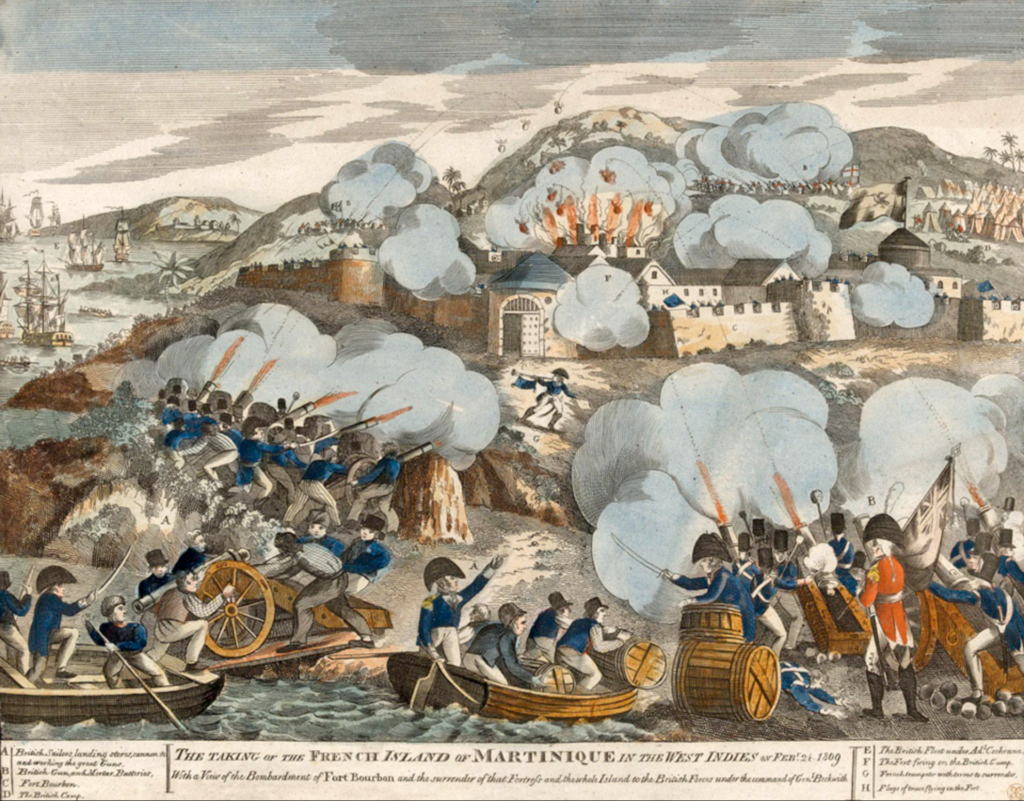
George Thompson’s The Taking of the French Island of Martinique in The West Indies On February 24, 1809 is an engraving with hand coloring, measuring 32.9 × 45.2 cm, that vividly captures the British capture of Martinique during the Napoleonic Wars. This dynamic battle scene showcases white British soldiers landing ashore in small boats and fearlessly engaging the French forces in an overwhelming display of dominance. The composition of the artwork emphasizes British naval and military superiority, portraying a decisive victory where no British casualties are visible. British cannons, infantry and warships dominate the landscape. By omitting the significant losses – including the deaths of 97 British soldiers and injuries to another 365 men – Thompson’s work emerges as a piece of artwork which was used as propaganda that reinforces the British imperial narratives of military invincibility and superiority. It also neglected to depict any black British forces which were also paramount towards achieving this landmark victory. This engraving, produced during a time when colonial territories such as Martinique were central to Britain’s economic and political supremacy, serves as a visual and ideological tool that supports the British imperial project. Its portrayal of the British forces as both dominant and unscathed simplifies the complexities of the conflict, sanitizing the brutal realities of war serving to amplify the power and superiority of the British forces as a nation. This essay seeks to answer a central question: How does George Thompson’s The Taking of the French Island of Martinique in The West Indies On February 24, 1809 function as British propaganda, and how does it shape public perception of the Napoleonic Wars and Britain’s imperial project? To address this question, the analysis will examine the engraving within its historical, cultural, and economic contexts, drawing upon a range of primary and secondary sources to situate Thompson’s work within a broader lens of imperial narratives.
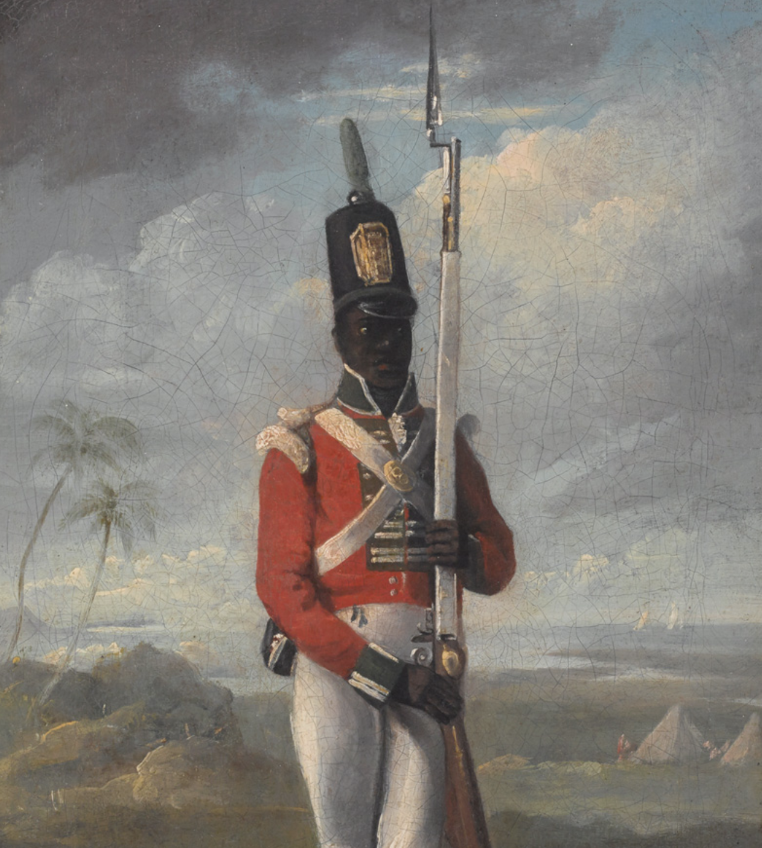
Black British Soldiers who were omitted from George Thompson’s The Taking of the French Island of Martinique in The West Indies On February 24, 1809
Is this image “Art” or is it more?
Carolyn Dean’s critique of the term “art” in her essay The Trouble with the Term Art provides a valuable lens for examining the cultural and ideological dimensions of George Thompson’s The Taking of the French Island of Martinique in The West Indies On February 24, 1809. Art can be a powerful, universal weapon to promote ideas and is immune to the limits of language. Everyone who can see, can be impacted by its message. Dean argues that categorizing objects as “art” often abstracts them from their functional, cultural, and historical contexts, obscuring their roles as instruments of power and ideology. It makes one consider the motives driving the creation of such portraits. Is it art, or is it propaganda? Thompson’s engraving, when framed solely as a work of “art,” risks being perceived as an apolitical aesthetic object rather than a deliberate act of imperial propaganda. By considering the reasoning behind the portrait and acknowledging the engraving’s propagandistic function, we see how it operates with a dual purpose of art and a more subtle Anglocentric message conveying the ideologies of imperialistic Britain. The imagery artistically promotes the sense of invincibility, legitimizing British colonial expansion while masking the human costs of empire-building. Dean’s insights remind us that the term “art” can detach an object from its socio-political purpose, thus reinforcing the importance of examining works like Thompson’s with wider optics which account for their historical and ideological contexts. This approach challenges us to consider how the framing of objects as “art” can either obscure or illuminate their roles in shaping collective memory and public sentiment, particularly in imperial contexts.
Simplifying a Complex Ordeal
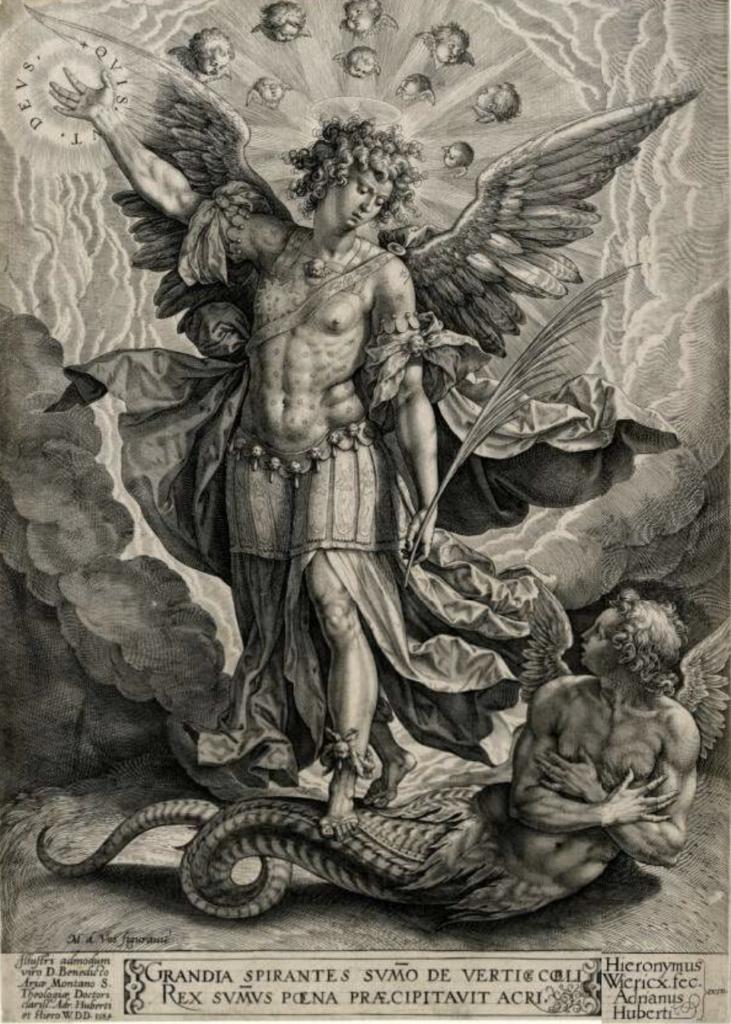
Maerten de Vos’s St. Michael the Archangel
Stephanie Porras’ discussion of Maerten de Vos’s St. Michael the Archangel in Going Viral? Maerten de Vos’s ‘St. Michael the Archangel’ provides a valuable framework for understanding the circulation and ideological function of George Thompson’s The Taking of the French Island of Martinique in The West Indies On February 24, 1809. Like de Vos’s St. Michael, Thompson’s engraving relied on replication and dissemination to amplify its message, serving as a form of visual propaganda that reinforced the dominant British doctrines. While de Vos’s St. Michael embodied Catholic Counter-Reformation ideals of the divine triumph over evil with the archangel defeating Satan, Thompson’s work similarly illustrates British imperial dominance over inferior foes during the Napoleonic Wars. Both images functioned within broader networks – whether religious or colonial – that enabled their circulation, increasing their impact by allowing them to transcend their original contexts and reach many diverse audiences. In both cases, the images simplified complex struggles – whether spiritual or military – into heroic narratives that legitimized systems of power. Porras’ analysis describes how the replication of such works contributed to the spread of ideological messages, illustrating how Thompson’s engraving, much like St. Michael, served to glorify dominance, suppress opposing narratives, and reinforce the culture and politics of its time.
Geopolitical Stakes of the War
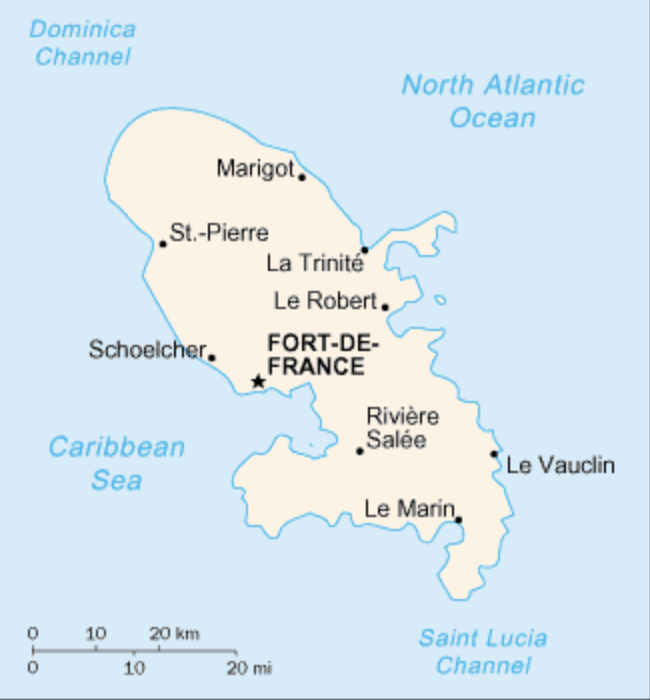
Map of Martinique
Alexander Mikaberidze’s The Napoleonic Wars: A Global History provides a critical framework for understanding the geopolitical stakes of the Napoleonic Wars, particularly the protracted Anglo-French rivalry that extended far beyond Europe to colonies in the Americas and the Caribbean. This rivalry was driven by a combination of military strategy, economic ambition, and the symbolic importance of supremacy in the colonial sphere. It encompasses the historical battle for European dominance between France and England. The British capture of Martinique in 1809 solidified British supremacy in this global contest. This island’s strategic location within the Caribbean and its economic significance, particularly as a center for sugar production, made it a highly coveted prize. Mikaberidze believes that conflicts such as these were not isolated skirmishes but critical battles in a larger war for imperial hegemony, with the Caribbean serving as a key theater for projecting power and enhancing economic penetration by accessing raw materials and securing vital trade routes. Martinique’s capture allowed Britain to disrupt French trade as well as weaken its economy. Furthermore, this served to reinforce Britain’s own economic dominance, showcasing the island’s importance within the larger framework of global imperial competition. This triumph over France firmly established Britain’s position as the most powerful force in Europe.
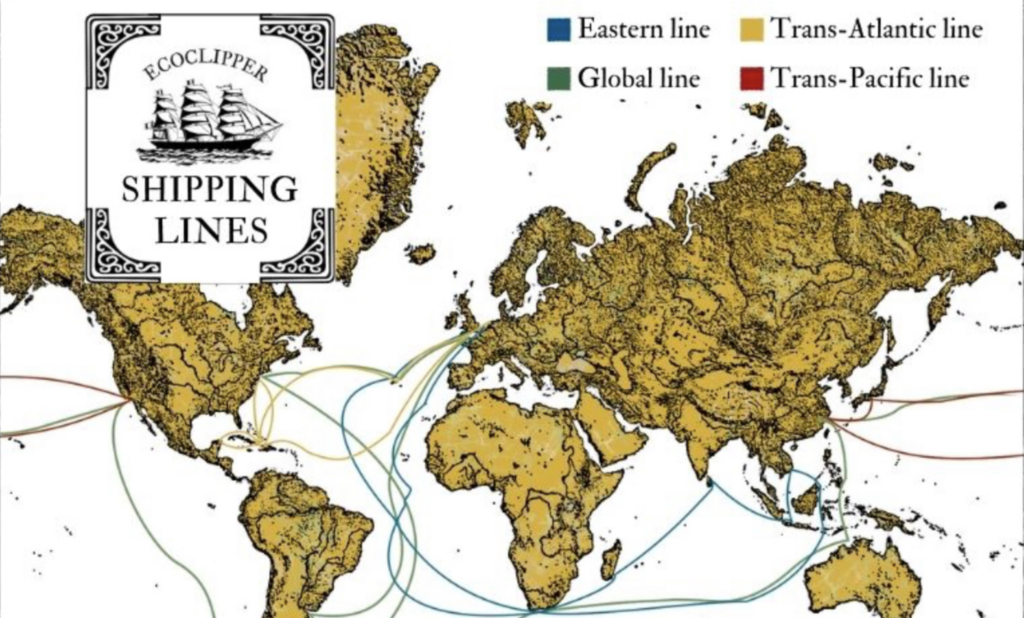
Shipping Routes in 1809
Thompson’s engraving The Taking of the French Island of Martinique in The West Indies On February 24, 1809 reflects this geopolitical reality by emphasizing British naval and military superiority, portraying the conquest as swift, decisive, and inevitable. The visual composition, with white British forces landing confidently and engaging French defenses with apparent ease, communicates a message of unassailable dominance. Yet this depiction intentionally obscures the human and material costs of war, including the significant British casualties sustained during the campaign. By ignoring these losses, Thompson’s work avoids the brutality of conflict and constructs an idealized image of British military invincibility. This aligns with the broader imperial narrative of the Napoleonic era, which sought to secure public support for Britain’s expansionist ambitions by depicting colonial conquests as both morally justified and effortlessly successful. Moreover, Mikaberidze’s analysis helps contextualize the ideological function of such visual propaganda. The Napoleonic Wars were not solely a series of battles but also an intense competition for influence over public opinion. Propaganda in various forms – including art, literature, and media – played a crucial role in legitimizing Britain’s military and colonial endeavors. Thompson’s engraving, with its triumphant portrayal of the Martinique campaign, served to bolster domestic morale, encourage enlistment, and affirm the righteousness of Britain’s imperial project. It also reinforced the perception of Britain as a global hegemon, projecting an image of unrelenting success that masked the complexities and costs of maintaining an empire. In this way, the engraving functions not only as a record of a historical event but as a carefully crafted ideological tool that shaped public perceptions and contributed to the cultural underpinnings of British imperialism.
Firsthand Account
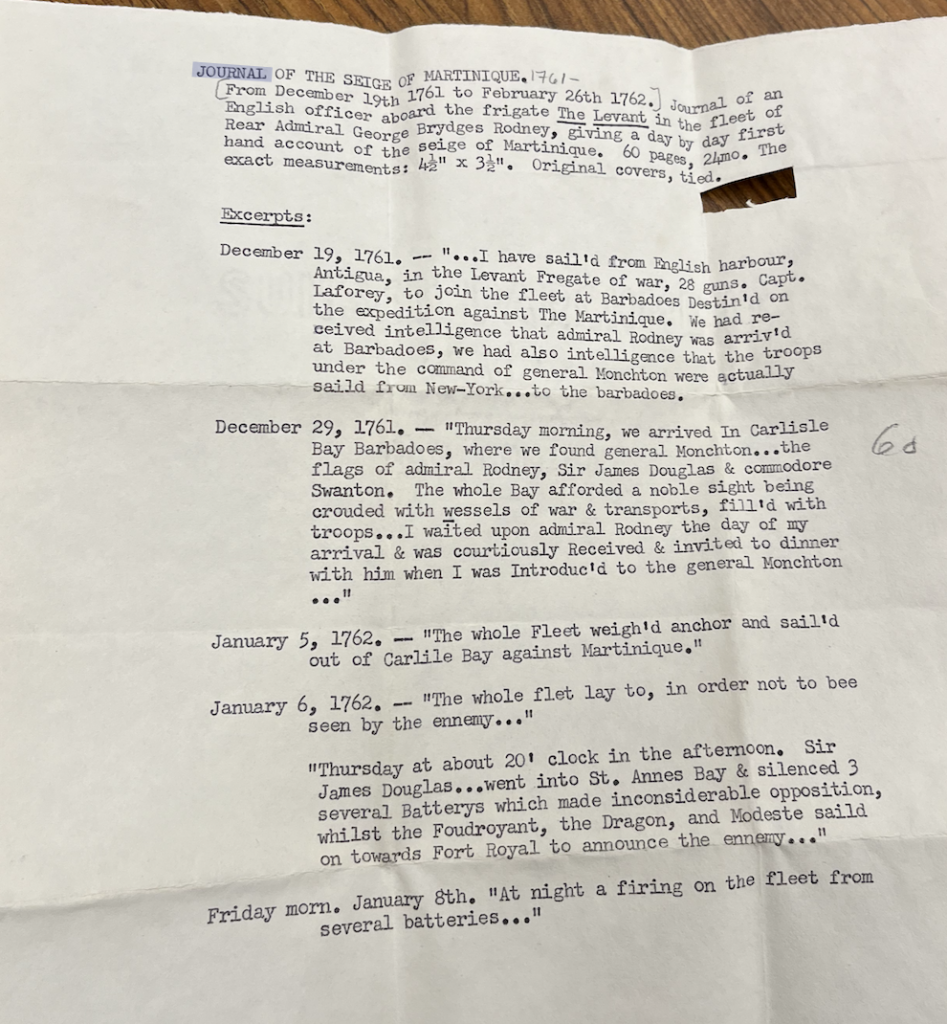
Journal of the Siege of Martinique (1761–1762)
The Journal of the Siege of Martinique (1761–1762) provides a valuable comparative perspective for understanding George Thompson’s depiction of the British capture of Martinique in 1809. This firsthand account of an earlier British campaign against the island offers a more nuanced and unfiltered evaluation of the realities of colonial warfare. The journal details the logistical difficulties, fierce resistance, and significant human cost of the 1762 siege, painting a vivid picture of the obstacles, complexities and brutalities involved in any violent military campaigns. In contrast, Thompson’s engraving The Taking of the French Island of Martinique in The West Indies On February 24, 1809 minimizes these aspects, presenting the 1809 conquest as an almost effortless triumph. By omitting visible casualties and downplaying the chaos and suffering inherent to warfare, the engraving projects an idealized image of British invincibility, shaping public perceptions to align with imperial propaganda. This image fails to illustrate the nuances of battle such as risks of landing on shores and challenge of attacking well defended areas. The continuity of Anglo-French struggles in the Caribbean, as highlighted in the Journal of the Siege of Martinique, underscores the ongoing strategic and economic importance of the region during the 18th and early 19th centuries. Both the 1762 and 1809 campaigns were driven by the desire to control lucrative colonial resources, such as sugar and coffee, which were central to the British economy. However, while the Journal acknowledges the arduous and costly nature of these efforts, Thompson’s engraving erases such complexities to align the 1809 campaign with the narrative of a seamless imperial project. The stark contrast between the raw details of the Journal and the polished idealization in Thompson’s work reveals how visual media were used to reshape historical memory, turning the hardships of war into a celebratory narrative of British dominance. Thompson’s portrayal of the 1809 campaign as a decisive and bloodless victory not only glorifies British military prowess but also diminishes the role of French resistance and the sacrifices of British soldiers. This misleading depiction mirrors the broader trend of imperial propaganda during the Napoleonic Wars, which sought to legitimize Britain’s colonial ambitions by masking the moral and material costs of conquest. The facade also portrays the British forces as almost immortal, with lack of death or even bloodshed. This philosophy never acknowledged the sacrifice of a soldier’s life and its down-stream impacts on their family. The majority of these soldiers were from the lowest classes of British society. The Journal of the Siege of Martinique provides a counterpoint to this narrative, reminding contemporary audiences of the unglamorous and grueling realities of empire-building. By examining the divergence between these two sources, one can better understand how Thompson’s engraving functions as a deliberate tool of propaganda, simplifying the narrative of British colonial victories to garner public support and reinforce the ideological underpinnings of imperialism. This contrast highlights the deliberate manipulation of public perception, where the sanitized visual representation of war serves the interests of Britain’s broader imperial agenda which was geared to generate power, wealth and maintenance of the government’s status quo.
Economic Motivations of the Image
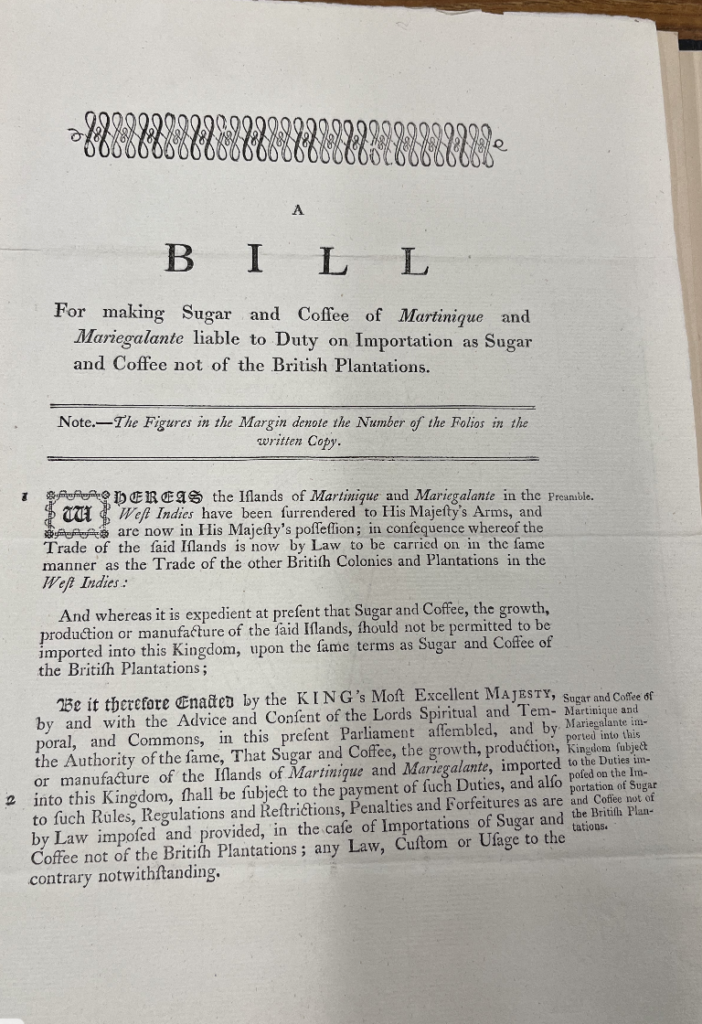
Bill on Sugar and Coffee
Additionally, the Bill on Sugar and Coffee sheds light on the economic motivations underlying British imperialism in the Caribbean, emphasizing the central role of commodities such as sugar and coffee in sustaining Britain’s global dominance. During the Napoleonic Wars, these lucrative resources were integral to the British economy, with the Caribbean colonies serving as crucial hubs for the production and trade of these goods. Martinique, in particular, was a valuable prize due to its fertile lands and established sugar plantations. The Bill on Sugar and Coffee underscores how economic motivations were intertwined with Britain’s military and colonial strategies, highlighting the importance of securing and controlling territories that could provide steady supplies of these commodities further strengthening British impact on the European economy. Thompson’s engraving, The Taking of the French Island of Martinique in The West Indies On February 24, 1809, can thus be interpreted as a visual celebration of these conquests, reinforcing the notion that Britain’s military victories were not only necessary but economically beneficial. Thompson’s work aligns military success with the broader economic priorities of Britain’s imperial project, presenting the capture of Martinique as an effortless extension of Britain’s economic and geopolitical dominance. The triumphant depiction of white British forces advancing unchallenged onto Martinique’s shores implicitly suggests that the island’s wealth and resources were ripe for British control, omitting the exploitative labor systems and human suffering that underpinned the Caribbean plantation economy. This omission reflects a propagandistic intent, portraying the conquest as both justified and benevolent while obscuring the harsh realities of colonial exploitation. It also ignores the black soldiers’ impact on this battle further perpetuating the ideologies of Anglocentric superiority. By downplaying the conditions that made Martinique so valuable – such as the reliance on enslaved labor to sustain its sugar industry – Thompson’s engraving upholds the imperial philosophy that Britain’s expansion was a civilizing mission rather than an economically driven enterprise built on oppression. The economic motivations underscored by the Bill on Sugar and Coffee provide critical context for understanding how visual media like Thompson’s engraving functioned within Britain’s imperial framework. The engraving served not only as a celebration of military triumph but also as an ideological justification for Britain’s control of colonies whose access included both natural resources and cheap human labor. By glorifying the conquest of Martinique, Thompson’s work encouraged public support for Britain’s imperial ambitions, framing the acquisition of Caribbean territories as essential for national security and prosperity. This alignment of economic interests with military propaganda illustrates the interconnectedness of Britain’s colonial and economic agendas, where visual representations of conquest played a key role in masking the exploitative foundations of the empire. Thus, the engraving serves as both a record of a historical event and a powerful artifact of economic propaganda, reinforcing the perception and creating a facade which embraced British imperialism as a morally and economically justified endeavor.
An Imperialistic Imagination
Finally, insights from Victorian Jamaica illustrate how visual and textual representations of British colonial victories resonated across the empire, shaping an imperial imagination that celebrated British supremacy over France while obscuring the human and material costs of conquest. In the 19th century, these representations were vital in fostering a sense of national and imperial pride, uniting disparate regions of the empire under a shared narrative of British dominance. In the Caribbean, where colonial control was marked by systemic exploitation and racial hierarchies, such images were influential in justifying British authority. Thompson’s engraving, The Taking of the French Island of Martinique in The West Indies On February 24, 1809, exemplifies this phenomenon by portraying a sanitized and triumphant vision of imperial conquest. The absence of visible casualties or destruction suggests a moral and logistical superiority that aligns with the broader imperial narrative of Britain as a civilizing and stabilizing force. Visual media like Thompson’s engraving not only showcased the military strength of the British empire but also celebrated these victories which worked to harmonize British control over colonial territories. In Caribbean colonies such as Jamaica, where British governance was often contested and economic exploitation through plantation slavery left lasting scars, representations of military triumphs helped to legitimize the empire’s presence. By focusing on the heroism and invincibility of British forces and omitting the violence and suffering integral to colonial conquests, these images shaped public perceptions both in Britain and across the empire. In doing so, they reinforced racial and cultural hierarchies that positioned Britain as the rightful leader of a global order, masking the exploitative foundations of its rule. Thompson’s engraving, when considered alongside the broader cultural narratives explored in Victorian Jamaica, highlights the ideological role of visual propaganda in sustaining the needs of the empire. By romanticizing victories such as the capture of Martinique, these representations encouraged colonial subjects and British citizens alike to view imperial expansion as inevitable, beneficial, and unassailable. The engraving’s resonance across the empire underscores its dual function: it celebrated Britain’s accomplishments while silencing the voices and experiences of those subjugated by colonial rule. In this way, Thompson’s work not only reflects the historical moment of the Napoleonic Wars but also contributes to a larger cultural project that sought to entrench British supremacy and obscure the profound human costs and social injustices inherent to its imperial ambitions. Through its triumphalist imagery, the engraving became a tool for constructing and perpetuating the myth of a benevolent and invincible British Empire.
Conclusion
In conclusion, George Thompson’s The Taking of the French Island of Martinique in The West Indies On February 24, 1809 serves as a striking example of British imperial propaganda, skillfully blending artistry with ideology to reinforce the narratives of dominance and invincibility that underpinned the British Empire during the Napoleonic Wars. The engraving’s idealized depiction of the British conquest of Martinique simplifies the complexities of war, erasing the human and material costs to construct a triumphant vision of imperial dominance and expansion. By omitting the significant casualties suffered by British forces and presenting the victory as swift and unchallenged, Thompson’s work communicates a sanitized and celebratory narrative that aligns with the broader ideological project of British imperialism. Carolyn Dean’s critique in The Trouble with the Term Art highlights how categorizing such works as “art” can obscure their functional and ideological roles, encouraging viewers to see them as aesthetic achievements rather than tools of propaganda. Dean’s analysis reminds us to view Thompson’s work within its socio-political context, where it operated as a deliberate instrument to justify and celebrate imperial dominance. Similarly, Stephanie Porras’ Going Viral provides a framework for understanding how images like Thompson’s engraving achieved widespread influence through replication and dissemination. By circulating far and wide, such works not only reinforced British imperial narratives but also shaped collective memory across diverse audiences, amplifying their ideological impact.
Through its examination of the geopolitical, economic, and cultural contexts of the engraving, this essay has demonstrated how Thompson’s work operates as more than a mere record of a historical event. Alexander Mikaberidze’s analysis of the Napoleonic Wars underscores the high stakes of the Anglo-French rivalry, situating the capture of Martinique as part of a global contest for colonial and economic supremacy. The Journal of the Siege of Martinique (1761–1762) further highlights the continuity of these struggles in the Caribbean, providing a stark contrast to Thompson’s idealized portrayal by revealing the grueling realities and significant human costs of previous campaigns. Similarly, the Bill on Sugar and Coffee illustrates the economic motivations driving British imperialism, emphasizing the critical role of Caribbean commodities in sustaining the empire’s wealth and power. By aligning military victories with these economic priorities, Thompson’s engraving reinforces the perception of conquest as both necessary and beneficial. Moreover, insights from Victorian Jamaica reveal the cultural impact of visual representations like Thompson’s engraving, which resonated across the empire to shape public perceptions and bolster imperial pride. The work not only celebrated British military achievements but also legitimized colonial control, constructing an imperial imagination that presented Britain as a benevolent and unassailable global power. This narrative, however, came at the cost of obscuring the systemic exploitation, violence, and suffering that defined the colonial experience, particularly in regions like the Caribbean. It also marginalized the value of the British soldier.Ultimately, Thompson’s The Taking of the French Island of Martinique encapsulates the role of art and propaganda in sustaining the British Empire. By glorifying military conquests and masking their complexities, the engraving contributed to a broader ideological framework that justified Britain’s expansionist ambitions, strategic economic goals, and reinforced its cultural and political dominance. Dean and Porras remind us that such works must be understood not just as art objects but as powerful tools of ideological dissemination, serving to project and sustain imperial ideologies. Its lasting significance lies not only in its historical context but also in its function as a powerful reminder of how visual media can shape collective memory and public sentiment. By celebrating conquest while obscuring its costs, Thompson’s work exemplifies the ways in which art was instrumental in legitimizing the moral and material foundations of imperialism, leaving an indelible mark on the cultural fabric of the British Empire.
References
A Bill for Making Sugar and Coffee of Martinique and Mariegulante Liable to Duty on Importation as Sugar and Coffee Not of the British Plantations. [publisher not identified], 1809.
Barringer, Tim, and Wayne Modest, editors. Victorian Jamaica. Duke University Press, 2018. JSTOR, https://doi.org/10.2307/j.ctv11hpgxv.
Dean, Carolyn. The Trouble with (The Term) Art. University of California Press, 2006.
Mikaberidze, Alexander. The Napoleonic Wars: A Global History. Oxford University Press, 2020.
Porras, Stephanie. Netherlands Kunsthistorisch Jaarboek 66 (2016): 54-79.
Walsingham, H. R. B., et al. Journal of the Siege of Martinique, 19 Dec. 1761 through 26 Feb. 1762. Digital Collections, Hamilton College Library, https://litsdigital.hamilton.edu/do/e2776577-59dc-4d7b-b3ab-fe07fc545398.
Wells, David A.J., and The West India Committee. The West Indian Soldier: A Brief History of the British Army and the Caribbean. The West India Committee, n.d.