By: Emilia Chamorro
Different types of mediums can be used and combined to create a sense of immersion. This outcome can be seen in a photograph taken by Allan Grant for LIFE on the issue of November 1960, A Flintstones recording session at Hanna-Barber studios, 1960 (Syken, Grant 58-59). Grant was a photographer for LIFE that found himself taking pictures about the behind the scenes of The Flintstones, capturing the voice actors in the recording booth accompanied by the cartoons as cardboard cutouts (Syken, Grant 58). It is important to take into consideration the time this photograph was published in: the 1960’s. This decade had fresh, original television shows like The Flintstones that were parodies of “modern togetherness” and were targeted to adults (LIFE 57). Because the image appears in an issue of LIFE and is also accompanied by text describing the television show and its making, the creators, and the voice actors, it can be seen as an advertisement. It also makes sense that this photograph serves as a promotion of the show because of the magazine’s audience. LIFE talked about pop culture, featured a variety of eye-catching advertisements, and important events happening at that time. The people that would read this magazine would be consumers of these things: television, celebrities, fashion, and things to buy. Not to mention again, The Flintstones was aimed at adults, so it makes sense that they would be the ones reading this. Grant’s photograph of The Flintstones manages to use the integration of cartoons and real life humans to captivate the audience to the article and the television show. This image is important and should be cared about because it successfully used immersion of mediums for advertising, being a pioneer for what the advertising industry would become in the future.
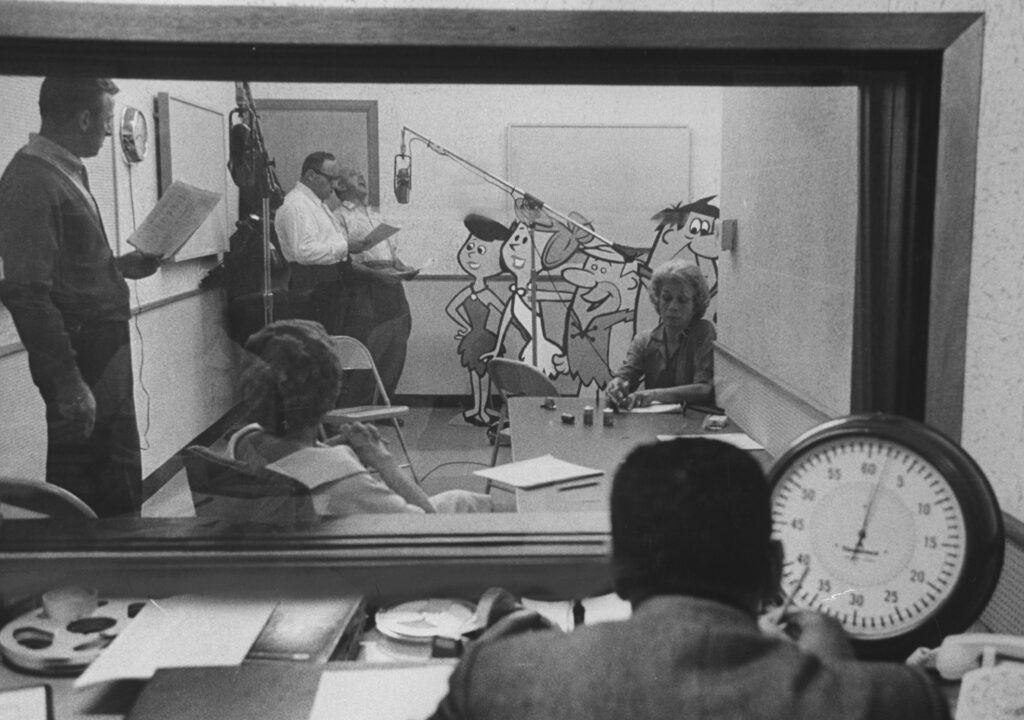
A Flintstones recording session at Hanna-Barber studios, 1960, LIFE.
The protruding element of Allan Grant’s photograph is the life-size cardboard cutouts of The Flintstones that appear in the recording booth next to their voice actors. This element can be seen in the works of Ad Reinhardt. On Reinhardt’s “Some Vacation,” it can be seen how he mixes his own cartoon style with that of a more professional or serious tone, similar to drawing styles that could be found in academic papers or newspapers (Hill 83-85, Reinhardt). Both Reinhardt’s drawing as well as Grant’s picture share the composition of a viewer looking through a window to where there are two different forms of media—one the same as the outside viewer, and one different to it. The relationship found with the immersion of media is used to connect to contrasting subjects or elements and make them interact in an innovative way. In Grant’s picture, the thick outline of the characters make them stand out of the real life world they find themselves in, making their cartoonish appearance look out of place and unnatural in the recording booth. Reinhardt’s image utilizes simplistic cartoon lines for the characters, their objects, and the window, while using a complex and detailed art style for the train. The difference in art styles between the two elements show this tone of out of placeness that was described in Grant’s work.
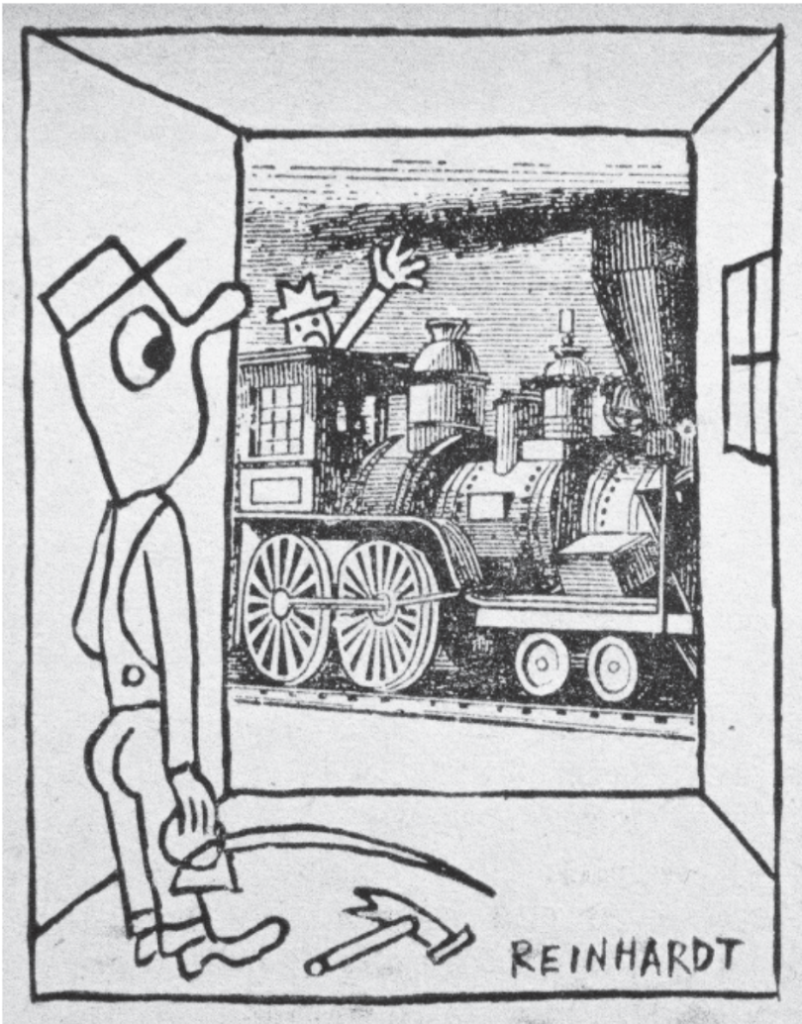
Ad Reinhardt, “Some Vacation,” PM, March 2, 1944, 9. Image courtesy New-York Historical Society ©2016 Estate of Ad Reinhardt/Artists Rights Society (ARS), N.Y
Both Grant and Reinhardt created cartoons that were aimed at adults. On Reinhardt’s “Things You Should Know When You Buy Meat,” it is clearly seen how he created a cartoon that is aimed at adults because they would be the ones to go to the grocery store and do the shopping. Since it was published in 1943, Reinhardt’s comic was targeted to adults during wartime, teaching them about food rations through charming cartoons (Hill 82). I find it intriguing how Reinhardt combines something serious like wartime food rationing with cartoons that are conventionally aimed at children. Similarly, Grant’s photograph is aimed at the adults that watch The Flintstones, which parodied shows about families and the way they were portrayed as being perfect. Furthermore, television was something very important during the 60’s. It was not only used for entertainment and to stay up to date with the news of the world, but the television was also used as a symbol of status. People would take their family pictures in front of their televisions to show that they had one, proving their social status, becoming a staple in old family snapshots (Spigel 1). The importance of social status can also be linked to being a factor to the sales of televisions. Due to this reason, it makes sense that this advertisement is found in a pop culture, social LIFE magazine, promoting a television program. Grant’s image is not expressing concern, but instead, trying to sell televisions and the lifestyle they are related to. Pictures like FIGURE I.4, 1961, are perfect examples of the way people were actively posing with their televisions (Spigel 23). High social rankings were not only related to the stars in the programs, like the ones in Grant’s photos, but they were also related to the people that had a television and watched the shows.
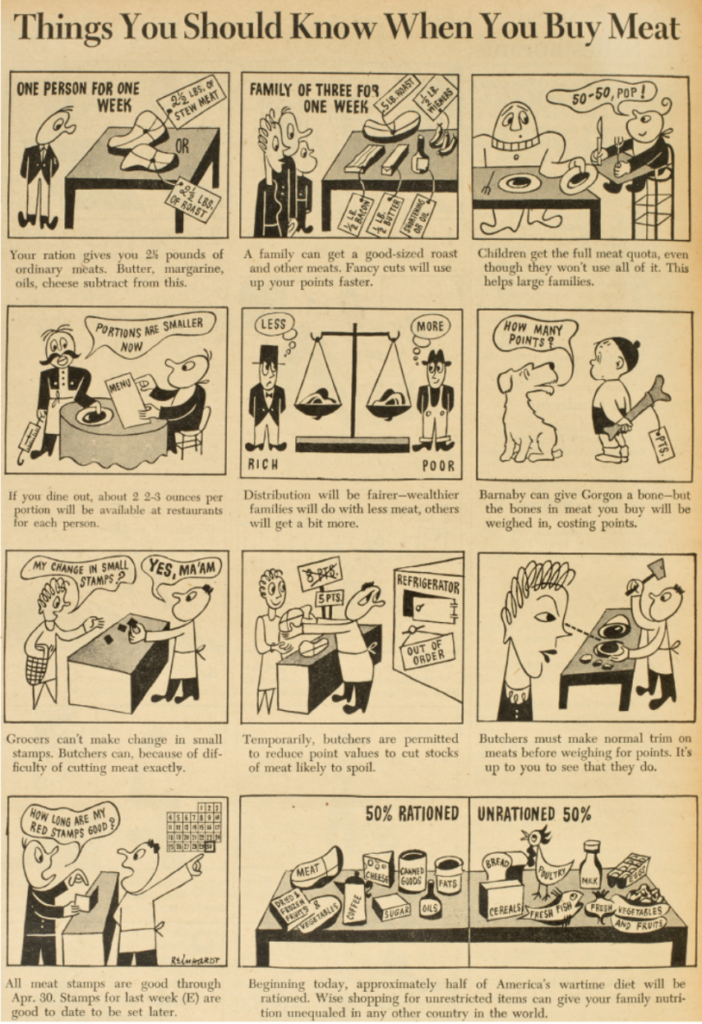
Ad Reinhardt, “Things You Should Know When You Buy Meat,” PM, March 29, 1943, 18. Image courtesy New-York Historical Society ©2016 Estate of Ad Reinhardt/Artists Rights Society (ARS), N.Y.
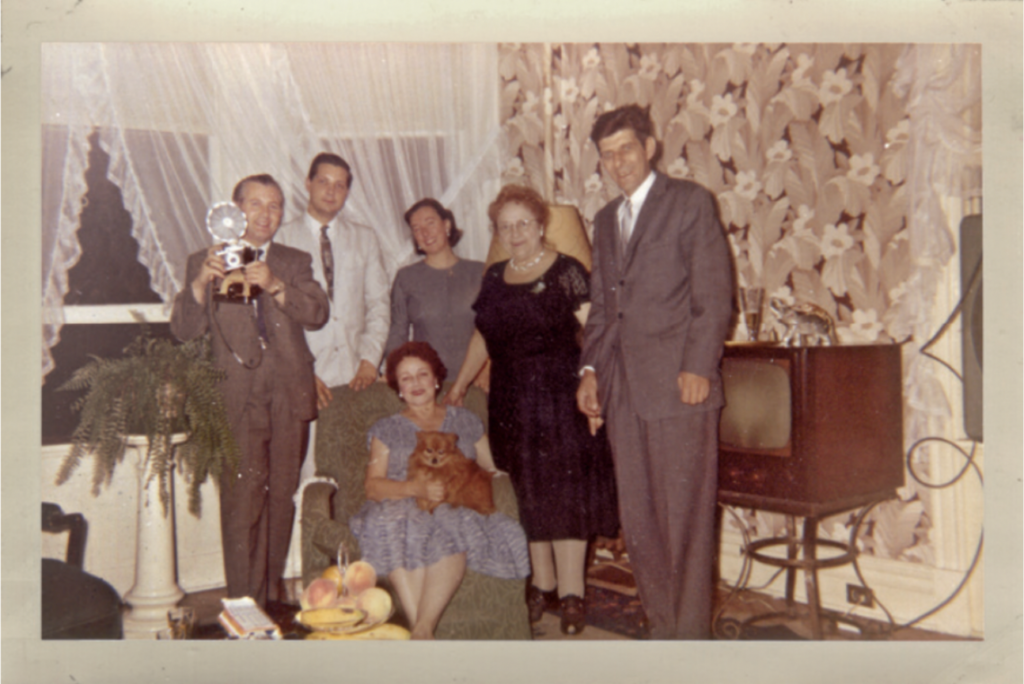
FIGURE I.4, 1961.
Advertisements have come a long way. There are many different techniques that companies use to capture the attention of the audience and potential buyers. In this case, Allan Grant used the immersion of cartoon characters in the real world to connect the people with a fantasy world that is not real. It can be said that this immersion serves as a way to express escapism, showing people that through The Flintstones television show, you can “escape” to a better place, even if it is just while you watch the program. I find it very interesting how the voice actors are in the same room as their cartoon characters because it breaks the fourth wall in a way. The photograph shows you both the real and the fake, but puts it all in the same place. Humans tend to create things to get away from others, be it drawing cartoons when talking about wartime food rations or creating a cartoon program to make fun of modern life. Even though the purpose of the image was advertisement, it provides a bigger message than that: through the world of entertainment, immersion and escape from reality is possible.
Works Cited
- Ad Reinhardt, “Things You Should Know When You Buy Meat,” PM, March 29, 1943, 18. Image courtesy New-York Historical Society ©2016 Estate of Ad Reinhardt/Artists Rights Society (ARS), N.Y.
- Ad Reinhardt, “Some Vacation,” PM, March 2, 1944, 9. Image courtesy New-York Historical Society ©2016 Estate of Ad Reinhardt/Artists Rights Society (ARS), N.Y.
- Grant, Allan. A Flintstones recording session at Hanna-Barbera studios, 1960.
- Hill, Jason E. “How to Look at News Pictures in America,” 2016.
- LIFE, November 1960.
- Spigel. FIGURE I.4 1961.
- Spigel. “INTRODUCTION: COMPANION TECHNOLOGIES.”
- Syken, Bill. https://www.life.com/arts-entertainment/yabba-dabbo-doo-inside-hanna-barbera-and-tvs-first-cartoon-for-grownups/

Leave a Reply