People Attending at Kelly’s Funeral
It is not that hard to imagine a photographer at a murder scene taking pictures for a report, especially in modern times when news cycles are exceptionally fast. This process is exactly what Cornell Capa—a photographer for the photography cooperative Magnum—did in 1953 at the scene of the murder of Francis “Red” Kelly, a new hiring boss for the Port of New York’s waterfront. He took pictures of the crime scene itself, as well as the aftermath of the event and other activities at the docks, and published them in the May 18, 1953 edition of Life magazine in an article titled “‘Clean-Up’ Week on Docks” (on pages 40 through 43). Several photos from the magazine article for which he photographed appear in this post. The Life article discusses the murder as well as issues surrounding ‘kickbacks,’ which in this case are illegal payments made as compensation for preferential treatment in dock hiring. Kelly was murdered because the murderers wanted more control over kickbacks in the shape-up system that the dock used, which is a system where the hiring boss chooses only some of the available workers to work for a certain amount of time from the whole pool of available workers. The article also talks about a vote to reform the system that did not actually include any way to propose alternative methods for hiring, signaling issues with corruption around the hiring and voting processes.
Cornell Capa was a photographer and photojournalist for Magnum and Life magazine (International Center for Photography, n.d.). He also created a photography exhibition called The Concerned Photographer and founded the International Center for Photography (International Center for Photography, n.d.). He was one of the photographers that utilized the framework of ‘concerned photography’ within his photography work. Concerned photography was a movement that strived to take photographs of worrisome events and subjects to raise concern among the people who viewed the photographs (Bair, 2022). This concern can be seen in the photos in the article on murder and corruption at the Port of New York in Life magazine since these photos not only depict the events at the dock but also express concern about the murder and the other issues at the docks. Concerned photography has a strange relationship with the concept of objectivity, which means something that is untouched by humans and in its ideal, perfect state (Daston and Galison, 2007). Here, the ideas of concerned photography and objectivity interact in the photos. The photos utilize a hybrid version of objectivity, where they try to present the objects of the photos as the objective truth and as unmanipulated by humans while also asking viewers to be concerned about the contents, revealing a tension between the two.
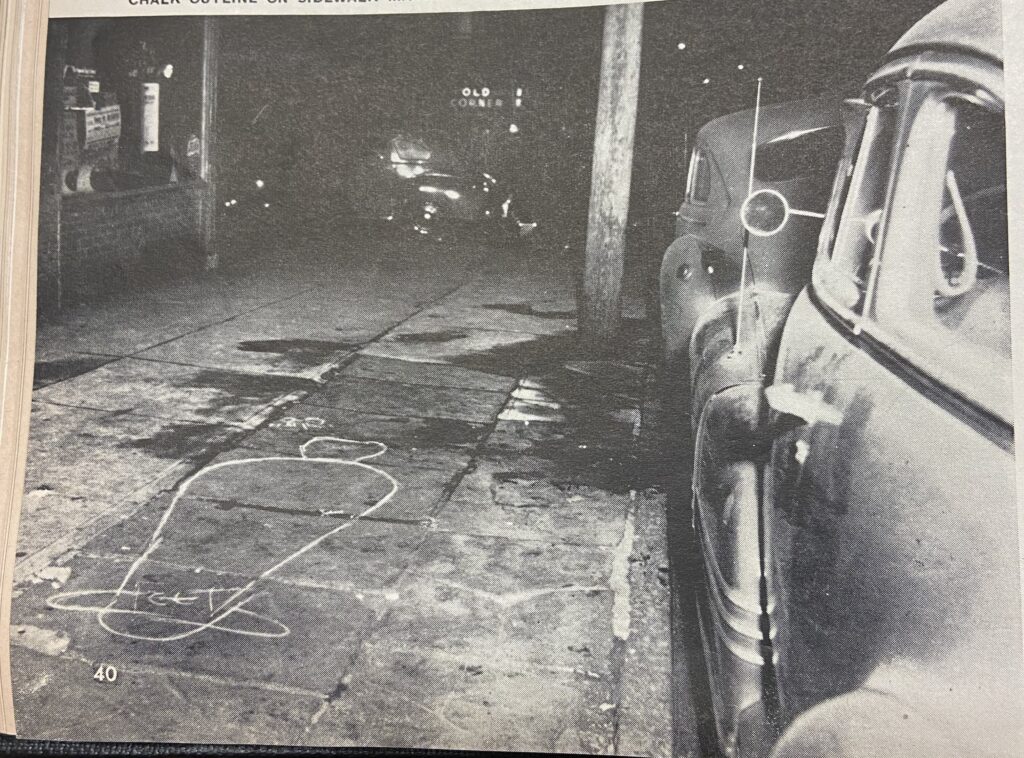
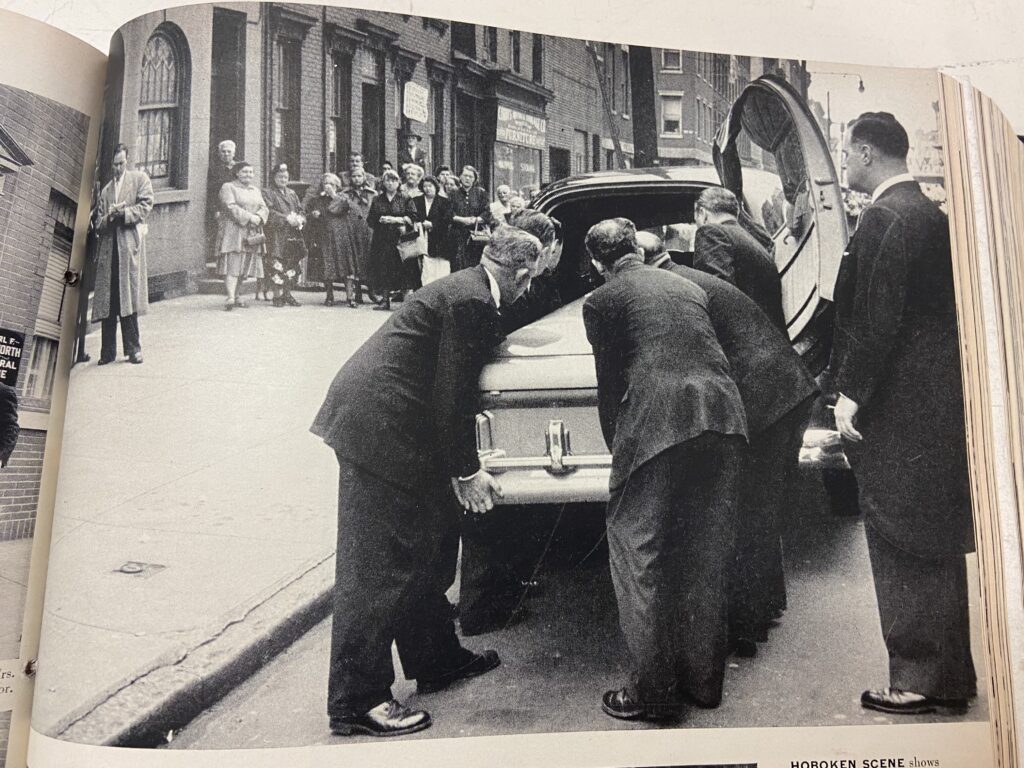
The two photos above are some of Capa’s photos from the article. The first photo depicts the murder scene itself, with white chalk marks demarcating where the murdered man’s body fell on the sidewalk. The second photo shows men lifting Kelly’s casket into a hearse for transportation to a church for funeral rights. Both photos appear to be very objective, simply presenting the truth of what occurred to the viewers. This interpretation is aided by the fact that the written descriptions of the photographs in the magazine are very similar to the ones just provided in this paragraph. These descriptions give factual information about what the photographs present in a written format. Together, the photographs that appear simply to show what occurred, along with the text that describes what happened, present the photographs very objectively.
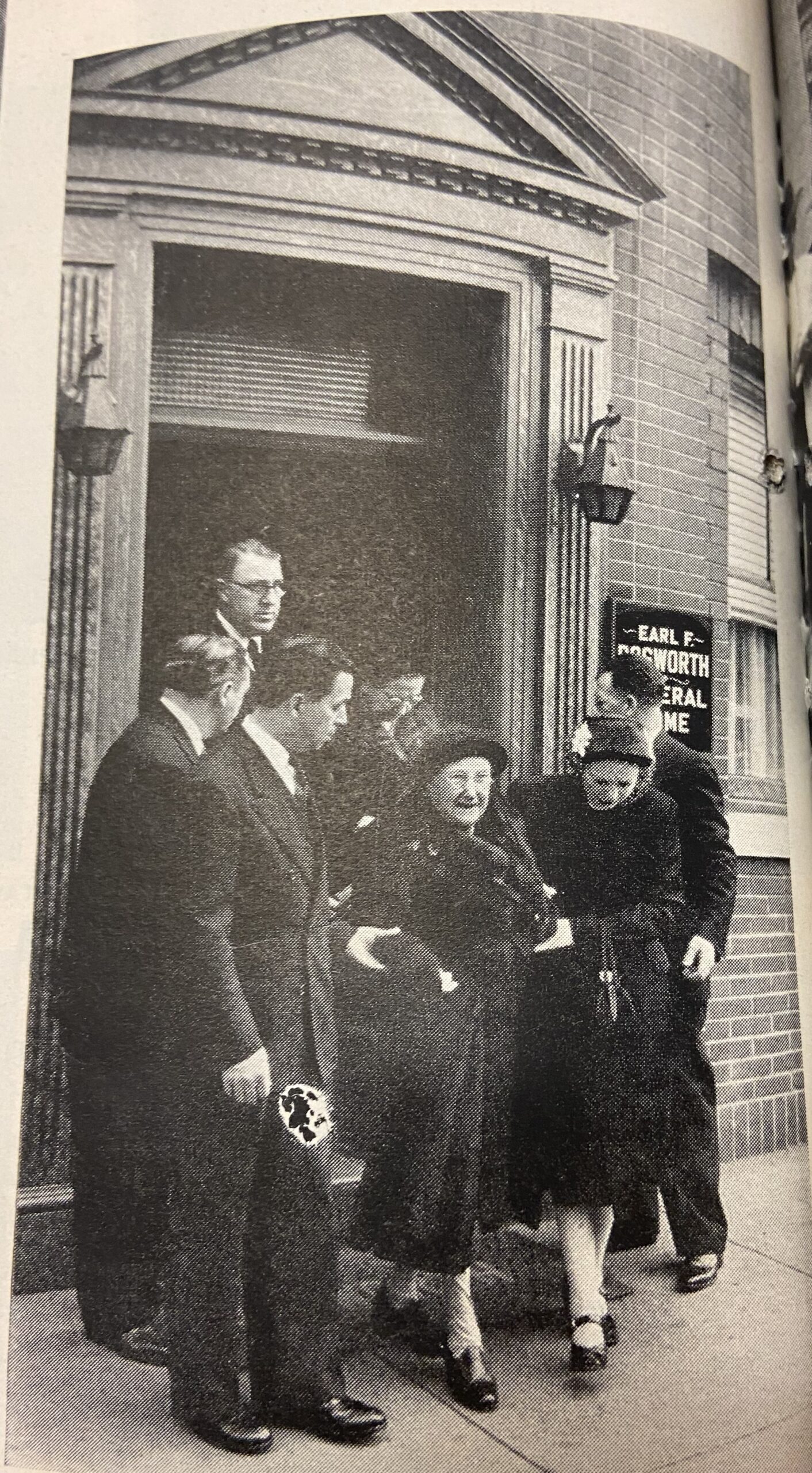
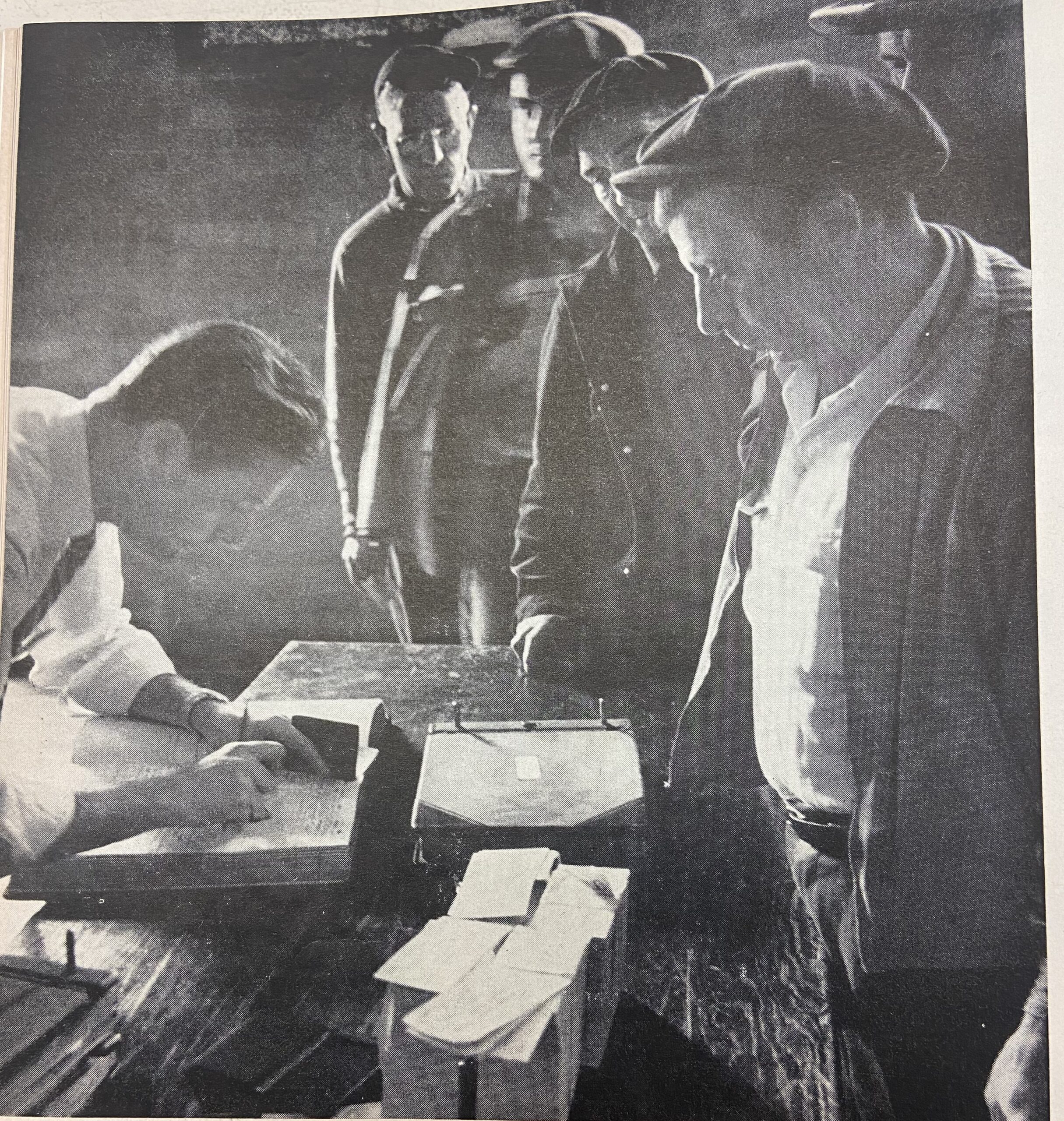
However, when each photo is examined for the context of the event and the photographs are put together, Capa’s attempt to get average viewers of Life to be concerned about the events the photographs depict also becomes apparent. The photographs, both together and individually, ask the viewer to be concerned about the murder of Kelly and issues surrounding hiring and corruption within the dock industry in the Port of New York. Since this article was in the popular general-interest magazine Life, it is likely that Capa hoped that these photos and his narrative of concern about their depicted events would reach a general United States audience. The article includes a photo of Kelly’s grieving mother that pulls at most viewers’ heartstrings. It also has pictures of longshoremen (people who load and unload boats) presenting their union books before being able to vote for changes to dock policies (located below). The caption in the magazine draws attention to the fact that it was apparently pretty easy to get a fake union book to participate in the vote. The Life article said that several newspapers succeeded in doing this when testing the possibility. Overall, the photographs together work to present a narrative that seeks to make viewers feel concerned about corruption and deaths that are occurring within the dock industry in the Port of New York. The murder of Kelly, along with corruption and a previous murder of a hiring boss two years before (mentioned in the article) are key to the narrative that hopes to prompt concern among viewers of the magazine.
The tension between these two frameworks for understanding the photographs is very important. The photos all seek to show objective versions of what happened at the docks while also trying to express concern about what occurred. These two things seem to be in fundamental conflict. Objectivity is supposed to mean something unaffected by humans, and yet Cornell Capa seems to be placing a narrative of concern within his photographs, which would mean that the photographs are touched by this human-created narrative. Despite this, the photographs still seek to be objective and present the ‘truth’ of what occurred. By using objectivity and concern at the same time, Capa is able to create photographs that both appear to be the truth while also expressing concern about what happened within them. This allows him to have more control over the photographs’ narrative that viewers should be concerned about what is occurring at the docks in the Port of New York related to corruption and murder of workers. It also gives his narrative more credibility since the photographs seem to be the objective truth.
Thus, a hybrid form of objectivity emerges from Capa’s photographs in this Life magazine article, where the photographs both appear objective while also trying to make their viewers feel concerned about the subjects within the photos. But can photographs ever truly be objective? Whether or not these photos are actually objective is for the viewer to decide. Personally, I do not think that photographs can be objective and completely removed from the photographer, since the photographer is the one who chooses to take photos of certain events and objects from certain angles. Even if the photographer is simply reporting on an event, they do so by choosing to take pictures in specific ways. It is up to each individual to decide for themselves, though, whether they believe photographs can be objective. Do Capa’s photos of the issues at the dock feel objective to you?
Sources
Bair, N. (2022). The International Origins of ‘Concerned Photography’: Cornell Capa in the United States, Japan, and Israel. American Art, 36(2), 75–101.
Daston, L. and Galison, P. (2007). Objectivity. New York: Zone Book.
International Center for Photography. (n.d.). Cornell Capa. https://www.icp.org/browse/archive/constituents/cornell-capa?all/all/all/all/0.

Leave a Reply