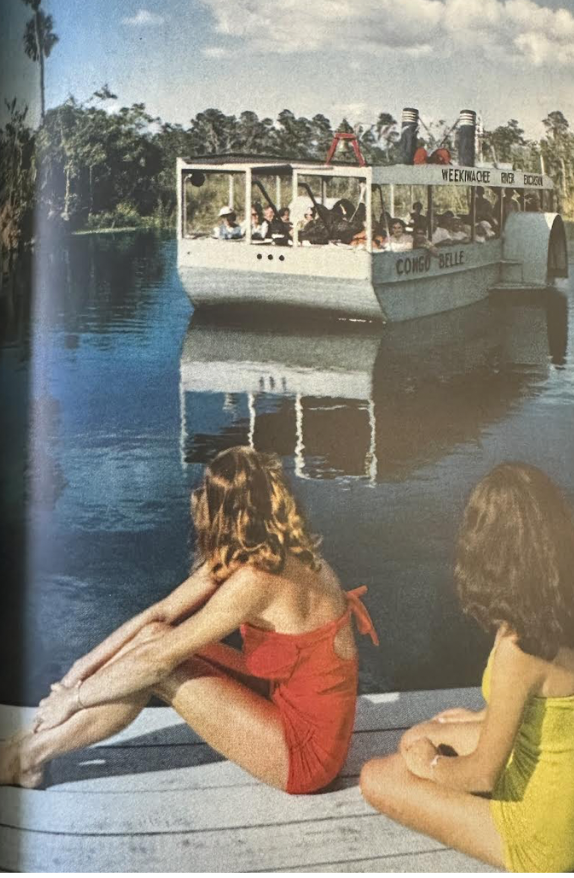
The photograph entitled Excursionists Aboard the Paddle-wheeling Congo Belle Glide Down the Weeki Wachee appears in the 1955 edition of The National Geographic magazine. The image was taken by Bates Littlehales, a long time National Geographic photographer well known for his work in underwater photography. The photograph captures tourists indulging in a picturesque voyage along the Weeki Wachee River, located along the coast of Florida. The visitors soak in the scenic wonders of the river aboard the boat cruise known as the Congo Belle. The river originates from the Weeki Wachee Springs, and is well known for its diverse wildlife and spectacular scenery. The Weeki Wachee Springs Park stands as a popular destination for tourists, most famous for its iconic mermaid shows. The park also offers an array of fun recreational activities, inviting visitors to fully immerse themselves in the area’s natural beauty. In the photograph, tourists aboard the cruise are greeted by the female performers, or mermaids, as they eagerly await the upcoming underwater show. The elements of the photograph, coupled with the intentional camera placement, creates a tranquil and peaceful atmosphere, aiming to entice viewers to explore and experience the park’s captivating attractions.
The photographer is positioned behind the female performers, revealing at a distance the tourists gazing towards them. The tourists’ focus towards the female performers deliberately emphasizes the significance of these women, capturing viewers attention to their presence. There is an air of mystique surrounding the women as their faces are not shown, adding an intriguing element to the photograph. The choice to conceal the performers’ faces can be interpreted as a deliberate tease, leaving viewers curious about their identities. The close proximity of the camera lens, coupled with the revealing swim attire, offers viewers a more intimate perspective of the performer’s physique. It directs the viewer’s attention towards the women’s body and posture. Attracted by their physical appearance and exposed skin, many visitors will be eager to see these women firsthand. In his essay Companion Technologies, Spigel talks about the association between the camera and femininity. He states, “women often used the new medium to direct the gaze at themselves” (Spigel 22). In this photograph, the revealing attire of the performers serves as a strategic tool to entice viewers and generate further interest in visiting the park. The gender norms and expectations of the time shape how these women are dressed and positioned in the photograph, proving Spigels argument that, “we conceptualize gender and sexuality as performances” (Spigel 8).
The photograph serves as a promotional tool to advertise the park’s amenities and the unique experience it provides. The close positioning of the camera to the performers communicates an inclusive message. The intimate proximity to the performers signifies that everyone is welcome to partake in the attractions and experiences of the park. After World War II, there was a notable increase in Americans’ desire for leisure and travel. The positive demeanor of the tourists, calm composure of the performers, and the gentle water ripples, collectively portray the park as a destination of tranquility and leisure. The park, like many other tourist attractions and resorts at the time, “pandered to a growing middle-class market for leisure…carefully curated” (Andrezejewski). Considering the shift in consumer trends, it’s possible the photograph was taken with the intent to showcase the park as aligned with the latest desires and preferences of American tourists at that time. Concealing the faces of the performers might have been a deliberate attempt to shift the viewers attention towards their swimming attire. A subtle advertisement for a new and more fashionable kind of swimwear that is less restrictive and more revealing. By omitting the faces of the performers, it allows viewers to better envision themselves wearing the swimsuit and the adoration they would experience wearing it, similar to those in the image. The crowded cruise indicates the strong demand for the park, reflecting the parks ability to meet tourists current desires and preferences.
While the park promises a leisurely experience, it also invites visitors to explore its extraordinary and distinctive offerings. As described in the caption beneath the photo, cruisers catch a glimpse of exotic wildlife, including bears, panthers, baboons, and alligators. Although these animals are confined to cages along the shores of the river, visitors get to enjoy the unique experience of observing these exotic and potentially dangerous creatures in a safe and protected environment. Visitors truly get the best of both worlds. They have the opportunity to experience the thrill of seeing these fascinating animals up close with the assurance of safety and security. Interestingly, the performer’s posture exudes a sense of ease and comfortability with the surroundings, almost as if they are a part of nature itself. The photograph aims to ease the discomfort and intimidating concept of the wild, with the intent to spark curiosity and encourage exploration. The confidence that the performers exude in their body positioning, despite the hard gazes and stares, shows that the performers are well practiced and masters at their craft.
The various elements within the photograph and the deliberate placement of the camera create a purposeful image meant to inspire visitors to explore the park and its many amenities. It shows viewers that amidst nature and its exoticism, lies a source of enjoyment and leisure. In combination with the beauty and uniqueness of the natural surroundings, the photographer uses the female body and the inclusion of desirable commodities, like the swimsuit, to further persuade people to visit the park and explore its thrilling attractions.
“Weeki Wachee Springs.” Wikipedia, The Free Encyclopedia. Wikimedia Foundation, Inc. https://en.wikipedia.org/wiki/Weeki_Wachee_Springs#:~:text=History,-A%20fashion%20photograph&text=The%20spring%20was%20named%20%22Weeki,underwater%20air%20hose%20breathing%20techniques.

Leave a Reply