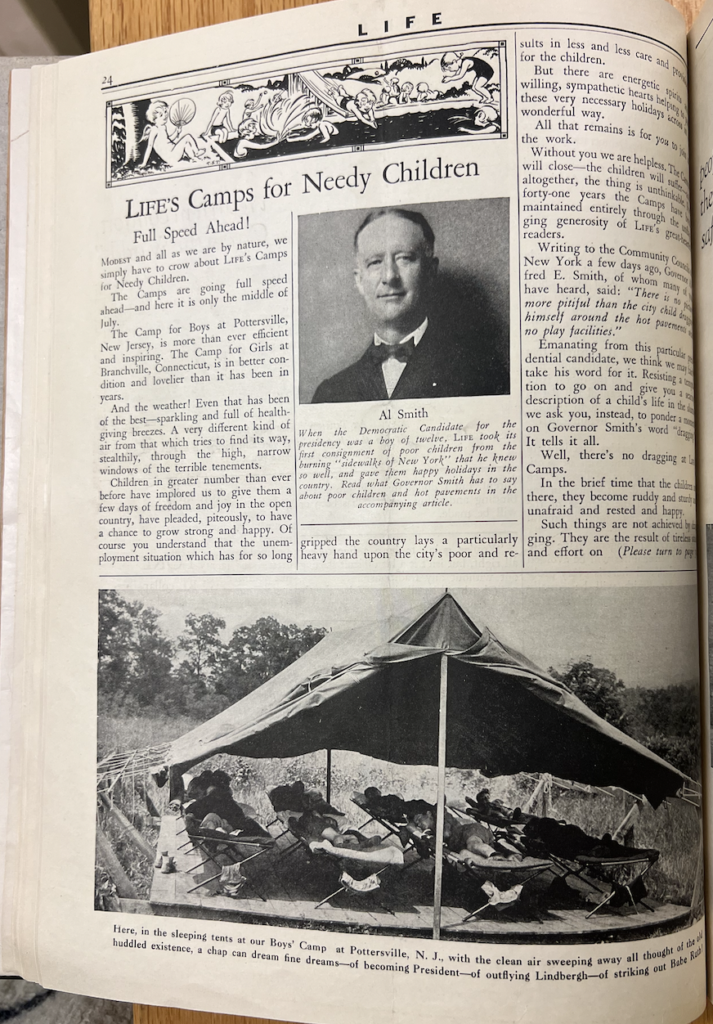
The July 5, 1928 issue of Life Magazine, features an advertisement for “Life’s Camps for Needy Children” urging parents to withdraw their children from drab, uninteresting urban environments and enroll them in a summer camp where they will thrive in a plethora of nature, activities, and socialization. The advertisement includes a cartoon depicting a utopian vision of a generic summer camp, a portrait of the Democratic presidential candidate Al Smith, and a photo of campers sleeping in their tent at The Camp for Boys at Pottersville. These visual elements are interspersed among a plea for readers to register their children in summer camp to keep the camp afloat for children in need and provide kids with a stimulating environment where they can grow and flourish in the country instead of being cooped up in the city. The camp is presented as an oasis where the fresh air, sunshine, and the rural setting will ground the children, teach them life skills, and allow them to be happy and free. The supposedly candid image exhibited is of an unrealistically perfect and orderly camp where each of the boys is neatly asleep in their tent in the middle of a serene field. In addition to this ostensibly real moment, there is a cartoon that depicts an ideal camp environment with children playing and enjoying themselves. This image is meant to convince the reader that they would be opting into this idealist, blissful image that is unachievable and does not actually represent the camp. The last visual element is a portrait of Al Smith which acts as an endorsement for the camp and functions as proof that respectable children with bright futures go to this camp and sending your child to this camp sets them up for a successful life. While these three images each contribute something unique to the advertisement, they work together to create a convincing, flawless depiction of Life’s Camps for Needy Children that sells the camp as a necessity for a child’s happiness and development.
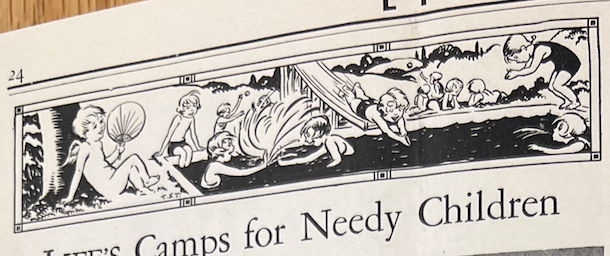
At the top of the page is a framed illustration of children swimming, running, socializing, and playing games. The kids are outside, smiling, and having fun–a picture-perfect scene. A child dives into the pool while another soars down the slide, and, in the foreground, two more splash each other, grinning widely. On the land, two kids are engaged in a game of catch while a group off to the right lies on the grass, lost in conversation. Furthermore, on the far left a cherub figure sits under a tree, leisurely fanning themself. This character adds a heavenly, righteous tone to the cartoon as if everything could not be more perfect and the camp is a paradisical place. The cartoon style, the presence of celestial elements, and the unrealistically flawless scene all create an idyllic image that cultivates an unfeasible vision of Life’s camps in the viewer’s mind. The efficacy of this cartoon lies in its lack of “aura”. Walter Benjamin defines the aura as “a peculiar web of space and time: the unique manifestation of a distance however near it may be.” While Benjamin defined the term in the context of photography, it remains relevant to the cartoon. The generic figures, unidentifiable landscape, and typical summer camp activities all create an anonymous, perfect depiction that is uncontextualized and not attached to any specific setting. The absence of the aura allows the viewer to feel closer to the cartoon. The lack of detail presents an opportunity for the viewer to imagine their children in this context and mold the scene to fit into their reality. The same elements that make the cartoon relatable also make it desirable. Everything in the image is ideal, begging the question: Why would you not want this for your children?
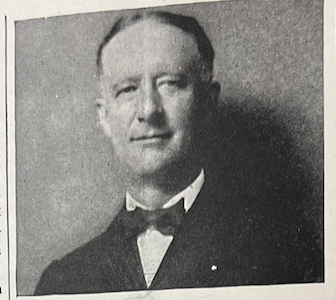
In the middle of the page is a portrait of Al Smith dressed in a tuxedo, endorsing the camp and recounting his happiest childhood days spent at this oasis far from the hot pavement and suffocating atmosphere of New York. Juxtaposed with the carefree, fun tone of the cartoon, Smith’s portrait adds an air of credibility to the advertisement. Showing that an alumnus of Life’s Camps is a well-known, successful, presidential candidate assures parents that sending their child here will be beneficial for their development and will allow them to blossom into an equally distinguished, happy, intelligent person. While Smith’s words urge parents to enroll their children in this camp to achieve a level of character building that cannot be cultivated in the city environment, his gaze into the camera and mild expression are reassuring to the viewer. He appears trustworthy and professional, the model camp graduate, and a major selling point.
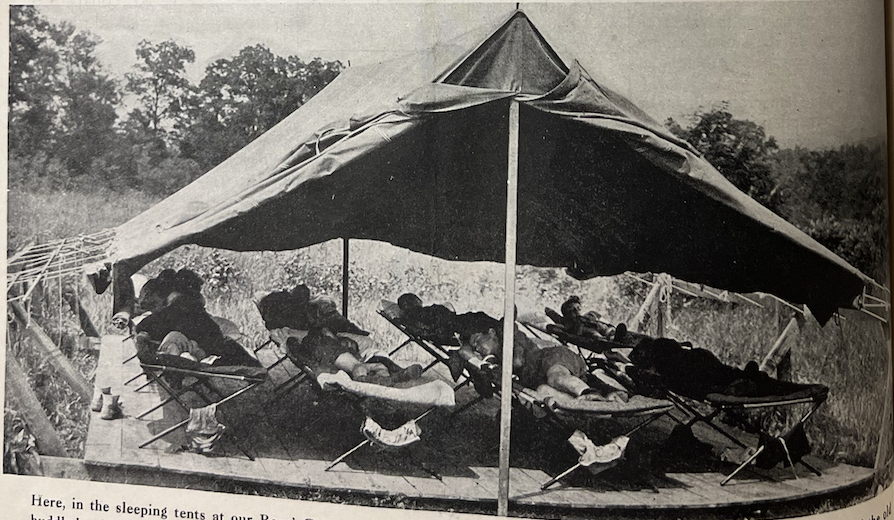
The last image depicts eight boys asleep on their cots under a tent in the middle of a vast field. The setting is vague, and the tent does not seem integrated into its surroundings but instead seems out of place amongst the grass and trees. Standing alone, there is no indication of other facilities or ways to contextualize the image. The boys are sleeping so peacefully in a tent that is so exemplary it calls into question the objectivity of the photograph. Daston and Galison state that objectivity “preserves the artifact or variation that would have been erased in the name of truth” and that “to be objective is to aspire to knowledge that bears no trace to the knower.” The intention to show viewers a perfect, appealing snapshot of life at the camp takes priority over a realistic depiction of life at the summer camp that cannot possibly be captured in this photograph. The image does not seem organic but instead feeds into the agenda of the advertisement by setting forth a flawless, serene representation of camp life.
Life’s Camps for Needy Children is an advertisement that uses three different visuals to curate an ideal image of the camp, establish credibility, and present a snapshot of the camp that is seemingly candid. The cartoon and photos all work together to paint a picture of the perfect summer camp, convincing parents that they must send their children to provide them with happiness, room to grow, and a bright future. The advertisement is successful in selling this image and utopia to readers due to the carefully curated visuals.
Works Cited:
Benjamin, Walter. “A short history of photography.” Screen, vol. 13, no. 1, 1 Mar. 1972, pp.
Life’s Camp for Needy Children Advertisement. Life, 5 Jul. 1928, p. 24.
Datson, Lorraine and Peter Galison. Objectivity. Zone Books, 2007.

Leave a Reply