Category: Art of the Black Atlantic

  • Portrait of John Bigge Thornton and 18th Century English Portraiture

    Portrait of John Bigge Thornton and 18th Century English Portraiture

    The 18th century was a transformative period in English history. As the empire expanded across the globe, English society underwent substantial change. Enlightenment thought took hold of an ever growing middle class created by global trade. As society changed, so too did the art it produced. In portraiture, as a longstanding and dominant medium for cultural expression, these societal shifts are especially evident. English portraits emerged as a means of representing daily life and societal ideals. These portraits became carefully constructed means of representing status, intellect, and cultural value. As the medium became more accessible to the general population, portraiture shifted from an art form of societal elites to one that the English middle class sought to adapt to define their own status. Artists such as Joshua Reynolds, Thomas Gainsbourogh, and George Romney became the artistic representatives of an English population more and more able to enter into the artistic realm. George Romney’s Portrait of John Bigge Thornton, serves not only as an excellent piece of art, but as a strong example of the changing dynamics within 18th century English portraiture.
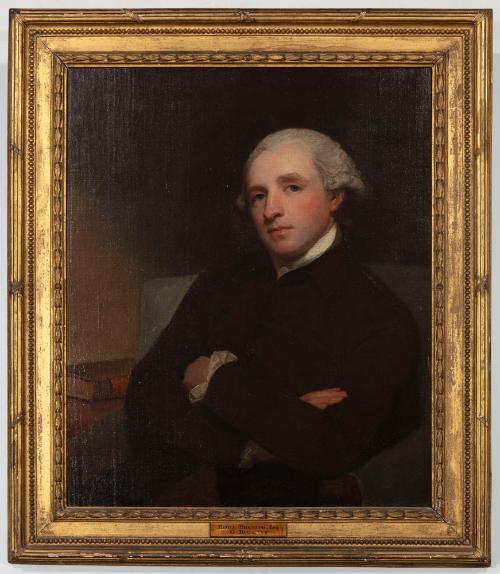
    Fig. 1: Portrait of John Bigge Thornton by George Romney

    Before analyzing 18th century English portraiture further, it is important to provide a visual analysis of the key piece of this essay. Romney’s Portrait of John Bigge Thornton. The portrait is of a medium size with dimensions of 30 × 25 in. sitting in an ornate gold frame (36 5/8 × 32 1/4 × 2 1/8 in.). Romney chose to use oil paint on canvas as his medium, utilizing mainly shades of brown, black, and white. Romney paints with smooth and subtle strokes of his brush throughout the painting. He uses multiple layers of oil paint to build up the image, ultimately crafting a painting that is free from visible brush strokes. The subject, John Thornton, sits slightly to the right of the middle of the frame. He sits comfortably, leaning back into his chair at an angle with a sense of calm sophistication. His arms are crossed, left over right, helping to keep himself still while he sat for his portrait. Thornton wears simple and elegant clothing. He sports a plain brown jacket, with frilly cuffs protruding from his wrists and a white collar extending slightly above the top of his jacket. His face is clearly designed to draw the viewer’s eye when they first see the portrait. It is the brightest part of the painting, as Thornton’s pale pink skin is a lone instance of bright color in the frame. His ashy gray wig is brushed back, curling at the ends above his ears. His head is tilted slightly to the left, and he turns his head slightly to face the viewer. Thornton’s facial expression is fascinating, and his dark brown eyes stare directly into those of the viewer. He raises his left eyebrow slightly with a knowing look, and his lips remain closed softly. The setting of the portrait is equally interesting. The area around Thornton is plain, save for the soft blue chair he sits in, and a dark brown and red book sitting closed on the wooden table behind him. The area behind his head remains dark and blank, providing contrast to his brightly lit face. The portrait is lit from outside of the frame, casting subtle shadows on the right side of Thornton’s face. While small details such as these may seem to be unimportant, the broader scope of this essay will reveal that it is precisely these details that make the painting such a strong example of 18th century English portraiture.

    It is further important to understand the context of this essay’s central portrait. The portrait currently resides in the Wellin Art Museum at Hamilton college, as a part of the Beinecke Collection of the Lesser Antilles. Begun in 1778 by English portrait artist George Romney, Thornton sat for the painter five times, though the portrait was ultimately left unfinished. This was due to the death of Thornton in 1780, and left Romney unable to add the finishing touches to the portrait. Interestingly, the painting was not commissioned by Thornton. Instead, it was paid for by Thornton’s close friend, the romantic poet and biographer William Hayley. The painting would eventually be bought by former Hamilton College trustee Walter Beinecke. Beinecke would eventually donate the portrait, alongside numerous other works, to the college. The portrait was donated as a part of Beinecke’s personal collection of works associated with European colonization of the Lesser Antilles, a series of islands in the Caribbean. The addition of the portrait to the Beinecke collection provides one of the most intriguing aspects of its history. When the portrait was added to the collection, it was as a portrait of Henry Thornton—there remains a plaque at the bottom of the frame identifying it as such. Henry Thornton was an English economist, banker, and philanthropist, whose work as an abolitionist helped to end the British Atlantic slave trade. This misidentification placed the portrait in direct connection to the rest of the Beinecke Collection, which contains numerous depictions of slavery and the post-slavery era in the European colonies of the Caribbean. John Thornton however, has little ties to the rest of the collection. As a rising English lawyer, John Thornton had no known ties to the Lesser Antilles. The portrait would eventually be correctly identified, but remains a part of the Beinecke collection at Hamilton. This makes the portrait a uniquely separate part of the collection, tied to the Caribbean purely by chance.
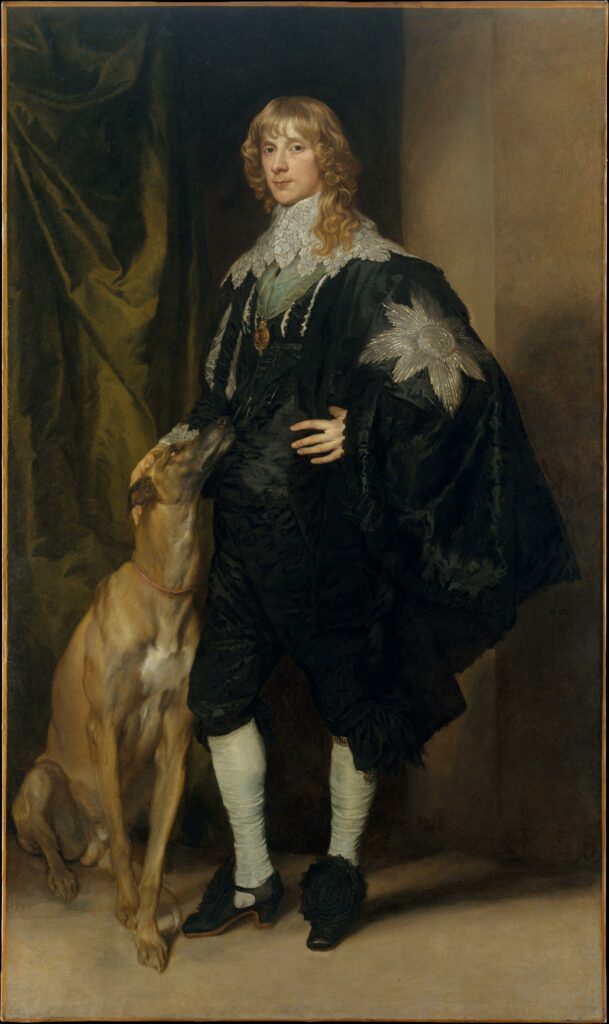
    Fig. 2: James Stuart (1612-1655), Duke of Richmond and Lennox by Anthony van Dyck

    The transformation that English portraiture in the 18th century cannot be fully understood without an examination of the century prior. Portraits of the 17th century were almost exclusively commissioned by societal elites such as royalty or the aristocracy. These were portraits designed to flaunt a subject’s elitism and societal status. As art historian Mark Roskill points out, portraits commissioned at the time were made by a small group “which prized grace and elegance as hallmarks of breeding and quality, and which at the same time welcomed the trappings of grandeur,” (Roskill, pg. 173-174). This meant portraits of the time were large and filled with as many signals of status as could be packed into the frame. One excellent example of this can be seen in Anthony van Dyck’s famous portrait, James Stuart (1612-1655), Duke of Richmond and Lennox. The portrait is massive, rising over seven feet tall and four feet across, and depicts the English nobleman James Stuart alongside his hunting companion. His clothing oozes opulence, with intensely detailed fabrics and clothing pieces draped over his figure. This opulence extended to the artists themselves, who were brought from around Europe to paint the English elite. Portraits of the time often placed their subjects inside their lavishly decorated homes, or performing acts of leisure in the countryside—van Dyck’s portrait here combines both, as the dog alongside Stuart is likely a hunting companion. This is not to say that the stylistic conventions were limited to England. In Spain, portraitists also sought to portray his subjects in glamorous luxury. Historian David Pullins specifically mentions “Velázquez’s remarkable series of portraits associated with the royal hunting lodge known as the Torre de la Parada,” (Pullins, pg. 20). These conventions of 17th century portraiture laid the groundwork for the changes that would come in the next hundred years.

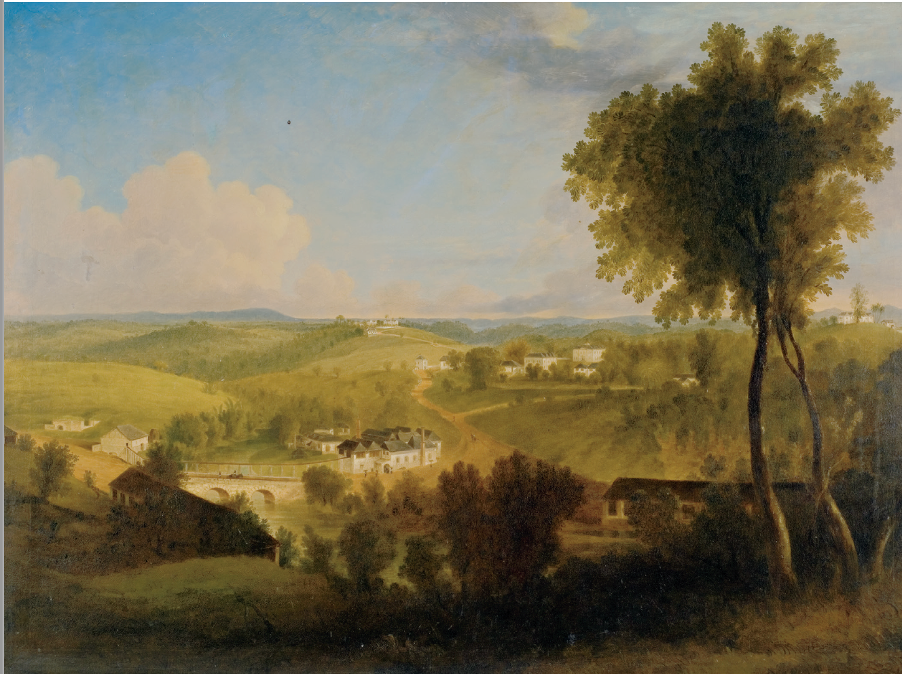
    In the 18th century, England underwent a massive cultural shift and the changes of the era would be reflected in the portraiture of the time. As the British Empire expanded across the globe, newfound opportunities for profits and social mobility emerged. This took its most prominent form with an impressive expansion of the English middle class. Suddenly, there existed countless merchants, bankers, traders, and other professionals with money to spend. Portraiture, throughout its history in England, had been seen as a way of representing status and achievement within society. The commission of a portrait of oneself was a way for the rising middle class to showcase their newfound wealth and cultural literacy in a country where such values were highly prized. This created a boom in the painting of portraits in the 18th century, driven mainly by the middle class. One example of this can be seen in Horace Wallace, a rising politician and writer in England in the 1700s. In a letter to a friend in 1781, Wallace speaks to this boom in portraiture, writing, “I desired him to copy for me a portrait of Mr Browne Willis…and he struck off fifty copies of Mr Tyson’s copy for me, but as the sketch,” (Wallace, pg. 285). Another change in the portraiture of the 18th century came in the form of a market transformation. Artists of the time often used commissioned portraits to make a living. This led to the standardization of many aspects of a portrait. As art scholar and curator Louise Lippincott and art historian Alan Davison write, “By and large, portraits were manufactured in an environment formed by stiff competition, division of labor, standardized product, and standardized prices… the economics of portrait painting drove many of the genre’s manifest features,” (Davison, pg. 236.) The sudden abundance of portraiture in the 18th century also led to increased imagery of class differences. Aristocratic portraits maintained their standard depictions of elaborate clothing, surrounded by symbols of power and prestige. These portraits contained columns, books, or expansive landscapes representative of their subjects’ wealth, education, and authority. Middle class patrons instead looked for portraits that celebrated their newfound status. These portraits drew from aristocratic traditions, but instead included objects linked to the sitter’s trade or achievements, taking the form of globes for merchants or scientific instruments for intellectuals.A final change in 18th century portraiture was more artistic in nature. Newer 18th century portraits took inspiration from earlier landscape paintings. Art historian Tim Barringer provides an example of this change, writing, “the Scottish artist Joseph Bartholomew Kidd, commissioned by the Tharp family to paint Good Hope, probably in early 1836, provided a valedictory contribution to this genre, which adapted the format of English estate portraits, themselves modeled on the classical landscapes of the seventeenth-­century,” (Barringer, pg. 282). These dramatic cultural and societal shifts of 18th century England forever changed English portraiture, transforming a medium of the elite to one accessible to much of the rest of the population. 

    The changes in English portraiture in the 18th century are exemplified by this essay’s central artwork, George Romney’s Portrait of John Bigge Thornton. Clothing often served as a class signal within portraits of the time, and Romney’s portrait is no different. Thornton’s clothes in the painting are not ornate or extravagant, but they are professional and sophisticated. He also wears a powdered wig, a signal of status within English society.  These fashion choices place Thornton squarely within the growing English middle class as a rising professional, and allows him to assert himself as a member of this new area of English culture. Compared to earlier English portraiture, figures wearing such clothing are almost entirely absent. The objects in the background of the portrait are also representative of typical 18th century English portraiture. In the painting, Thornton is placed in front of a table with a closed book sitting on its tabletop. Thornton was an educated man, and a lawyer, slowly working his way up in English society. In this context, the book likely serves as a way of representing Thornton’s rising status to the viewer. It makes clear that he is an educated figure, sophisticated and well read, and that he would like to be perceived as such. The book also serves to portray Thornton as an enlightened figure. The book is the only object visible in the background of the portrait. However, it is possible that Romney would have added more objects designed to signal Thornton’s status if he had not died before the completion of the portrait. With the enlightenment spread across Europe in the 18th century, Romney’s placement of a book alongside Thornton shows that he is a man of reason and logic. Finally, Thornton’s pose acts as an example of the way 18th century English portraits acted in a market context. He is seated, with his arms crossed across his chest and body turned slightly away from the viewer. Poses of this kind were extremely common at the time, and Romney was used to painting in this manner. This speaks to the commodification of the portrait, as artists sought to maintain their livelihood, they stuck to simple poses that could be repeated over and over without much differentiation. In these ways, George Romney’s Portrait of John Bigge Thornton, acts as a strong example of the changes in English portraiture in the 18th century.

    The pricing of Portrait of John Bigge Thornton also reveals knowledge about the portrait’s subject. The increase in demand for portraits in the 18th century created a new market for the medium. Popular artists such as Joshua Reynolds and Thomas Gainsborough were able to charge high prices for their talents, while less fashionable painters attracted customers with lower prices. John Thornton’s portraitist, George Romney, fell into the latter category. Despite his widespread popularity and recognition as a talented artist, Romney catered to a clientele of less wealthy patrons. British art historian David Wilson describes Romney as such, writing, “Romney consistently charged much less than Reynolds, roughly half the price during the 1770s and 1780s for half-length portraits (then so-called three-quarter, because it measured 3/4 yard). As a measure of comparison, while Reynolds’s portrait…cost 35 guineas and that of Fitzwilliam 50 guineas, Romney’s price…was 18 guineas,” (Wilson pg. 110). This helps to identify Thornton’s societal status. Thornton was not a man of means, able to spend vast amounts of money on the most famous portraitists of his era. This can be seen further through the size of the portrait itself. Artists of the time often priced their commissioned work based on the size of the piece, with larger artworks demanding a higher price. Alan Davison explains this, writing, “the dimensions (approximately 30 x 25 inches) of Hardy’s oil portrait…represent the smallest and cheapest of the three commonly used standard fixed sizes at the time,” (Davison pg. 236). This information identifies Romney’s Portrait of John Bigge Thornton, with its dimensions of 30 x 25 inches, as the cheapest possible portrait available at the time. When combined with the knowledge that Thornton himself was not even the one responsible for commission of the portrait (the portrait was commissioned by Thornton’s friend William Hayley), places Thornton among the least wealthy people to whom a portrait was available in 18th century England. While many other members of English society remained unable to procure a portrait of themselves, Thornton’s ability to have a portrait painted of himself speaks to market adaptation to the increased demand for portraits in England at the time.

    The 18th century was a transformative period in English history. As the empire expanded across the globe, English society underwent substantial change. Enlightenment thought took hold of an ever growing middle class created by global trade. As society changed, so too did the art it produced. In portraiture, as a longstanding and dominant medium for cultural expression, these societal shifts are especially evident. English portraits emerged as a means of representing daily life and societal ideals. These portraits became carefully constructed means of representing status, intellect, and cultural value. As the medium became more accessible to the general population, portraiture shifted from an art form of societal elites to one that the English middle class sought to adapt to define their own status. Artists such as Joshua Reynolds, Thomas Gainsbourogh, and George Romney became the artistic representatives of an English population more and more able to enter into the artistic realm. George Romney’s Portrait of John Bigge Thornton, serves not only as an excellent piece of art, but as a strong example of the changing dynamics within 18th century English portraiture.

    George Romney’s Portrait of John Bigge Thornton ultimately serves not only as an excellent piece of art, but as a strong example of the changing dynamics within 18th century English portraiture. As the British Empire expanded its reach across the globe, English society underwent a similar transformation. This was especially visible in the portrait art of the time. The growth of the middle class led to a new market for portraits, and a new population hungry to showcase their newfound wealth and status. The portraits painted during this time became powerful personal and societal statements. 18th century English portraiture exemplifies the changing landscape of British society, as well as the people such as John Thornton who took part in changing it. In the end, George Romney’s Portrait of John Bigge Thornton is a testament to the representative power of art in our lives, and perhaps by studying more such art, we can come to understand the changes we encounter in our own ever changing world.


    Bibliography

    Victorian Jamaica. Edited by Tim Barringer and Wayne Modest. Durham: Duke University Press, 2018.

    Artist: Anthony van Dyck (Flemish, Antwerp 1599-1641 London). James Stuart (1612-1655), Duke of Richmond and Lennox.

    Davison, Alan. “Thomas Hardy’s Portrait of Joseph Haydn: A Study in the Conventions of Late Eighteenth-Century British Portraiture.” Music in Art 33, no. 1 (2008): 235–246.

    Horace Walpole. Horace Walpole’s correspondence With the Rev. William Cole. New Haven, CT: Yale University Press, 1937.

    Houston, Robert Allan. “British Society in the Eighteenth Century.” Journal of British Studies 25, no. 4 (1986): 436–466.

    Pullins, David. Juan De Pareja: A Biographical Sketch. New York, NY 10016, USA: The Metropolitan Museum of Art, 2023.

    Roskill, Mark. “Van Dyck at the English Court: The Relations of Portraiture and Allegory.” Critical Inquiry 14, no. 1 (1987): 173–199.

    Wilson, David. “Bibliophile, Grangerizer, and Patron of Artists: A Group of Portraits Commissioned by Anthony Morris Storer (1746–1799) from Sir Joshua Reynolds and George Romney.” The British Art Journal 15, no. 2 (2014): 103–114.

    Baetjer, Katharine. “Portrait Painting in England, 1600–1800.” In Heilbrunn Timeline of Art History. New York: The Metropolitan Museum of Art, 2000–. http://www.metmuseum.org/toah/hd/bpor/hd_bpor.htm (October 2003) 
  • John Herbert Caddy’s “Kingston, St. Vincent” and Landscape Art of the Mid-19th Century Caribbean

    Landscape painting has long served as a tool for presenting political, social, and economic identities. For this reason, it provides a valuable lens through which to examine the evolving dynamics of these arenas at the time of a landscape’s creation. Landscape art in the mid-19th century Caribbean was undergoing transformation, mirroring the sweeping changes in the region. Previously, landscapes often celebrated European colonial dominance over nature and enslaved peoples. However, with emancipation movements liberating the enslaved populations, artists began producing works that could emphasize, challenge, or complicate the legacy of imperialism (Arabindan-Kesson, 2022; Barringer, 2018; Carmichael, 1833; Thompson, 2011).

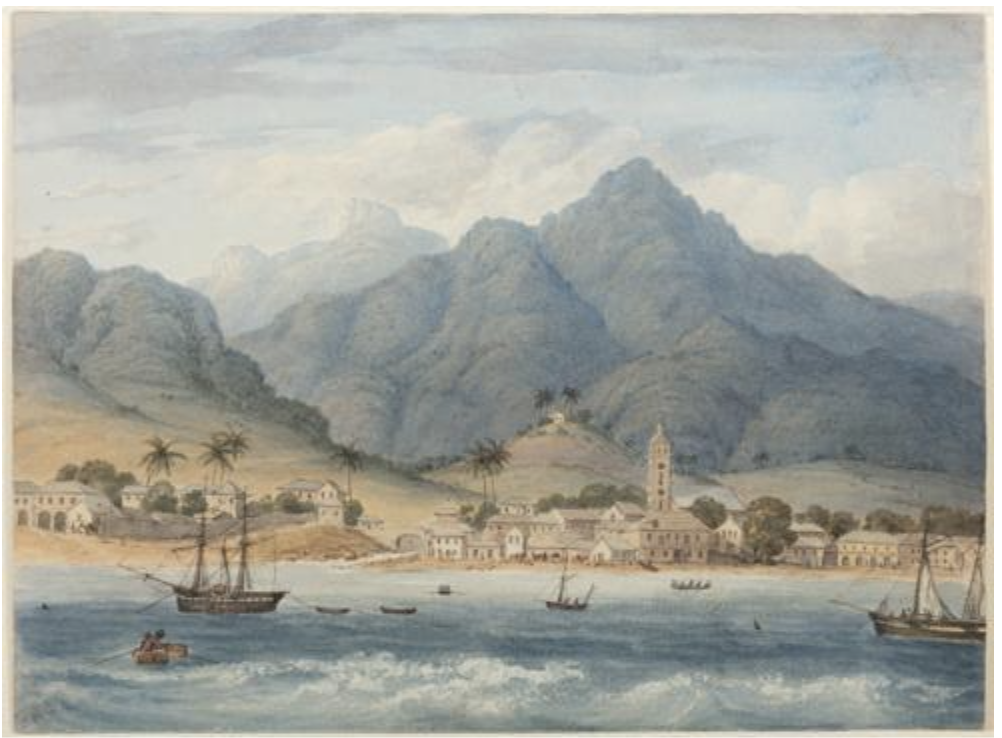
    The watercolor “Kingston, St. Vincent,” painted by John Herbert Caddy in 1845, exemplifies these shifting artistic paradigms. Created by a Canadian-born lieutenant and engineer in the British military (Dictionary of Canadian Biography, n.d.), the painting portrays a tranquil seaside town. Its composition, devoid of human activity yet rich with architectural and natural detail, reflects a serene, picturesque view of the British West Indian colony. The absence of human figures—enslaved or free—underscores a deliberate attempt to decontextualize the island’s fraught history. By analyzing Caddy’s artistic choices in this painting, we can see how his work deviated from earlier 19th-century landscape conventions while simultaneously complicating narratives of the West Indian environment and colonial experience.

    The Painting

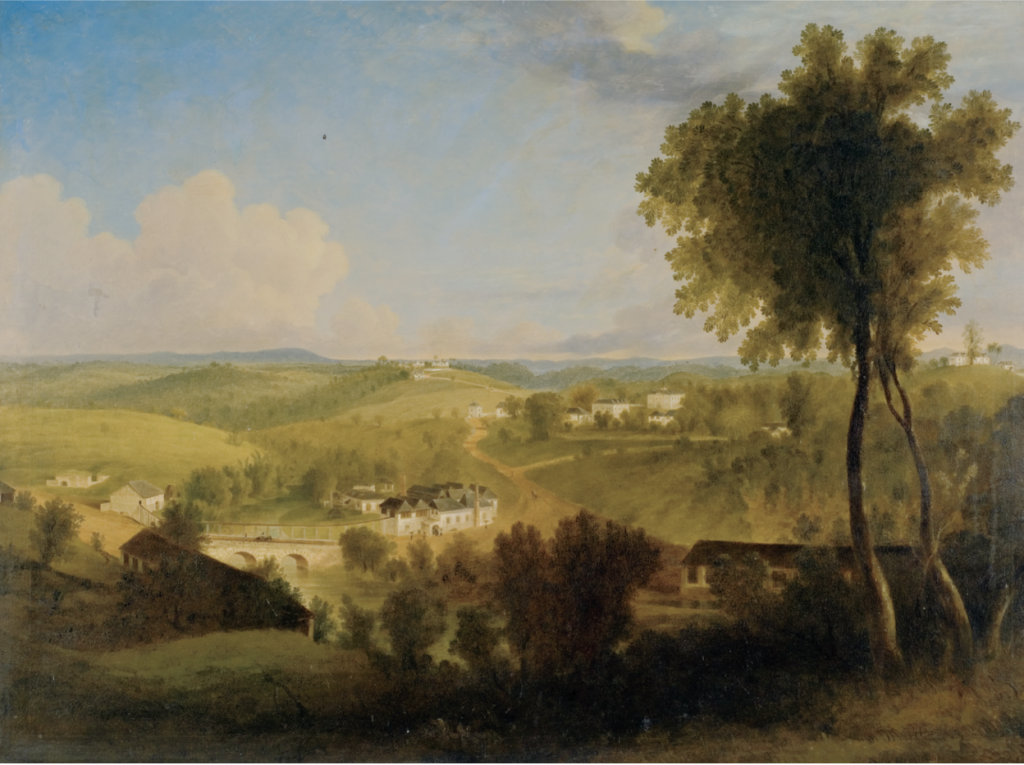
    Caddy’s “Kingston, St. Vincent” (Figure A) employs a layered perspective to guide the viewer’s gaze from the dramatic green hills and cloudy sky in the background, through the tightly clustered town in the mid-ground, to the rippling sea in the foreground. The lush hills and expansive sky dominate the composition, diminishing the man-made buildings and harbor in scale and significance. The muted color palette of greens, blues, beiges, and browns enhances the idyllic tone, suggesting a harmony between nature and civilization.

    Figure A. Lt. John Herbert Caddy, Kingston, St. Vincent, 1845, oil on canvas. Hamilton College eMuseum.

    In the immediate foreground, the ocean waves churn gently, their blue hues echoing the sky. Sailboats and rowboats dot the harbor, indicating economic activity, yet they are portrayed at a scale that emphasizes their insignificance against the grandeur of nature. The town itself, composed of cream-colored buildings interspersed with palm trees, appears orderly and tranquil. However, this orderliness obscures any trace of the social, political, or economic tensions that accompanied emancipation. Human figures are scarce; the two barely discernible men in a small rowboat blend almost seamlessly into their surroundings, reducing them to elements of the landscape rather than active participants.

    The History of Saint Vincent

    Saint Vincent was first inhabited by the Ciboney people, followed by the Arawak people of Venezuela, who were then displaced by the Carib people, who originated from South America (Tolson, Niddrie, & Fraser, 2024). The Caribs intermarried with a group of previously enslaved Africans who had escaped from plantations on other nearby islands. Throughout the 17th century, the Caribs fought off a number of efforts by Europeans to invade and settle Saint Vincent, although they ultimately allowed French settlement in the early 18th century. In 1763, Britain gained control of Saint Vincent with the Treaty of Paris, but the Caribs refused to acknowledge the authority of the British, leading to two wars from 1772—73 and 1795—96. When the Caribs eventually lost, they were exiled from the island, allowing the British to take full control of Saint Vincent. They implemented a plantation economy, which utilized enslaved Africans to produce crops of sugar, cotton, coffee, and cocoa. In 1834, emancipation freed those enslaved and gave them more bargaining power with plantation owners, although competition for work and pay increased later in the century when Portuguese and South Asian workers arrived and sugar prices fell (Tolson, Niddrie, & Fraser, 2024). 

    Caddy’s History 

    Raised in Canada, John Herbert Caddy went to England at the age of 14 to receive a military education at the Royal Military Academy, ultimately becoming an engineer, like his father and others before him, and being trained to execute topographical sketches and paintings (Dictionary of Canadian Biography, n.d.). After rising to the rank of first lieutenant, he married a colonel’s daughter in 1828 and was subsequently posted to a series of West Indian colonies. On location, he kept a diary, with written descriptions of his experiences and excursions, as well as some sketches of the areas he visited, some of them coming to be expanded upon as paintings and published after returning to England. His third posting was in St. Vincent in 1834, where he was reportedly joined by his family. In 1843, he retired from the military and settled with his family in London, Canada, working as a civil engineer and, later, turning his hobby of painting Canadian landscapes into his profession, instructing others privately and as a college professor (Dictionary of Canadian Biography, n.d.).  

    According to the Dictionary of Canadian Biography (n.d.), “Caddy was a painstaking artist who worked slowly and carefully from pencil sketches made on the scene, through sepia drafts, to the finished picture” and “he sometimes completed several versions of the finished landscape.” Still, as a painter who was trained in his art by the military, Caddy’s eye and skill were necessarily focused on different aspects of a landscape and with a different intention in mind than a painter trained in an art school.  As Tom Villemarie noted for the The Sudbury Star (2017), “One part of his education involved learning how to sketch and paint in order to record topographical features for reference, for example for future shelling or building of a road or a fort.” This militaristic and colonial perspective is vital to keep in mind, then, when viewing Caddy’s work, particularly given that his published paintings of St. Vincent and other West Indian locations were drawn from sketches performed on the job in his role as soldier and engineer.  

    Saint Vincent Prior to Emancipation

    Carmichael’s 1833 book, Domestic Manners and Social Condition of the White, Coloured, and Negro Population of the West Indies, provides a first-hand account of Saint Vincent just before Caddy’s arrival. As a plantation owner, Carmichael reflects colonial paternalism, describing being visited by “several of our own people” (p. 5), a phrase that normalizes ownership of enslaved individuals. She dismisses their language as “uncouth jargon” akin to “African tongues” (p. 5), revealing colonial prejudices that devalue African culture and obscure systemic barriers to education. Misinterpreting the enslaved’s “happiness” at seeing their “master” as loyalty (p. 5), she aligns with narratives of contented servitude while ignoring resilience and strategic navigation of power. Although she observes white sailors’ cruelty, such as calling a boy a “black devil” (p. 6-7), her detachment minimizes its significance and omits her complicity. Carmichael admires the productivity of Black people bringing surplus produce to market (p. 4-5), but her praise is tied to colonial profitability rather than agency. On the island, she notes poor clothing among the enslaved (p. 9-10), focusing on appearances rather than systemic deprivation, and criticizes women washing laundry semi-nude (p. 10), reflecting Eurocentric propriety. She describes distrust between Black and “Coloured” people (p. 17), an observation that underscores colonial divisions but avoids critical engagement with exploitation. Complaining of theft and neglect among the enslaved (p. 20), she dismisses these acts as resistance, framing them instead as failures of service. While she describes the “hard life” of a plantation owner’s wife, including moral oversight of the enslaved (p. 21), her focus on supervising labor (p. 22-23) dehumanizes enslaved individuals and ignores the systemic exploitation inherent to slavery. Still, by emphasizing the exhausting nature of the work in Saint Vincent for the supervising plantation owner’s wife, she is also inherently saying that the enslaved there are tasked with doing a tremendous amount of work.

    Perhaps the greatest critique, though, that Carmichael has for the social structure of Saint Vincent comes from her depiction of the children of plantation owners, whom she calls “Creoles.” Carmichael notes how poorly behaved these Creoles are generally and especially how badly they treat the enslaved, as they are “permitted and encouraged to use the negroes, both young and old, tyrannically” (p. 28). This depiction underscores how systemic cruelty is ingrained from childhood, with plantation culture normalizing oppressive behaviors as a status symbol. Still, she excuses this behavior by attributing it to their “totally neglected education” (p. 28), failing to acknowledge how such negligence perpetuates the plantation’s exploitative structures. Her dismissal of the impact on the enslaved—claiming their strong feelings “quickly evaporate” in passionate expressions of emotion (p. 30)—reflects a dehumanizing view that reduces complex human responses to fleeting outbursts, minimizing the psychological toll of systemic abuse. This rationalization not only absolves the Creoles of responsibility but also reinforces colonial justifications for maintaining the social hierarchy. Read another way, though, Carmichael clearly articulates the problems within this system, as, starting from a young age, it makes unfeeling and badly behaving monsters out of those who oppress others.

    Carmichael also describes the vegetation and landscape of Saint Vincent at length. She notes that the landscape showed “mountain heaped upon mountain, in that wild confusion that told of those awful convulsions of nature to which these tropical regions have been subject” (p. 3-4), invoking imagery that situates the island within a narrative of sublime chaos. This depiction reflects a colonial gaze that views the natural environment as both an obstacle and a spectacle, emphasizing its untamed quality while underscoring its utility for plantation economics. Her complaints about “the disadvantages of a tropical climate” (p. 65), including heat and sand, reveal a sense of alienation and discomfort that contrasts with the labor expected of the enslaved, who endured these conditions without reprieve. She notes the decreasing value of West Indian produce and the difficulty of paying staff (p. 63), framing enslaved labor as essential to maintaining profitability, thereby justifying its continuation. Her claim that hoeing—done exclusively by enslaved people—is “literally nothing” due to the lightness of the tools (p. 98-99) trivializes the immense physical toll of such labor, minimizing the suffering inherent in plantation work while reinforcing colonial narratives of enslaved people as naturally suited for hard labor. While this rhetoric reflects broader efforts to obscure the brutality of slavery while presenting the plantation economy as indispensable, it also belies the fact that this enterprise was rapidly failing.

    Landscape in the Atlantic World

    Images of colonies were historically used to “unite and homogenize” the various parts and peoples of the Empire of which they were a part (Auerbach, 2004, p. 47). By using the constructed image of locations that were far-flung and disparate, the artist could provide “a measure of coherence and control” not available to the individual traveler or the government worker waiting on (Auerbach, 2004, p. 48). Within the colonial framework, an artist could “conceal the hardships and beautify the frequently unpleasant surroundings that characterized life in the imperial zone, refracting local people and conditions through a single, formulaic lens” (Auerbach, 2004, p. 48). These efforts are evident in Joseph Bartholomew Kidd’s oil painting “Good Hope, circa 1835—1836” (Figure A). Treating distant lands, including to the island of Saint Vincent, to this formulaic, unifying lens allowed those within the Empire to relate to, embrace, and even feel possessive of these far-off places.

    Figure B. Joseph Bartholomew Kidd, Good Hope, circa 1835—1836. Oil on canvas. 

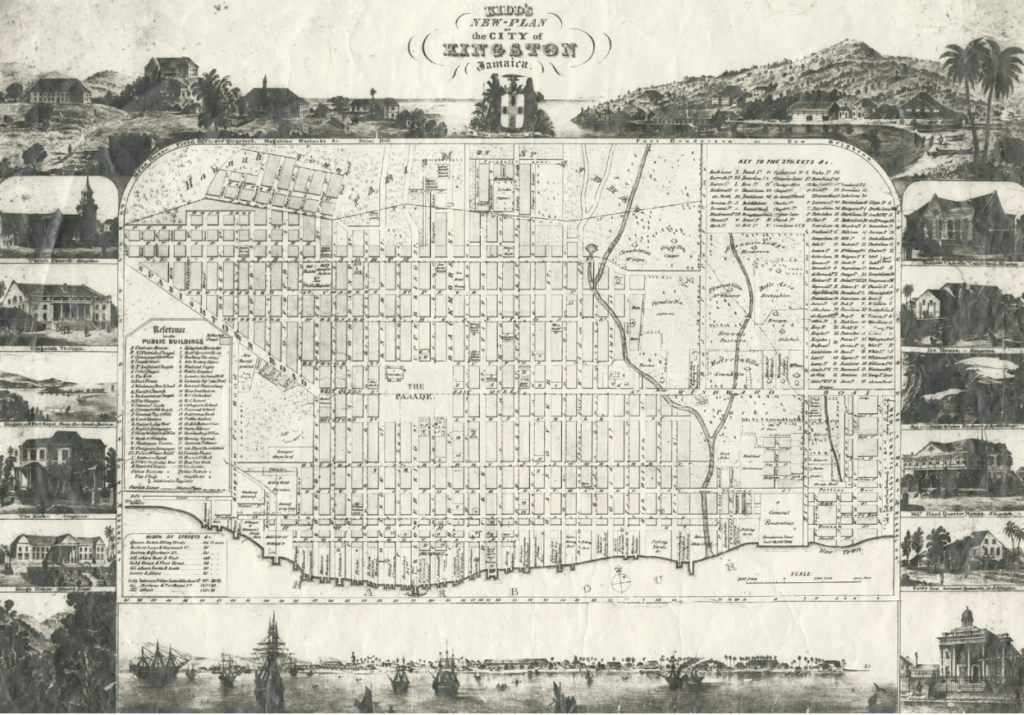
    Landscape depictions of the West Indies often strove to show the order made by colonialism out of chaos, how the wild ways of the land and the bodies it subjugated were brought under control and made prosperous, commercial, worthy of investment, and able to fill the viewer/consumer with contentment. In considering a map of Kingston, Jamaica made by artist Joseph Bartholomew Kidd in the mid-19th century (Figure B), Jaffe (2018) discusses the ways in which West Indian towns were created in an urban grid plan in an attempt “to imprint colonial order onto a potentially unruly social and physical landscape the aftermath of emancipation” (p. 73). Colonial planners and those who executed their wishes—that is, military engineers, like Caddy—expressed their authority through the buildings and streets they constructed even down to their “dimensions, materials, styles, or colors” (Jaffe, 2018, p. 73). Jaffe explains, “Urban planning was often directed toward controlling the black and low-income populations, and impressive architecture served to bolster ideas of European civilization” (p. 73). Discussing the landscape images presented alongside the map of Kingston, Jaffe also encourages us to notice both what is included in such as depictions, as well as what is not, for example, ”some two dozen calmly floating sea vessels demonstrating the port’s posterity,” as well as its lack of people: “the map’s version of Kingston seems to ignore the presence of the urban majority, composed of newly freed Afro-Jamaicans” (p. 75). Turning this perspective to Caddy’s painting of Saint Vincent, we see some of the same themes: grand and orderly buildings all of similar hues and European design, an active harbor of boats, and an overwhelming lack of people.  

    Figure C. Joseph Bartholomew Kidd, Kidd’s New Plan of the City of Kingston, Jamaica, 1854. 

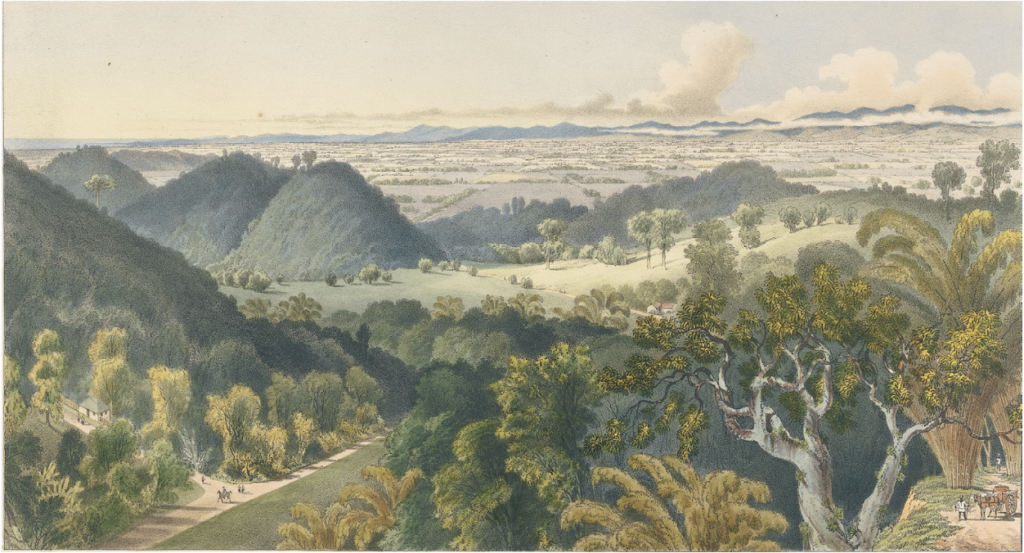
    Emancipation didn’t just change the relationships and economy in the colonies, but also changed the messages that artists and their sponsors wanted to share with potential investors and tourists about the location. Barringer (2018) notes how, at the time of emancipation, visual representations of the land of nearby Jamaica were changing. Prior to 1838, when enslaved people gained their freedom, artists generally focused on the sugar crop and its wealthy proprietors, utilizing “the vocabulary of the picturesque to present the island’s agrarian landscapes as elegant and tranquil and its great houses as the epitome of opulence and refinement” (Barringer, 2018, p. 282). With emancipation, though, the relationships between the plantation owners and their workforce changed dramatically. There was unrest, uncertainty, and difficulty for plantation owners to find the workers they needed. Despite—or perhaps because of—reports in the press of “the febrile and unsettled condition of the colony…[Scottish artist Joseph Bartholomew] Kidd, reassuringly, presents an eyewitness account of a Jamaica that appears static and peaceful” (Barringer, 2018, p. 288).  After emancipation, promoters sought to use images of West Indian colonies to emphasize the health, vitality, and fecundity of the land, functioning as glowing advertisements more so than accurate artistic reflections. These efforts were created to combat the belief that the islands had been “ruined” by emancipation (Thompson, 2011, p. 45). One such example is that of Joseph Bartholomew Kidd’s “Distant Views of the Plains of Westmoreland” (Figure C). Caddy’s idyllic, fertile, lush presentation of Saint Vincent indicates a wish to return the town to this perceived contented, peaceful, and organized state prior to emancipation. 

    Figure D. Joseph Bartholomew Kidd, Kidd’s New Plan of the City of Kingston, Jamaica, 1854. 

    The bodies of those depicted in images of the West Indies also changed with emancipation. Prior to emancipation, Barringer (2018) continues, “The human body played a limited role in Jamaican art…black figures were generally represented as servants or deployed only in the middle distance of agricultural scenes, peacefully at work” (p. 282). Yet, with the declaration of emancipation came a belief that Africans were predisposed to idleness, even that emancipation was a failure for not having taught enslaved people to enjoy voluntary work, and this stereotype carried over into art as depictions of Afro-Jamaicans as lazy and only seeking to fulfill their immediate desires. Still, images of black workers were often conflictual—at times, they were shown as lounging and eating the crops they are meant to sell, while others showed them as “industrious and disciplined laborers—qualities that would appeal to new business investors” (Thompson, 2011, p. 46-47).  Given that Caddy’s original sketch occurred the same year that Saint Vincent passed emancipation, the nearly complete lack of humans in his landscape seeks to subtract the humans that reside here completely, as well as any political and rifts, riots, and conflicts occuring in Saint Vincent leading up to or following this major change.

    Caddy’s Perspective

    Given that Caddy was stationed on Saint Vincent in 1834, he would have witnessed the early days of the emancipation of the island’s enslaved people—perhaps even the very day it took effect. Undoubtedly, 1834 was one of great flux in Saint Vincent, as power and the island’s economy shifted to incorporate the new rights of its formerly enslaved inhabitants. It is intriguing then that Caddy’s landscape shows so few people and so little action at all, none of the usual hustle and bustle of a port, nor any signs of the strife or upheaval one would expect from such events. Considering Caddy’s depiction of this West Indian colony at this moment in time from his perspective as an engineer for the British military, we can see the ways in which Caddy was trained to remove people from landscapes in order to focus on the utility and/or problems with the land and how it could be manipulated. Additionally, given that this image was first captured in his sketchbook while he worked and then redrawn and painted later, much after the fact and from a distance, gives us some indication that he was motivated to portray the island in a way that both romanticized nature and looked back sentimentally at the physical aesthetics of imperialism. The people were removed out of habit, by instruction, and for simplicity—the people who could have been in the picture—enslaved or free, master or businessman—complicated the beauty of the land and could be subtracted to preserve what was naturally beautiful and that which he admired from his work as an engineer—the calm, organizing presence of cream-colored structures.  

    Conclusion

    John Herbert Caddy’s “Kingston, St. Vincent” encapsulates the complex interplay between art, colonialism, and historical transformation in the mid-19th century Caribbean. By employing a serene composition and omitting human figures, the painting constructs a vision of harmony that masks the island’s turbulent social realities. As a product of its time, Caddy’s work reflects both the aspirations of colonial narratives and the anxieties surrounding emancipation and its aftermath.

    Ultimately, this painting invites viewers to critically consider how art can simultaneously reflect and distort historical truths, offering a curated vision of the past that serves specific ideological ends. By situating “Kingston, St. Vincent” within its historical and artistic contexts, we gain insight into the ways landscape art has been used to shape collective memory, obscure injustices, and reinforce systems of power. At the same time, the painting’s beauty and technical skill remind us of the enduring power of art to evoke reflection, even as it conceals as much as it reveals.

    References

    Arabindan‐Kesson, A. (2022). Transmission and Transfer: Plantation Imagery and Medical Management in the British Empire. Art History, 45(3), 472–497. https://doi.org/10.1111/1467-8365.12660

    Auerbach, J. (2004). The picturesque and the homogenisation of empire. The British Art Journal, 5(1): 47–54. http://www.jstor.org/stable/41614516.

    Barringer, T. (2018). Land, Labor, Landscape: Views of the Plantation in Victorian Jamaica. In Victorian Jamaica (pp. 281-). Duke University Press. https://doi.org/10.2307/j.ctv11hpgxv.36

    Breen, H. H. (1844). St. Lucia: Historical, statistical, and descriptive. Henry Hegart. 

    Caddy, John Herbert. Kingston, St. Vincent. 1845. Watercolor on Paper. Accessed October 23, 2024. https://emuseum-2022.hamilton.edu/objects/37/kingston-st-vincent?ctx=6936dfcc60d0f66ac0c78f200ed0b75d01f76046&idx=3

    Carmichael, M. (1833). Domestic manners and social condition of the white, coloured, and  negro population of the West Indies (Vols. 1–2). Whittaker, Treacher, and Co. Dictionary of Canadian Biography. “Caddy, John Herbert.” Accessed October 23, 2024. https://www.biographi.ca/en/bio/caddy_john_herbert_11E.html.

    Hamilton College eMuseum. “Lt. John Herbert Caddy.” Accessed October 23, 2024. https://emuseum-2022.hamilton.edu/people/190/lt-john-herbert-caddy.

    Jaffe, R. (2018). Kidd’s new plan of the city of Kingston, Jamaica, 1854. In Victorian Jamaica (pp. 73-75). Duke University Press. https://doi.org/10.2307/j.ctv11hpgxv.36

    Thompson, K. (2011). The Evidence of Things Not Photographed: Slavery and Historical Memory in the British West Indies. Representations, (113), 39-0_4. https://doi.org/10.1525/rep.2011.113.1.39

    Tolson, R., Niddrie, D.L., & Fraser, A. (2024, October 29). Saint Vincent and the Grenadines. Encyclopedia Britannica. https://www.britannica.com/place/Saint-Vincent-and-the-Grenadines

    Villemarie, T. (2017, January 15). Caddy was a pro painting early Ontario. The Sudbury Star. https://www.thesudburystar.com/2017/01/15/caddy-was-a-pro-painting-early-ontario

    Wen, X., & White, P. (2020). The Role of Landscape Art in Cultural and National Identity: Chinese and European Comparisons. Sustainability, 12(13), 5472. https://doi.org/10.3390/su12135472

  • History and Ideology in George Catlin’s Depictions of American Indians: Osceola of Florida

    By Gabby Johnson

    George Catlin, Osceola of Florida, 1838. Lithograph with hand coloring. Composition: 26 ¼ x 19 ½ in. Wellin Museum of Art at Hamilton College. 

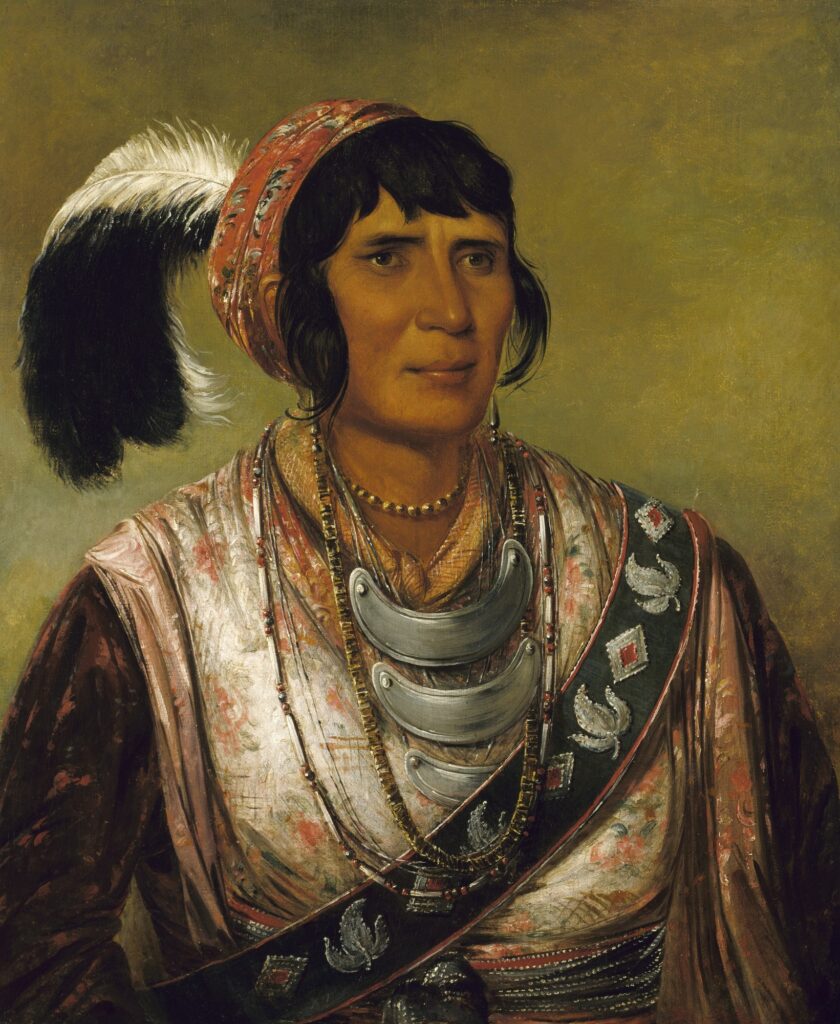
    George Catlin was a prolific artist who extensively represented American Indian people throughout the nineteenth century, both in his paintings and writings. Among the many artworks he created is a hand-colored lithograph titled Osceola of Florida that was produced in 1838 and can be seen above. This work depicts the titular figure, Osceola, who was a relatively well-known leader of the Seminole tribe of American Indians in Florida. In this full-length portrait, Osceola has been represented in a mostly desolate landscape with one prominent rock in the foreground and is wearing multiple layers of clothing, including a tunic, a jacket, leggings, and boots. He has also been depicted with accessories such as bracelets, necklaces, a headband, and a satchel, in addition to a gun that he has propped against the ground, showing audiences that this weapon is almost as tall as he is. While this depiction of Osceola may appear highly detailed and realistic at first glance, understanding historical context such as the abusive treatment of American Indian tribes by the United States government, and knowing biographical information about both Osceola and Catlin, provokes questions about whether this lithograph is truly as documentary as it initially seems to be. Modern scholars still debate whether Catlin’s intentions were as benevolent as he claimed them to be and discussions about his true motivations for creating so many artworks of American Indians are ongoing. Regardless of his true intentions, Catlin produced artworks that romanticized American Indian life and culture in ways that were not always accurate, but that instead made his commercial success more likely.

    The United States government has a long history of implementing policies that were intended to either assimilate or harm American Indian tribes, background that is important to know because it informs the context in which Catlin was working and the ideologies that he was exposed to and may have held. The American government began efforts to remove tribes from their Native lands beginning in the early nineteenth century and Congress passed the Indian Removal Act in 1830 (Dippie 1982, 68). This policy allowed the government to take over Native land and instead give it to White settlers by forcing tribes who lived east of the Mississippi River to march to their newly appointed territories in Oklahoma. These forced marches are most commonly known today as the Trails of Tears and not only displaced over sixty thousand American Indian individuals, but also resulted in over one thousand deaths. The Indian Removal Act demonstrates how the U.S. government clearly prioritized the lives and land rights of White Americans over American Indians in the nineteenth century and is a policy that most members of the American public were aware of. It is therefore likely that Catlin was also aware of this governmental action, and while it is possible that he commented on it in one of his many writings, there is also visual evidence in his artworks to suggest that he was aware of this harmful policy.

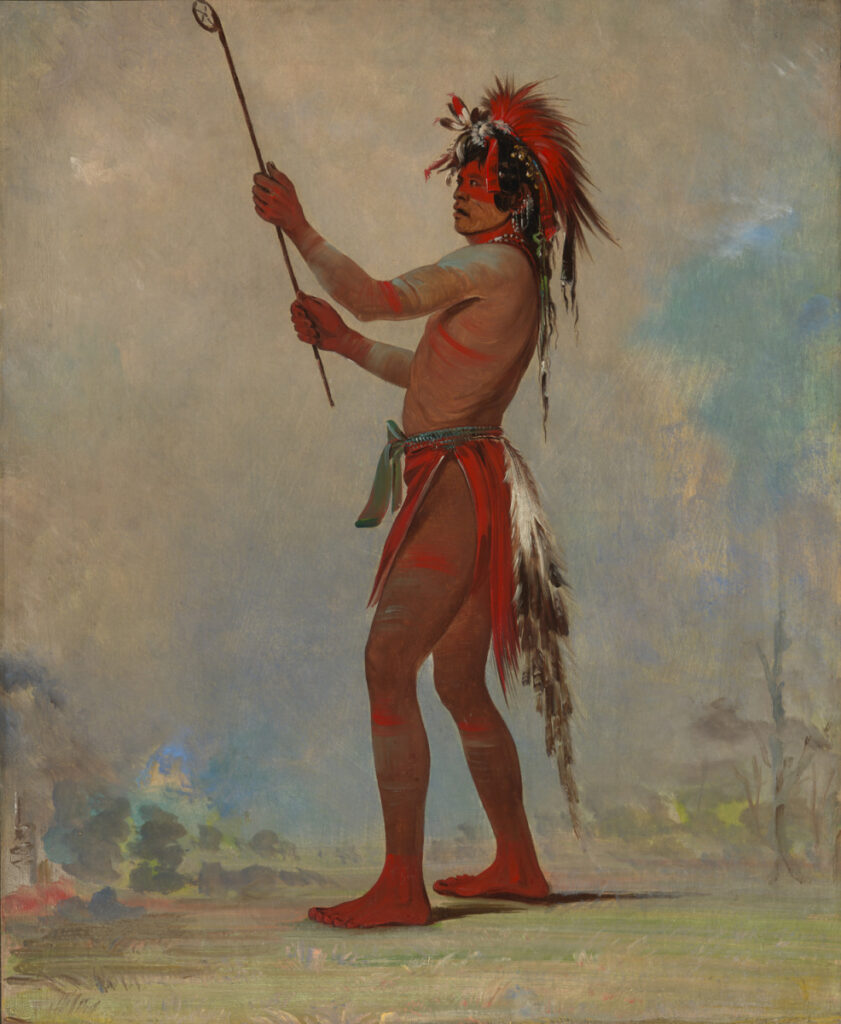
    In Osceola of Florida, Osceola himself is the primary subject and there are few environmental features surrounding him to take the viewer’s attention away from him. Instead, he has been depicted standing within a hazy and desolate landscape; the only identifiable environmental elements in this lithograph are the few rocks that appear on the ground that Osceola is standing on. The barren landscape in this artwork was not unique to Osceola of Florida, however, and several of Catlin’s other artworks included similarly vague and unidentifiable landscapes in the background. This similarity is demonstrated by comparing Osceola of Florida to the painting We-chúsh-ta-dóo-ta, Red Man, a Distinguished Ball Player, seen below. In reality, the individuals that Catlin depicted lived in or near landscapes with identifiable elements, including local trees, flowers, rock formations, lakes, rivers, or other elements of the natural world. Knowing that Catlin could have included these types of environmental features in his artwork but evidently chose not to suggests that he may have made this representational choice for a particular reason. More specifically, representing American Indian individuals in vague and desolate landscapes, rather than within the identifiable landscapes of their respective homelands, may have been designed to denote the loss of homeland that many tribes were experiencing at this time. Depicting Osceola within an almost blank background rather than within the lush and semi-tropical environment that he had grown up in, for example, draws attention to the potential loss of that land for Osceola and the rest of the Seminole tribe. The desolate landscape represented in Osceola of Florida thus supports the idea that Catlin was not only aware of the policies that the United States government was enacting against American Indian nations, but also that he perhaps intended to draw wider attention to these situations.

    George Catlin, We-chúsh-ta-dóo-ta, Red Man, a Distinguished Ball Player, 1835. Oil on canvas. 29 x 24 in. Smithsonian American Art Museum.

    While mostly barren, the landscape in Osceola of Florida includes a detailed signature that suggests that Catlin intended to draw attention to his artistic prowess in addition to pointing out the governmental policies and actions that were actively displacing American Indian tribes. This signature can be seen in the large rock in the bottom left corner of the lithograph, seen in the image below this paragraph. Although these rocks appear unassuming at first glance, the largest one looks as if it has been inscribed with information about the production of this lithograph, including its title, the name of the artist, its publisher, and the year it was produced. While Catlin’s motivation for including this information within the composition itself is not entirely apparent, it might have functioned as an alternative form of his signature that highlighted Catlin’s responsibility for the production of this artwork. Such motivations for including a unique signature were not unprecedented in art and can also be found, for example, in works produced by several artists working throughout the Americas in the late seventeenth century, including Cristóbal de Villalpando and Juan Correa. By including highly visible signatures within their work, artists working in the “New World” reflected their aspirations to deploy “European pictorial motifs and textual conventions” and to credit themselves with being the “inventor” responsible for employing these techniques (Hyman 2017, 104). Catlin may have had a similar motivation for including this unique and informative signature in Osceola of Florida, perhaps wanting to remind viewers that he was the “genius” responsible for creating this impressive portrait. By making his own name highly visible, rather than Osceola’s, Catlin emphasized his own role in producing this portrait and did not credit the fact that Osceola’s reputation helped draw significant attention to this portrait. This decision further suggests that he intended to produce commercially successful artworks by providing audiences with a strong reminder that he was the individual responsible for this impressive artwork’s production.

    Detail from George Catlin, Osceola of Florida, 1838. Lithograph with hand coloring. Composition: 26 ¼ x 19 ½ in. Wellin Museum of Art at Hamilton College. 

    Policies like the Indian Removal Act were not the only governmental actions that shaped Catlin’s ideas about American Indian people, and military conflicts such as the Seminole Wars, a series of conflicts between the United States military and the Seminole tribe, likely further contributed to the ideologies he held. This conflict is particularly relevant to considerations of Osceola of Florida because Osceola was not only a member of the Seminole tribe, but was also a significant member of their military force in the first few decades of this forty-year long conflict. The Seminole Wars were “were a series of battles motivated by a Southern brand of settler colonialism, which aimed to expand the new United States by transforming all the American South from Indian land to the land of cotton,” further exemplifying the United States government’s aim to take land from American Indian tribes for the purpose of benefiting White settlers (Oertel 2023, 19). Most Americans, including Catlin, were aware of this conflict and the important figures involved in it, including Osceola. Being exposed to this knowledge about the Seminole Wars and about Osceola likely shaped subconscious ideologies that Catlin held and may have additionally influenced the way he chose to compose Osceola of Florida.

    Knowing about Osceola’s biography and significance as a historical figure can further clarify Catlin’s motivations for making this portrait and for representing Osceola as he did because Catlin himself would have known, and perhaps been influenced by, this information. Osceola, who lived between 1804 and 1838, was a member of the Seminole tribe of Florida and was renowned for his “powers of fortitude, activity, and endurance,” qualities that resulted in his being named the first war-chief of the nation (Jerdan 1838, 364). Beyond being well known to other members of the Seminole tribe, Osceola also became known to more general American audiences due to his military significance. This recognition was further enhanced when Osceola was captured and imprisoned by U.S. military officials in late 1837, only months before his untimely death while in prison, which was caused by illness (Hight 1990, 121). Osceola thus occupied a semi-prominent position within the American imagination due to his military prowess and significant role in the Seminole Wars. This reputation likely influenced Catlin’s desire to depict Osceola because he knew that such a portrait would gain attention from a wide audience of Americans familiar with Osceola, attention that would in turn benefit Catlin by exposing more people to his work.

    Having this background information about Osceola as a historical figure clarifies that his portrait in Osceola of Florida was romanticized, even though it initially appears to be documentary. Osceola appears to be in peak health in this lithograph and is standing strong, looking similar to what audiences would expect from a renowned military leader. In reality, however, Catlin created this image of Osceola only days before his death, a period during which he would not have genuinely appeared this healthy and strong (Hight 1990, 121). Instead, Osceola would have looked weak, pale, and otherwise unhealthy at this time. None of these traits have been depicted in this portrait, however, indicating that Catlin was not working entirely from life when he produced this representation but instead romanticized particular elements to make Osceola appear stronger than he looked in reality. Catlin likely took this approach because he knew that audiences would be more interested in seeing a portrait of Osceola that matched his reputation as a strong and fierce military leader than they would be in seeing a weak depiction of him, regardless of whether such a representation was true to life. Catlin’s decision to represent Osceola differently than he appeared in life when making this portrait demonstrates his awareness of and concern for the commercial success of his portraits, which was based upon their reception by audiences and thus the expectations and ideologies that these viewers held, particularly about people that they considered to be “Other” from them.

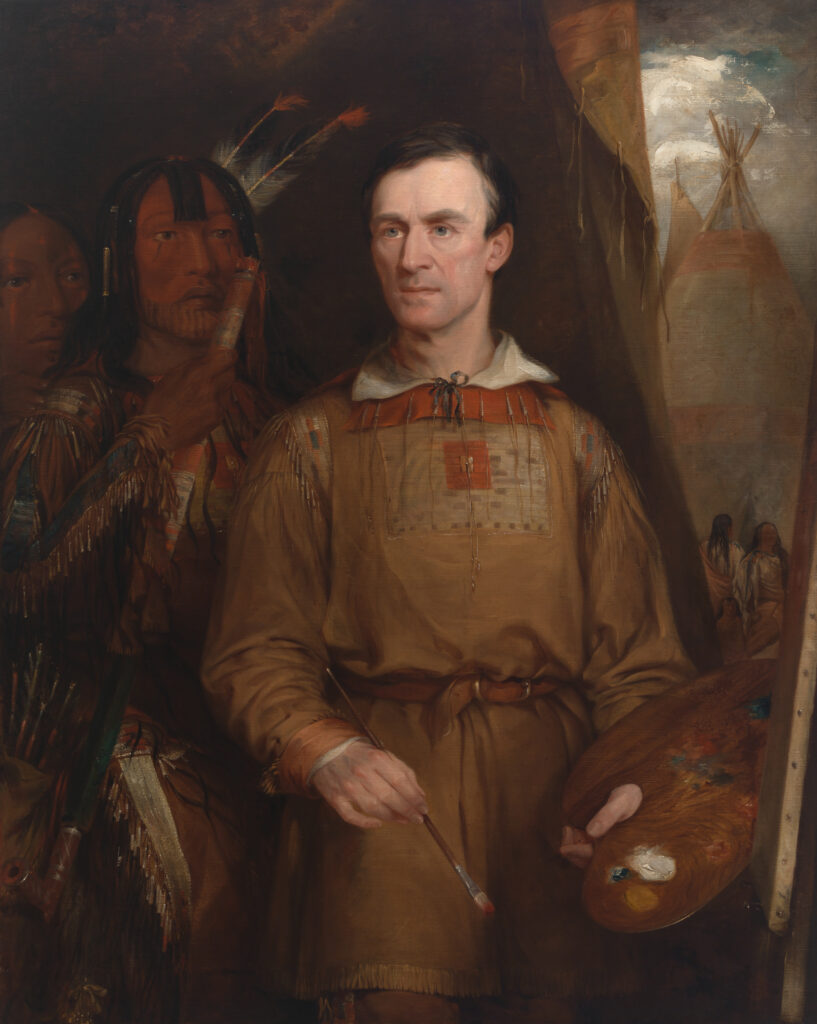
    While it is necessary to know about Osceola in order to better understand Catlin’s reasons for producing this artwork, knowing information about Catlin himself can also make his motivations for producing this work clearer. Born in 1796, Catlin was a lawyer before he became an artist, author, and explorer who devoted himself to documenting the lives and cultures of American Indian tribes throughout the United States. He claimed that “The history and customs of such a people are themes worthy of the lifetime of one man, and nothing short of the loss of my life shall prevent me visiting their country, and of becoming their historian,” a goal that is particularly noteworthy in the context of the U.S. government’s contemporaneous attempts to remove tribes from their Native lands (Knox and Edward W. Root Art Center 1980, Introduction). Catlin’s goal to document as much of American Indian life and culture as he could prompted him to travel extensively and resulted in the production of hundreds of artworks and several writing collections throughout his life. Much of this work became of ethnographic interest to scholars both during and after his life, contributing to Catlin’s status as a renowned scholar and historian whose work remains highly discussed, if controversial, today.

    William Fisk, George Catlin, 1849. Oil on canvas. Frame: 158.8 x 133.4 x 7 cm. National Portrait Gallery, Smithsonian Institution.

    Catlin’s allegedly positive motivations for documenting the lives of American Indians is variously supported and discredited by certain actions he took, further complicating the way that his artworks and their imbued ideologies can be understood today. Evidence for Catlin’s good intentions partly lies in his efforts to hold the U.S. government and fur companies accountable for their abusive treatment of American Indian tribes, as well as in the fact that he did not explicitly discredit Indigenous knowledge in the manner that most scholars and colonists tended to do at the time (Knox and Edward W. Root Art Center 1980, A History Of Catlin’s Indian Gallery). Discrediting Indigenous knowledge was a particularly pervasive problem in colonial South America, where the contributions that Indigenous people (as well as women and African people) made to scientific, inventive, and artistic developments were often overlooked or ignored (Ospina 2023, 923). In particular, Indigenous communities in colonized areas often held particular local knowledge, such as about local materials and environments, that were used to create several products, including, for example, cosmetics. While most colonists and settlers throughout the world ignored the role that Indigenous communities played in providing environmental upkeep and information about local materials, it does not appear that Catlin engaged with these ideologies. Although he did not necessarily use resources that relied on the environmental knowledge of American Indian tribes, it is important to note that Catlin attempted to defend these nations from exploitative fur companies who did not credit American Indian communities for the methods they used to keep the population of fur-providing animals healthy, nor did these companies replicate such practices. Catlin was aware of these ideologies and yet fought against them, supporting the argument that he had genuinely good intentions in his pursuit to document American Indian life throughout the United States.

    Although there is evidence to support the argument that Catlin chose to document the lives of American Indian people out of a true desire to help them in the face of abusive government policy, it must also be acknowledged that there were multiple instances in which he acted irreverently toward or harmed the very communities he claimed to be trying to help. One notable instance of his disrespect occurred when Catlin told members of the Dakhóta nation that he would be traveling to a particular quarry to collect samples of the iŋyaŋša stone found there. He blatantly ignored the tribe’s required protocols to access and obtain this culturally significant stone and instead journeyed there independently, taking pieces of the stone for himself once he arrived (Johnson 2020, 4-6). If Catlin was truly as focused on aiding and protecting American Indian communities, including the Dakhóta tribe, as he said he was, it seems as though he should have decided not to visit the site of the iŋyaŋša stone in this moment. His choice to disregard the usual protocols of this tribe and instead prioritize his own interests indicates that Catlin was not always as focused on helping or bringing attention to the plight of American Indians as he claimed to be. Additionally, Catlin later displayed the stone pieces that he collected from this quarry, an exhibition that ultimately promoted colonization of this area due to the mineralogical value of the stone, furthering the harm that Catlin perpetuated against the Dakhóta tribe (Johnson 2020, 7). Understanding Catlin as an individual, including his ideologies and motivations for producing his artwork, is important information to have when examining these works because it can clarify whether these implicit ideas are visible in any of his works and should impact the way we view them today. This information may also impact the way that modern scholars think about his traveling “Indian Gallery,” as he named it, and his motivation for curating this exhibition.

    Several of the artworks and writings that Catlin produced were ultimately housed in his “Indian Gallery,” the construction of which further complicates an understanding of Catlin as solely benevolent toward and defensive of American Indian communities. In addition to the artworks and writings that he produced, Catlin included ethnographic artifacts that he had collected within this exhibition, such as the stone that he stole from the Dakhóta nation’s stone quarry. This exhibition not only traveled to cities throughout the United States, but also spent several years in London (Knox and Edward W. Root Art Center 1980, A History Of Catlin’s Indian Gallery). Although this exhibition was objectively popular and attracted large audiences, Catlin was disappointed that “the admission fees barely covered the cost of transportation, catalogs, showbills, and advertisements,” leaving little money left for him (Knox and Edward W. Root Art Center 1980, A History Of Catlin’s Indian Gallery). While this exhibition was designed with the apparently positive intention to educate “civilized” society about the lives and cultures of American Indians, this mission problematically reinforced the exoticization and othering of American Indian communities that was already imposed through U.S. governmental policy and general public prejudices against Indigenous populations. Additionally, this exhibition provided Catlin with his primary means of living for some time, making the sale of exhibition tickets important to him so that he could personally profit from them. Despite his allegedly educational and positive motivations for constructing his “Indian Gallery,” the fact that Catlin actively profited off of this enterprise complicates the idea that he designed it with only these ideas in mind and instead suggests that he was aware of and focused on marketing tactics that would allow him to be commercially successful.

    The lithograph Osceola of Florida provides an effective case study for understanding the ideologies and motivations that influenced artworks produced by George Catlin. While he claimed that his depictions of American Indian populations were motivated by efforts to historically document and draw attention to the harmful policies that the United States government perpetuated against these tribes, it cannot be ignored that Catlin was also motivated by efforts to be commercially successful. This desire to gain professional and financial success through these artworks and his traveling ethnographic gallery prompted Catlin to romanticize some of the artworks he created, including his portrait of Osceola. Beyond demonstrating that Catlin was not always as respectful and well-intentioned as he portrayed himself to be, this information prompts additional questions about the ideologies that have informed the continued collection and discussion of Catlin’s work today. One wonders, for example, why Walter Beinecke, the previous owner of Osceola of Florida, was motivated to purchase this lithograph for his personal collection. Did he recognize the historical value that was imbued into this work through the identities of its subject and artist, or did he simply think it was an “interesting” representation of a Seminole man? Questions such as this have yet to be examined and provide a clear direction for future art historical scholarship that continues to consider figures like George Catlin, Osceola, or even Walter Beinecke.

    Bibliography

    Dippie, Brian W. 1982. The Vanishing American: White Attitudes and U.S. Indian Policy. University Press of Kansas. ACLS Humanities EBook. 

    Hight, Kathryn S. 1990. ““Doomed to Perish”: George Catlin’s Depictions of the Mandan.” Art Journal 49 (2): 119-124. https://doi.org/10.2307/777191.

    Hyman, Aaron M. 2017. “Inventing Painting: Cristóbal de Villalpando, Juan Correa, and New Spain’s Transatlantic Canon.” The Art Bulletin 99 (2): 102-135. 

    Jerdan, William. 1838. “Osceola, of Florida.” The Literary Gazette: A Weekly Journal of Literature, Science, and the Fine Arts, June 9. https://www.proquest.com/docview/5088119?pq-origsite=primo&sourcetype=Historical%20Periodicals.  

    Johnson, Annika K. 2020. “George Catlin, Artistic Prospecting, and Dakhóta Agency in the Archive.” Art Journal 59 (1): 4-23. https://doi.org/10.1086/709258. 

    Knox, Peter Gaillard, and Edward W. Root Art Center. 1980. New Indian Gallery: American Indian Art and Prints by George Catlin. Edward W. Root Art Center. 

    Oertel, Kristen T. 2023. “The “First” Emancipation Proclamation: Black Rebellion, Removal, and Freedom During the Seminole Wars.” Civil War History 69 (4): 11-35. https://dx.doi.org/10.1353/cwh.2023.a912507. 

    Ospina, Catalina. 2023. “Indigenous Knowledge and Women’s Cosmetics: Mopa Mopa in the Colonial Northern Andes.” Art History 46 (5): 918-945.

  • Imperial Ideals and Visual Propaganda: Exploring George Thompson’s The Taking of the French Island of Martinique in The West Indies On February 24, 1809″

    By: Peter Canterino

    Introduction

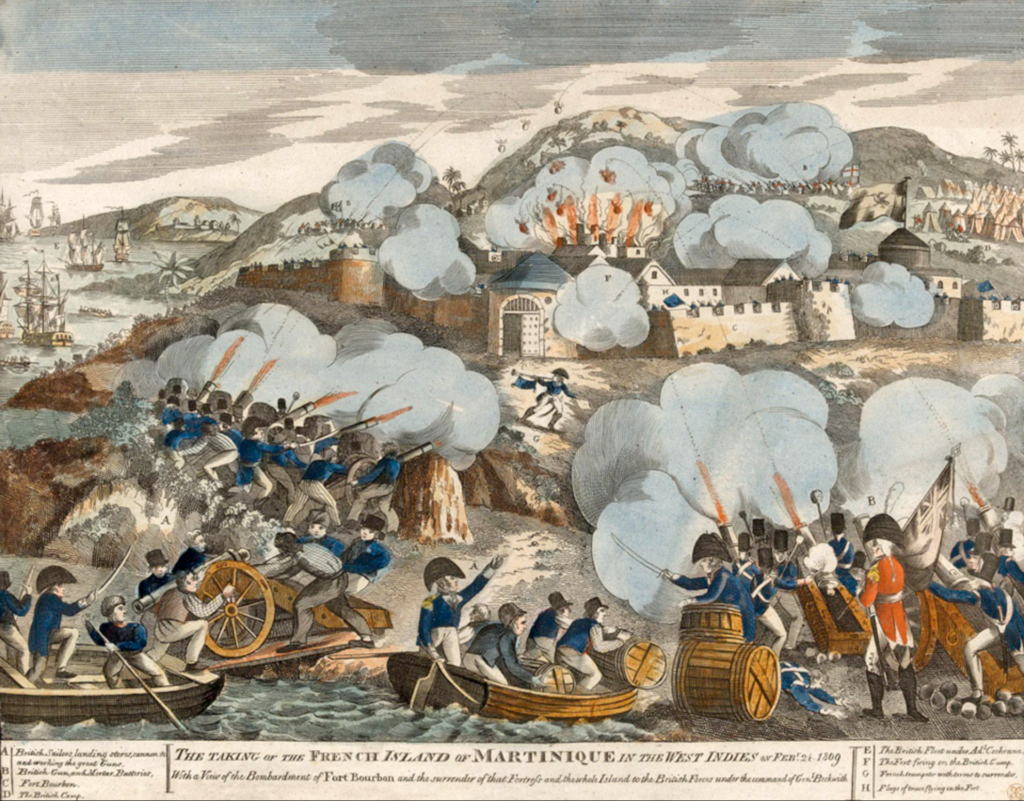
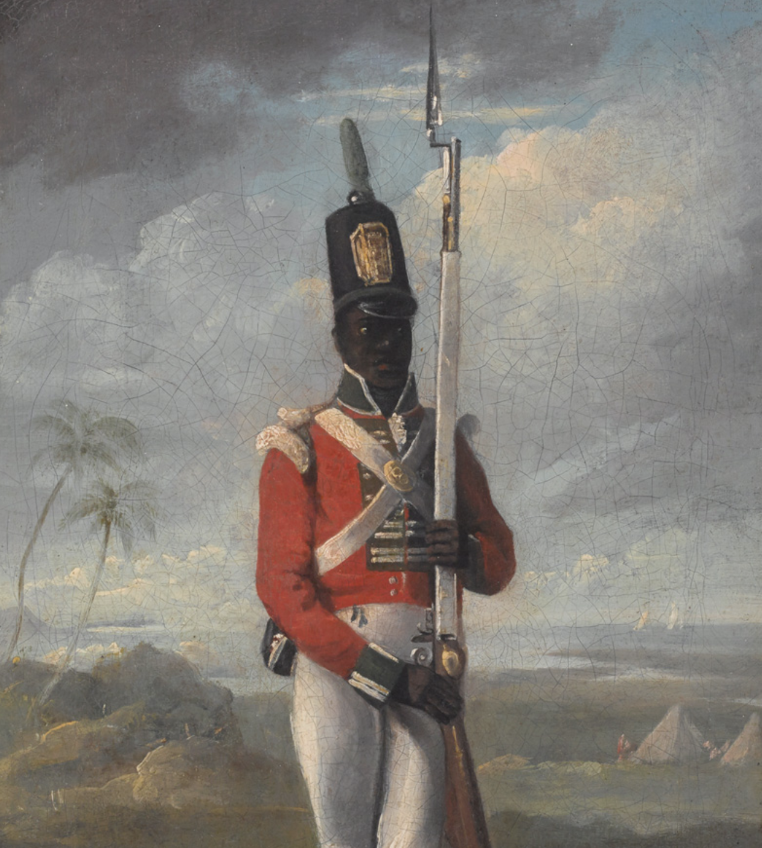
    George Thompson’s The Taking of the French Island of Martinique in The West Indies On February 24, 1809 is an engraving with hand coloring, measuring 32.9 × 45.2 cm, that vividly captures the British capture of Martinique during the Napoleonic Wars. This dynamic battle scene showcases white British soldiers landing ashore in small boats and fearlessly engaging the French forces in an overwhelming display of dominance. The composition of the artwork emphasizes British naval and military superiority, portraying a decisive victory where no British casualties are visible. British cannons, infantry and warships dominate the landscape. By omitting the significant losses – including the deaths of 97 British soldiers and injuries to another 365 men – Thompson’s work emerges as a piece of artwork which was used as propaganda that reinforces the British imperial narratives of military invincibility and superiority. It also neglected to depict any black British forces which were also paramount towards achieving this landmark victory. This engraving, produced during a time when colonial territories such as Martinique were central to Britain’s economic and political supremacy, serves as a visual and ideological tool that supports the British imperial project. Its portrayal of the British forces as both dominant and unscathed simplifies the complexities of the conflict, sanitizing the brutal realities of war serving to amplify the power and superiority of the British forces as a nation. This essay seeks to answer a central question: How does George Thompson’s The Taking of the French Island of Martinique in The West Indies On February 24, 1809 function as British propaganda, and how does it shape public perception of the Napoleonic Wars and Britain’s imperial project? To address this question, the analysis will examine the engraving within its historical, cultural, and economic contexts, drawing upon a range of primary and secondary sources to situate Thompson’s work within a broader lens of imperial narratives.

    Black British Soldiers who were omitted from George Thompson’s The Taking of the French Island of Martinique in The West Indies On February 24, 1809

    Is this image “Art” or is it more?

    Carolyn Dean’s critique of the term “art” in her essay The Trouble with the Term Art provides a valuable lens for examining the cultural and ideological dimensions of George Thompson’s The Taking of the French Island of Martinique in The West Indies On February 24, 1809. Art can be a powerful, universal weapon to promote ideas and is immune to the limits of language. Everyone who can see, can be impacted by its message. Dean argues that categorizing objects as “art” often abstracts them from their functional, cultural, and historical contexts, obscuring their roles as instruments of power and ideology. It makes one consider the motives driving the creation of such portraits. Is it art, or is it propaganda? Thompson’s engraving, when framed solely as a work of “art,” risks being perceived as an apolitical aesthetic object rather than a deliberate act of imperial propaganda. By considering the reasoning behind the portrait and acknowledging the engraving’s propagandistic function, we see how it operates with a dual purpose of art and a more subtle Anglocentric message conveying the ideologies of imperialistic Britain. The imagery artistically promotes the sense of invincibility, legitimizing British colonial expansion while masking the human costs of empire-building. Dean’s insights remind us that the term “art” can detach an object from its socio-political purpose, thus reinforcing the importance of examining works like Thompson’s with wider optics which account for their historical and ideological contexts. This approach challenges us to consider how the framing of objects as “art” can either obscure or illuminate their roles in shaping collective memory and public sentiment, particularly in imperial contexts.

    Simplifying a Complex Ordeal

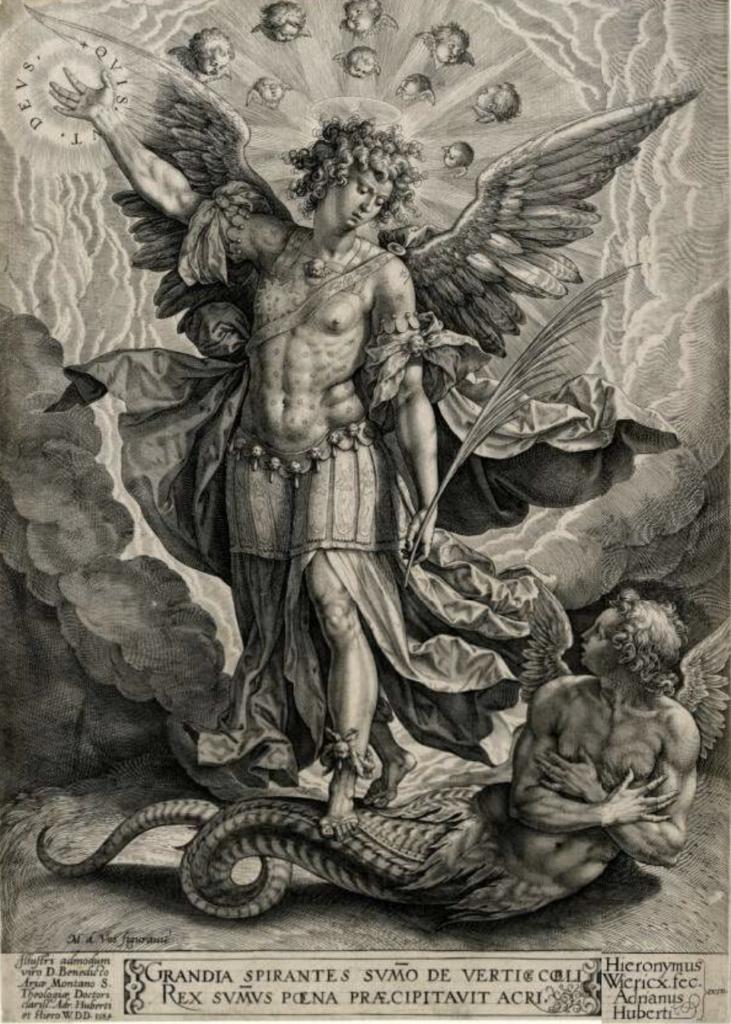
    Maerten de Vos’s St. Michael the Archangel

    Stephanie Porras’ discussion of Maerten de Vos’s St. Michael the Archangel in Going Viral? Maerten de Vos’s ‘St. Michael the Archangel’ provides a valuable framework for understanding the circulation and ideological function of George Thompson’s The Taking of the French Island of Martinique in The West Indies On February 24, 1809. Like de Vos’s St. Michael, Thompson’s engraving relied on replication and dissemination to amplify its message, serving as a form of visual propaganda that reinforced the dominant British doctrines. While de Vos’s St. Michael embodied Catholic Counter-Reformation ideals of the divine triumph over evil with the archangel defeating Satan, Thompson’s work similarly illustrates British imperial dominance over inferior foes during the Napoleonic Wars. Both images functioned within broader networks – whether religious or colonial – that enabled their circulation, increasing their impact by allowing them to transcend their original contexts and reach many diverse audiences. In both cases, the images simplified complex struggles – whether spiritual or military – into heroic narratives that legitimized systems of power. Porras’ analysis describes how the replication of such works contributed to the spread of ideological messages, illustrating how Thompson’s engraving, much like St. Michael, served to glorify dominance, suppress opposing narratives, and reinforce the culture and politics of its time.

    Geopolitical Stakes of the War

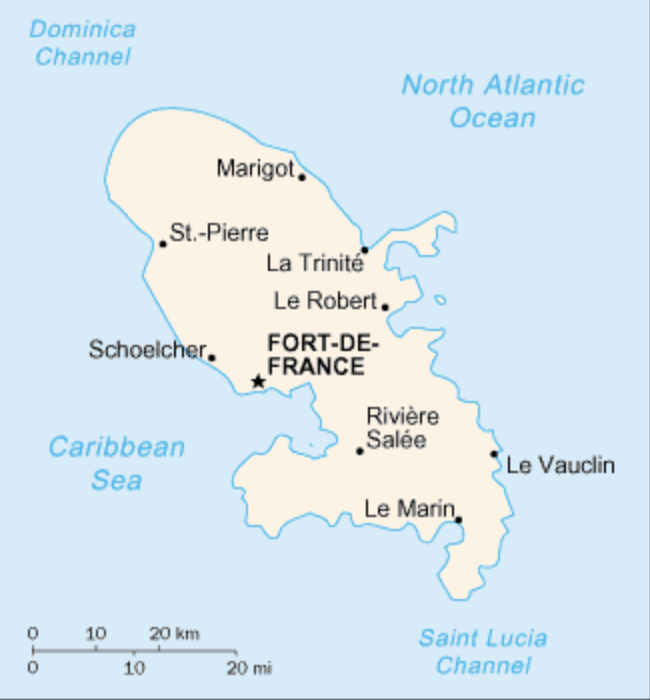
    Map of Martinique

    Alexander Mikaberidze’s The Napoleonic Wars: A Global History provides a critical framework for understanding the geopolitical stakes of the Napoleonic Wars, particularly the protracted Anglo-French rivalry that extended far beyond Europe to colonies in the Americas and the Caribbean. This rivalry was driven by a combination of military strategy, economic ambition, and the symbolic importance of supremacy in the colonial sphere. It encompasses the historical battle for European dominance between France and England. The British capture of Martinique in 1809 solidified British supremacy in this global contest. This island’s strategic location within the Caribbean and its economic significance, particularly as a center for sugar production, made it a highly coveted prize. Mikaberidze believes that conflicts such as these were not isolated skirmishes but critical battles in a larger war for imperial hegemony, with the Caribbean serving as a key theater for projecting power and enhancing economic penetration by accessing raw materials and securing vital trade routes. Martinique’s capture allowed Britain to disrupt French trade as well as weaken its economy. Furthermore, this served to reinforce Britain’s own economic dominance, showcasing the island’s importance within the larger framework of global imperial competition. This triumph over France firmly established Britain’s position as the most powerful force in Europe.

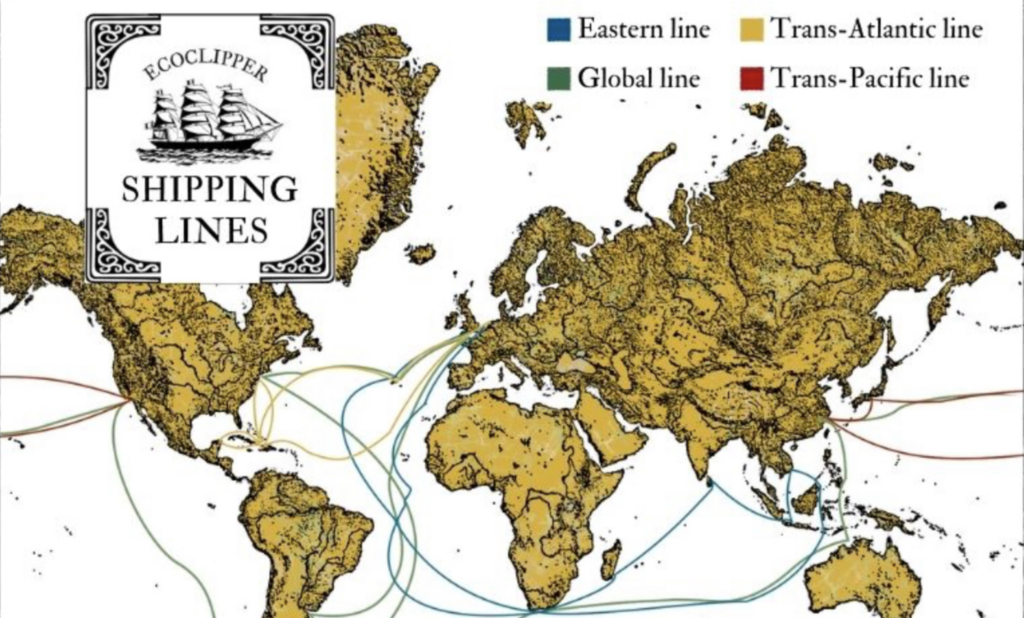
    Shipping Routes in 1809

    Thompson’s engraving The Taking of the French Island of Martinique in The West Indies On February 24, 1809 reflects this geopolitical reality by emphasizing British naval and military superiority, portraying the conquest as swift, decisive, and inevitable. The visual composition, with white British forces landing confidently and engaging French defenses with apparent ease, communicates a message of unassailable dominance. Yet this depiction intentionally obscures the human and material costs of war, including the significant British casualties sustained during the campaign. By ignoring these losses, Thompson’s work avoids the brutality of conflict and constructs an idealized image of British military invincibility. This aligns with the broader imperial narrative of the Napoleonic era, which sought to secure public support for Britain’s expansionist ambitions by depicting colonial conquests as both morally justified and effortlessly successful. Moreover, Mikaberidze’s analysis helps contextualize the ideological function of such visual propaganda. The Napoleonic Wars were not solely a series of battles but also an intense competition for influence over public opinion. Propaganda in various forms – including art, literature, and media – played a crucial role in legitimizing Britain’s military and colonial endeavors. Thompson’s engraving, with its triumphant portrayal of the Martinique campaign, served to bolster domestic morale, encourage enlistment, and affirm the righteousness of Britain’s imperial project. It also reinforced the perception of Britain as a global hegemon, projecting an image of unrelenting success that masked the complexities and costs of maintaining an empire. In this way, the engraving functions not only as a record of a historical event but as a carefully crafted ideological tool that shaped public perceptions and contributed to the cultural underpinnings of British imperialism.

    Firsthand Account

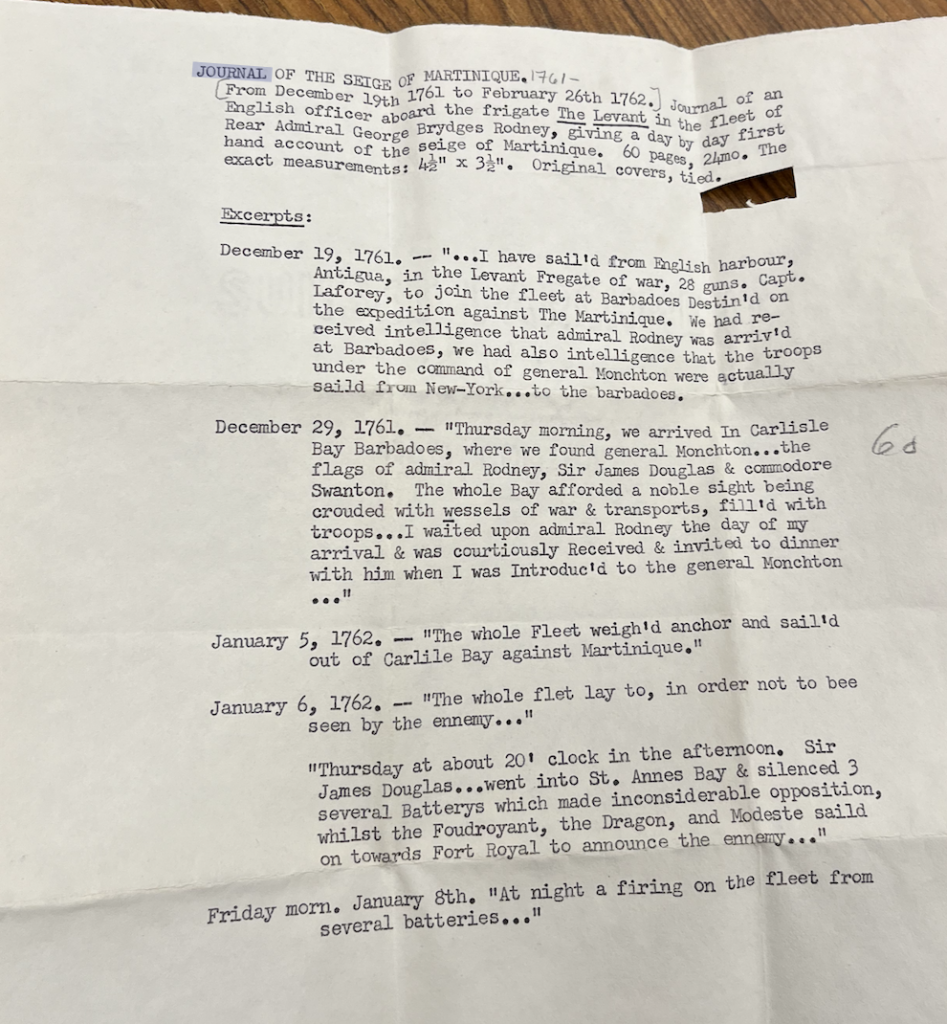
    Journal of the Siege of Martinique (1761–1762)

    The Journal of the Siege of Martinique (1761–1762) provides a valuable comparative perspective for understanding George Thompson’s depiction of the British capture of Martinique in 1809. This firsthand account of an earlier British campaign against the island offers a more nuanced and unfiltered evaluation of the realities of colonial warfare. The journal details the logistical difficulties, fierce resistance, and significant human cost of the 1762 siege, painting a vivid picture of the obstacles, complexities and brutalities involved in any violent military campaigns. In contrast, Thompson’s engraving The Taking of the French Island of Martinique in The West Indies On February 24, 1809 minimizes these aspects, presenting the 1809 conquest as an almost effortless triumph. By omitting visible casualties and downplaying the chaos and suffering inherent to warfare, the engraving projects an idealized image of British invincibility, shaping public perceptions to align with imperial propaganda. This image fails to illustrate the nuances of battle such as risks of landing on shores and challenge of attacking well defended areas. The continuity of Anglo-French struggles in the Caribbean, as highlighted in the Journal of the Siege of Martinique, underscores the ongoing strategic and economic importance of the region during the 18th and early 19th centuries. Both the 1762 and 1809 campaigns were driven by the desire to control lucrative colonial resources, such as sugar and coffee, which were central to the British economy. However, while the Journal acknowledges the arduous and costly nature of these efforts, Thompson’s engraving erases such complexities to align the 1809 campaign with the narrative of a seamless imperial project. The stark contrast between the raw details of the Journal and the polished idealization in Thompson’s work reveals how visual media were used to reshape historical memory, turning the hardships of war into a celebratory narrative of British dominance. Thompson’s portrayal of the 1809 campaign as a decisive and bloodless victory not only glorifies British military prowess but also diminishes the role of French resistance and the sacrifices of British soldiers. This misleading depiction mirrors the broader trend of imperial propaganda during the Napoleonic Wars, which sought to legitimize Britain’s colonial ambitions by masking the moral and material costs of conquest. The facade also portrays the British forces as almost immortal, with lack of death or even bloodshed. This philosophy never acknowledged the sacrifice of a soldier’s life and its down-stream impacts on their family. The majority of these soldiers were from the lowest classes of British society. The Journal of the Siege of Martinique provides a counterpoint to this narrative, reminding contemporary audiences of the unglamorous and grueling realities of empire-building. By examining the divergence between these two sources, one can better understand how Thompson’s engraving functions as a deliberate tool of propaganda, simplifying the narrative of British colonial victories to garner public support and reinforce the ideological underpinnings of imperialism. This contrast highlights the deliberate manipulation of public perception, where the sanitized visual representation of war serves the interests of Britain’s broader imperial agenda which was geared to generate power, wealth and maintenance of the government’s status quo.

    Economic Motivations of the Image

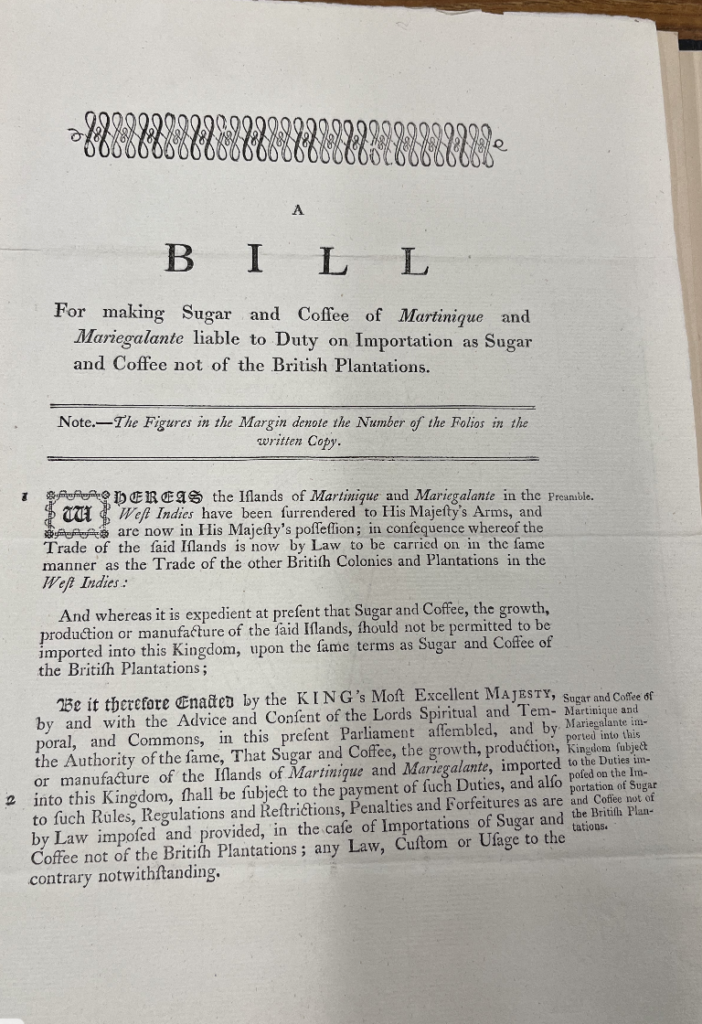
    Bill on Sugar and Coffee

    Additionally, the Bill on Sugar and Coffee sheds light on the economic motivations underlying British imperialism in the Caribbean, emphasizing the central role of commodities such as sugar and coffee in sustaining Britain’s global dominance. During the Napoleonic Wars, these lucrative resources were integral to the British economy, with the Caribbean colonies serving as crucial hubs for the production and trade of these goods. Martinique, in particular, was a valuable prize due to its fertile lands and established sugar plantations. The Bill on Sugar and Coffee underscores how economic motivations were intertwined with Britain’s military and colonial strategies, highlighting the importance of securing and controlling territories that could provide steady supplies of these commodities further strengthening British impact on the European economy. Thompson’s engraving, The Taking of the French Island of Martinique in The West Indies On February 24, 1809, can thus be interpreted as a visual celebration of these conquests, reinforcing the notion that Britain’s military victories were not only necessary but economically beneficial. Thompson’s work aligns military success with the broader economic priorities of Britain’s imperial project, presenting the capture of Martinique as an effortless extension of Britain’s economic and geopolitical dominance. The triumphant depiction of white British forces advancing unchallenged onto Martinique’s shores implicitly suggests that the island’s wealth and resources were ripe for British control, omitting the exploitative labor systems and human suffering that underpinned the Caribbean plantation economy. This omission reflects a propagandistic intent, portraying the conquest as both justified and benevolent while obscuring the harsh realities of colonial exploitation. It also ignores the black soldiers’ impact on this battle further perpetuating the ideologies of Anglocentric superiority. By downplaying the conditions that made Martinique so valuable – such as the reliance on enslaved labor to sustain its sugar industry – Thompson’s engraving upholds the imperial philosophy that Britain’s expansion was a civilizing mission rather than an economically driven enterprise built on oppression. The economic motivations underscored by the Bill on Sugar and Coffee provide critical context for understanding how visual media like Thompson’s engraving functioned within Britain’s imperial framework. The engraving served not only as a celebration of military triumph but also as an ideological justification for Britain’s control of colonies whose access included both natural resources and cheap human labor. By glorifying the conquest of Martinique, Thompson’s work encouraged public support for Britain’s imperial ambitions, framing the acquisition of Caribbean territories as essential for national security and prosperity. This alignment of economic interests with military propaganda illustrates the interconnectedness of Britain’s colonial and economic agendas, where visual representations of conquest played a key role in masking the exploitative foundations of the empire. Thus, the engraving serves as both a record of a historical event and a powerful artifact of economic propaganda, reinforcing the perception and creating a facade which embraced British imperialism as a morally and economically justified endeavor.

    An Imperialistic Imagination

    Finally, insights from Victorian Jamaica illustrate how visual and textual representations of British colonial victories resonated across the empire, shaping an imperial imagination that celebrated British supremacy over France while obscuring the human and material costs of conquest. In the 19th century, these representations were vital in fostering a sense of national and imperial pride, uniting disparate regions of the empire under a shared narrative of British dominance. In the Caribbean, where colonial control was marked by systemic exploitation and racial hierarchies, such images were influential in justifying British authority. Thompson’s engraving, The Taking of the French Island of Martinique in The West Indies On February 24, 1809, exemplifies this phenomenon by portraying a sanitized and triumphant vision of imperial conquest. The absence of visible casualties or destruction suggests a moral and logistical superiority that aligns with the broader imperial narrative of Britain as a civilizing and stabilizing force. Visual media like Thompson’s engraving not only showcased the military strength of the British empire but also celebrated these victories which worked to harmonize British control over colonial territories. In Caribbean colonies such as Jamaica, where British governance was often contested and economic exploitation through plantation slavery left lasting scars, representations of military triumphs helped to legitimize the empire’s presence. By focusing on the heroism and invincibility of British forces and omitting the violence and suffering integral to colonial conquests, these images shaped public perceptions both in Britain and across the empire. In doing so, they reinforced racial and cultural hierarchies that positioned Britain as the rightful leader of a global order, masking the exploitative foundations of its rule. Thompson’s engraving, when considered alongside the broader cultural narratives explored in Victorian Jamaica, highlights the ideological role of visual propaganda in sustaining the needs of the empire. By romanticizing victories such as the capture of Martinique, these representations encouraged colonial subjects and British citizens alike to view imperial expansion as inevitable, beneficial, and unassailable. The engraving’s resonance across the empire underscores its dual function: it celebrated Britain’s accomplishments while silencing the voices and experiences of those subjugated by colonial rule. In this way, Thompson’s work not only reflects the historical moment of the Napoleonic Wars but also contributes to a larger cultural project that sought to entrench British supremacy and obscure the profound human costs and social injustices inherent to its imperial ambitions. Through its triumphalist imagery, the engraving became a tool for constructing and perpetuating the myth of a benevolent and invincible British Empire.

    Conclusion

    In conclusion, George Thompson’s The Taking of the French Island of Martinique in The West Indies On February 24, 1809 serves as a striking example of British imperial propaganda, skillfully blending artistry with ideology to reinforce the narratives of dominance and invincibility that underpinned the British Empire during the Napoleonic Wars. The engraving’s idealized depiction of the British conquest of Martinique simplifies the complexities of war, erasing the human and material costs to construct a triumphant vision of imperial dominance and expansion. By omitting the significant casualties suffered by British forces and presenting the victory as swift and unchallenged, Thompson’s work communicates a sanitized and celebratory narrative that aligns with the broader ideological project of British imperialism. Carolyn Dean’s critique in The Trouble with the Term Art highlights how categorizing such works as “art” can obscure their functional and ideological roles, encouraging viewers to see them as aesthetic achievements rather than tools of propaganda. Dean’s analysis reminds us to view Thompson’s work within its socio-political context, where it operated as a deliberate instrument to justify and celebrate imperial dominance. Similarly, Stephanie Porras’ Going Viral provides a framework for understanding how images like Thompson’s engraving achieved widespread influence through replication and dissemination. By circulating far and wide, such works not only reinforced British imperial narratives but also shaped collective memory across diverse audiences, amplifying their ideological impact.

    Through its examination of the geopolitical, economic, and cultural contexts of the engraving, this essay has demonstrated how Thompson’s work operates as more than a mere record of a historical event. Alexander Mikaberidze’s analysis of the Napoleonic Wars underscores the high stakes of the Anglo-French rivalry, situating the capture of Martinique as part of a global contest for colonial and economic supremacy. The Journal of the Siege of Martinique (1761–1762) further highlights the continuity of these struggles in the Caribbean, providing a stark contrast to Thompson’s idealized portrayal by revealing the grueling realities and significant human costs of previous campaigns. Similarly, the Bill on Sugar and Coffee illustrates the economic motivations driving British imperialism, emphasizing the critical role of Caribbean commodities in sustaining the empire’s wealth and power. By aligning military victories with these economic priorities, Thompson’s engraving reinforces the perception of conquest as both necessary and beneficial. Moreover, insights from Victorian Jamaica reveal the cultural impact of visual representations like Thompson’s engraving, which resonated across the empire to shape public perceptions and bolster imperial pride. The work not only celebrated British military achievements but also legitimized colonial control, constructing an imperial imagination that presented Britain as a benevolent and unassailable global power. This narrative, however, came at the cost of obscuring the systemic exploitation, violence, and suffering that defined the colonial experience, particularly in regions like the Caribbean. It also marginalized the value of the British soldier.Ultimately, Thompson’s The Taking of the French Island of Martinique encapsulates the role of art and propaganda in sustaining the British Empire. By glorifying military conquests and masking their complexities, the engraving contributed to a broader ideological framework that justified Britain’s expansionist ambitions, strategic economic goals, and reinforced its cultural and political dominance. Dean and Porras remind us that such works must be understood not just as art objects but as powerful tools of ideological dissemination, serving to project and sustain imperial ideologies. Its lasting significance lies not only in its historical context but also in its function as a powerful reminder of how visual media can shape collective memory and public sentiment. By celebrating conquest while obscuring its costs, Thompson’s work exemplifies the ways in which art was instrumental in legitimizing the moral and material foundations of imperialism, leaving an indelible mark on the cultural fabric of the British Empire.

    References

    A Bill for Making Sugar and Coffee of Martinique and Mariegulante Liable to Duty on Importation as Sugar and Coffee Not of the British Plantations. [publisher not identified], 1809.

    Barringer, Tim, and Wayne Modest, editors. Victorian Jamaica. Duke University Press, 2018. JSTOR, https://doi.org/10.2307/j.ctv11hpgxv. 

    ​​Dean, Carolyn. The Trouble with (The Term) Art. University of California Press, 2006.

    Mikaberidze, Alexander. The Napoleonic Wars: A Global History. Oxford University Press, 2020.

    Porras, Stephanie. Netherlands Kunsthistorisch Jaarboek 66 (2016): 54-79.

    Walsingham, H. R. B., et al. Journal of the Siege of Martinique, 19 Dec. 1761 through 26 Feb. 1762. Digital Collections, Hamilton College Library, https://litsdigital.hamilton.edu/do/e2776577-59dc-4d7b-b3ab-fe07fc545398.

    Wells, David A.J., and The West India Committee. The West Indian Soldier: A Brief History of the British Army and the Caribbean. The West India Committee, n.d.

  • Beyond Cartography: Colonial Messaging in Levasseur’s 1856 Map of Guadeloupe

    Figure 1. Levasseur, Victor. Colonies Françaises (en Amérique) (The French Colonies in America), from “Atlas National Illustrè” (“Illustrated National Atlas”), c.1856. Engraving with hand coloring, 14 1/4 × 20 3/4 in. (36.2 × 52.7 cm). Ruth and Elmer Wellin Museum of Art at Hamilton College, Clinton, NY. The Beinecke Lesser Antilles Collection of Hamilton College. Image courtesy of the Ruth and Elmer Wellin Museum of Art at Hamilton College, Clinton, NY. 

    Introduction

    Cartographer Victor Levasseur’s Colonies Françaises (en Amérique) from Atlas National Illustrè, reveals more than a cartographic understanding of the island of Guadeloupe (Figure 1). It divulges the power relations inherent to the French Lower West Indies amidst a swiftly changing social and political climate. Created eight years after the abolition of slavery in France and its colonies, this map creates a carefully orchestrated narrative about the perceived collapse of colonial control, economic production, and social hierarchy. Levasseur’s central map is surrounded by two cartouches, an expansive landscape, and an inscription explaining the population, climate, and current events on the island. The cartouche on the left depicts a seemingly picturesque representation of agricultural labor, featuring portraits of Guillaume Lethiére, a prominent Guadeloupean mixed-race painter, and Coupenon, likely of the plantation-owning class. The cartouche on the right illustrates the horrifying moments during the 1843 earthquake. By focusing on the hierarchical relationship between these different components of the picture, this essay investigates how the composition reinforces colonial authority while simultaneously documenting the crucial aspects of the transformation of society in Guadeloupe.

    Building on this complexity, examining the map’s embellishments and aesthetics reveals deeper historical significance about contemporary perceptions and power relations in the post-abolition Lower West Indies, particularly in under-studied French colonies. This analysis will develop and apply Krista Thompson’s sidelong glance to this representation, investigating the visible and invisible aspects of its imagery.7 Thompson’s approach pushes us to investigate how this representation works to reinforce colonial authority while simultaneously documenting the crucial aspects of transformation in society in Guadeloupe. The intentional inclusion and positioning of certain figures, events, and symbols provide crucial insight into how French colonial authorities sought to represent their continuing influence over Guadeloupe during this period of significant social and economic change.

    A Krista Thompson Sidelong Glance

    While Krista Thompson’s sidelong glance provides a method of viewing African diasporic representations, this 1856 map of Guadeloupe internalizes this dynamic within its own composition, developing the tension between visible and invisible elements as an integral component of its visual narrative. Viewing this entire work with Thompson’s sidelong glance provides a crucial framework for understanding how this map operates at multiple complex levels. By contemplating both the visible and invisible elements that relate to the creation and significance of this work, we uncover how the map simultaneously documents and obscures colonial realities in post-abolition Guadeloupe.

    An important demonstration of this concept is the tension that exists between architectural elements surrounding the map and within the cartouches. The windmill in the left cartouche and plantation buildings exist as a stark contrast to the Guadeloupean landscape which engulfs these representations. Serving as a reminder of colonial power, this juxtaposition between the plantation buildings and the Guadeloupean landscape reveals the invisible struggle between colonial imposition and the indigenous environment. Levasseur’s inclusion and positioning of the windmill in a dominant position to the figures in the left cartouche serves as a visible symbol of colonial control. Meanwhile, the windmill’s positioning and inclusion in the work invisibly suggest the continued enforcement of European agricultural practices and colonial power dynamics in a post-abolition society.

    The visible, yet obscured, presence of Black figures throughout the map’s embellishments points to invisible power structures that remain in Guadeloupe’s post-abolition society. The positioning of these figures – whether laboring in the fields in the left cartouche or shadowed behind cotton in the landscape – reveals the continuation of colonial hierarchies despite the abolition of slavery. Although there is no direct depiction of slavery, the invisible harsh reality of post-emancipation labor conditions is uncovered through studying this map, regardless of its obstruction by the visible aesthetics of productivity and wealth.

    Historical Context

    To understand this representation of Guadeloupe and its complexities, some key events relating to Guadeloupe’s turbulent history must be discussed. The island of Guadeloupe in the late eighteenth and early nineteenth century was in constant change, particularly viewed through the frequent shift in colonial control and progression of the abolition movement at the time. Up to the 1750s, Guadeloupe was set up similar to other French colonies in the West Indies, primarily made up of sugar plantations.During the Seven Years War between 1759 and 1763, British forces invaded Guadeloupe, devastating plantations, and eventually leading to French surrender of the island to the British.1

    Between this period, the British utilized this as an opportunity to upscale the island, importing slaves and developing the main city, Pointe-à-Pitre, as a major harbor for the exportation of goods.1 In the 1763 Treaty of Paris, which ended the Seven Years War, the French forfeited its colonies in Canada to the British to regain control over Guadeloupe due to how profitable the island was. 2

    With new strength on the island, Guadeloupe was set to be transformed into a full-scale major exporter of many goods. To accomplish this, the French introduced coffee, tobacco, cocoa, and cotton.8 The introduction of these crops led to a rapid increase in the importation of slaves to work the plantations by the 1770s. By 1784, Guadeloupe began major exportation of its goods to the United States.2 

    Yet as turmoil increased in France during the French Revolution, Guadeloupe similarly felt the effects. British forces again took control over the island in 1789 and 1792. After regaining control from the British, Governor Victor Hugues abolished slavery in Guadeloupe for the first time in 1794.3 

    In 1802, Napoleon Bonaparte decided to reinstate slavery and sent a force of 3,500 men to dismantle the colonial army that existed on the island, specifically to enforce his decision. The resulting resistance, led by Louis Delgrès, eventually failed. This existence of resistance on the island at this time directly demonstrated the intense struggle of labor and control which shaped the island’s development and representations at the time. 

    During the Napoleonic Wars, Britain regained control over Guadeloupe, which lasted from 1810 to 1813. The French regained control in 1815 by the Treaty of Vienna. Although Napoleon proclaimed the abolition of the slave trade in 1815, slavery was not abolished in France – and all French colonies – until the Revolution of February 1848. After the abolition of slavery in Guadeloupe, plantations transitioned to heavily rely on indentured servitude to maintain the economic status of the island. 

    The creation of this map in 1856 is particularly notable, due to its positioning at a critical time in Guadeloupean history of social and economic transformation. French colonial authorities faced the challenge of maintaining control of the island, as well as productivity in new labor systems. It is through this historical lens that highlights how this map’s various decorative elements work to reassure French audiences about continued colonial control and productivity in post-emancipation Guadeloupe.

    The visible, yet obscured, presence of Black figures throughout the map’s embellishments points to invisible power structures that remain in Guadeloupe’s post-abolition society. The positioning of these figures – whether laboring in the fields in the left cartouche or shadowed behind cotton in the landscape – reveals the continuation of colonial hierarchies despite the abolition of slavery. Although there is no direct depiction of slavery, the invisible harsh reality of post-emancipation labor conditions is uncovered through studying this map, regardless of its obstruction by the visible aesthetics of productivity and wealth.

    The Left Cartouche

    Through its layered symbolism, the left cartouche exemplifies how the map’s embellishments reinforce colonial authority while documenting social and political transformation in post-abolition Guadeloupe (Figure 3). At its center, agricultural labor is depicted against the backdrop of a windmill and plantation buildings, creating a picturesque vision of colonial productivity in a post-abolition setting. One of the largest issues with this depiction of agricultural labor is the representation of Black labor in the foreground. Although this map was created eight years after the abolition of slavery, Levasseur intentionally represents agricultural labor through Black laborers, indicating the difficulties of this transition period after the abolition of slavery. Levasseur’s composition of these figures in this way directly parallels pre-emancipation imagery, reflecting broader Caribbean colonial anxieties about maintaining productivity in the plantations and economies as well as control over newly freed slaves. 

    The stances of the figures directly suggest their continued status as laborers, rather than a celebration of their newly emancipated status. The comparison from one figure sitting to another standing with his arms open echoes the visual strategies employed in West Indies works to represent an “orderly” transition from slavery to free labor. Similar to Tim Barrigner’s study of Jamaica’s emancipation, this imagery reinforces colonial power dynamics, especially the existing power hierarchies that began long before emancipation.5

    Figure 2. Kidd, Joseph Bartholomew. “Good Hope.” Oil on canvas, 1835-1836. Yale Center for British Art, New Haven, Connecticut.

    Figure 3. The left cartouche.

    Joseph Bartholomew Kidd’s painting, Good Hope, circa 1835-1836, directly relates to this cartouche (Figure 2). Kidd and Levasseur form a picturesque view of a plantation, developing a falsified sense of beauty and perfection. While this picturesque view is formed, both artists completely disregard the horrors and violence that occurred in these seemingly innocent locations, yet achieve this in different ways. Kidd accomplishes this by obscuring a Black man, who we can assume was a slave, in the shadows of the foreground of the painting. This directly relates to how the transatlantic colonial artistic canon has obscured the horrors of slavery, contributing to the continuation of the colonial power dynamic over slaves even after emancipation. On the other hand, Levasseur accomplishes this same concept by leaving two figures directly in the center and foreground of the cartouche, with a picturesque view of the plantation surrounding them. Yet, this image is a very unlikely representation of what constitutes life post-emancipation in Guadeloupe as a freed slave. This embellishment of post-abolition plantation life hints at the continuity of existing power hierarchies in post-emancipation Guadeloupe. 

    This idea is further supported by the placement of the windmill, jutting out from the landscape and blocking the view of the mountain range in the background. Moreover, plantation buildings take up much of the right side of the cartouche, extending past the barrier of the frame. This inclusion of the plantation in the background seemingly symbolizes the persistence of the pre-emancipation social hierarchy. In this image, the windmill and plantation buildings seem to act as the eyes of the plantation owners, demonstrating that although these figures seem to be completely alone in this picturesque scene, they are still under the control of the plantation itself. It is this dominance that asserts the colonies’ continued focus on plantation-based agriculture and economy while preserving the existing power structures regardless of the end of slavery. 

    Levasseur’s inclusion of the portraits of Lethière and Coupenon complicates the meaning of the left cartouche. Guillaume Lethière, a prominent mixed-race artist born in Guadeloupe, was a key abolitionist.9 The portraits of Lethière, and Coupenon, who is likely of the plantation-owning class, create a meaningful juxtaposition that speaks to Guadeloupe’s transformation in social hierarchy. Here, Lethière represents cultural achievement and social mobility within the restrictive colonial system. This pairing with Coupenon creates a deliberate visual commentary on power structures and the transformation of power structures underway at the time. With the laboring figures above Coupenon, it can be inferred that this is a symbolic representation of the alleged triumph of previous slaves over their masters. Yet, the plantation remains in the background of this image as a constant reminder of the pre-emancipation hierarchical status that still exists. It is this placement of figures that creates a sanitized version of post-emancipation colonial relations while simultaneously reinforcing the existing hierarchies, and resisting transition. 

    Through this cartouche, Levasseur reveals important information about the social transition underway regarding emancipation. This cartouche seemingly serves as a form of propaganda from the French. Levasseur likely added these embellishments to the map to provide context for life in Guadeloupe for those in France interested in creating plantations in Guadeloupe. By depicting Black laborers and developing this continuity in power dynamics of the plantation over its laborers in a post-emancipation society would likely appeal to potential plantation owners thinking about buying land in Guadeloupe. Through the use of the picturesque and portraits surrounding the plantation scene, Levasseur develops an idealized vision of colonial productivity in a post-emancipation society. This directly juxtaposes the tumultuous history of Guadeloupe, which had a very non-constant government and was the site of slave uprisings and constant war between colonial powers. Ultimately, the left cartouche functions as a carefully orchestrated piece of colonial propaganda, utilizing visual elements to assert continued French control over Guadeloupe while managing anxieties about emancipation’s impact on colonial economic and social structures through a picturesque representation of post-emancipation labor relations.

    The Right Cartouche

    Moving to the right of the map, the right cartouche provides further context into a significant event on the island of Guadeloupe, depicting the earthquake of February 1843 (Figure 4). In the foreground of the cartouche, we see a figure fallen on the ground. Behind the figure, water rushes through the village, with surrounding houses falling in towards the center of the image. Directly in the middle, the ground seems to have opened, with more figures running away from this central point. Similar to the left cartouche, snow-capped mountains loom in the background.

    The book “Observations sur le tremblement de terre éprouvé à la Guadeloupe le 8 février 1843” (Observations on the earthquake experienced in Guadeloupe on February 8, 1843) written by Charles Joseph Sainte-Claire Deville provides a witness outlook of this significant event. At the time of this earthquake, Deville was a geologist conducting research in the Western Antilles after completing school at the École des Mines (School of Mines) in Paris. In his book, Deville explains the results of the earthquake, as “Pointe-à-Pitre, this Venice of the Antilles, is now only a heap of rubble” and “part of the population has found death, and each day adds some names to the long list of victims.” 4 Deville later describes the movement of the earthquake as two parts, where buildings were violently shaken horizontally, and then a second vertical shake caused the buildings to fall.4 Deville notes that one person in Pointe-à-Pitre “experienced a sort of rolling; a crowd of people fell, the earth failing them under their feet.” 4

    Based on the descriptions provided by Deville, this perfectly lines up with Levasseur’s depiction of the earthquake in Pointe-à-Pitre. Levasseur emphasizes the inward falling of the buildings directly relating to the collapse of Pointe-à-Pitre into rubble. It is plausible that Levasseur may have utilized Deville’s description as a reference for creating this image. Interestingly, no records exist of the number of fatalities or types of people that lost their lives due to this earthquake. This gap in our records of this significant event in Guadeloupean history seems all too convenient, yet reflects the perception of slaves, as well as freed Black people at the time.

    Figure 4. The right cartouche.

    Since this earthquake had a significant impact on Pointe-à-Pitre, the largest harbor city at the time in Guadeloupe, it makes sense that this scene is included in the map as a point of reference for Parisians to understand where Guadeloupe is. Yet, why show a still moment before disaster, instead of showing the aftermath? Thinking with Krista Thompson’s sidelong glance raises many questions about Levasseur’s choice of this specific scene and the figures depicted in it. At the time of this earthquake, slavery was still in practice in Guadeloupe. Yet when this drawing was created, slavery had been abolished for eight years, meaning there must be some intentionality behind Levasseur’s choice of only depicting black figures in this horrifying scene of the earthquake – in which, likely very few of the represented figures survived. Thus, this leads to the question, what was Levasseur’s intention behind this representation of the 1843 earthquake?

    Levasseur’s depiction of solely black figures points to the context of slavery at the time of this earthquake. At the moment shown in this image, it is likely that slaves were going about their work, yet like many other representations of slaves at this time, slave owners are nowhere in sight. Meanwhile, the buildings surrounding the figures fall in towards them, towering over them as they try to escape. This portrayal of the earthquake seemingly represents the grasp of slave owners and colonial power. Regardless of the efforts put in to escape slavery, the figures are encapsulated and chained into it – just as the houses collapse, the water hemming in, and the ground opening beneath the figures. Viewing beyond the historical representation of the earthquake, we uncover the important meaning behind the representation reinforcing the broader inescapable nature of colonial power structures.

    The right cartouche’s depiction of the 1843 earthquake serves multiple functions beyond mere historical documentation. Levasseur’s choice to represent only Black figures in this scene of devastation, created eight years after abolition, carries significant meaning. This seemingly intentional absence of recorded fatalities among the enslaved population speaks directly to their dehumanization – deaths of the enslaved being treated as loss of property rather than human life. This directly supports the colonial attitude toward slaves at the time, as commodities, not people. Conveniently, it is this continuation of colonial power dynamics that is seen throughout the entire work, with the symbolic nature of the white-capped mountain range following through both cartouches as the highest point. The use of this motif of the mountain range throughout the work particularly coincides with the function of the left cartouche: to calm anxieties of emancipation and the changes in colonial power in Guadeloupe. This further adds complexity to the right cartouche, developing the idea of persistent oversight of colonial authority on the enslaved, and even more so in a newly emancipated society.

    The Encapsulating Landscape

    One of the most significant features of this work is the landscape that encapsulates the map, both cartouches, and the inscription. This landscape consists of three different parts: the floor of the forest, the forest itself, and the skyline and mountain in the background. The careful arrangement of these elements, particularly the commodities and figures on the forest floor, creates a visual hierarchy that reinforces colonial authority while showcasing Guadeloupe’s economic value and potential for further development.

    The floor of the forest contains mostly commodities of the island including sugar, cotton, rubber, tobacco, coffee, cacao, and various fruits. This is directly verified by the primary source from 1843, which explains the main products of Guadeloupe being 36 million kilograms of sugar, 2 million kilograms of cacao, and 400,000 kilograms of cotton.8 By outwardly showing all of these goods in abundance as part of the map, it can be inferred that this functions to demonstrate the economic value of Guadeloupe. In a post-emancipation context, this is extremely important as colonies struggled to maintain economic prosperity after the abolition of slavery. Although Guadeloupe did struggle with the end of slavery, its rapid switch to indentured servitude allowed for the continuity of strength compared to other colonies which struggled a lot more. This can also be viewed under the interpretation that this map was used as French propaganda to lure plantation owners and others from France to develop the island further. By intentionally showing all of these commodities, Levasseur is pointing to the potential of the land, even in a post-emancipation context.

    Figure 5. The lower landscape.

    Based on the descriptions provided by Deville, this perfectly lines up with Levasseur’s depiction of the earthquake in Pointe-à-Pitre. Levasseur emphasizes the inward falling of the buildings directly relating to the collapse of Pointe-à-Pitre into rubble. It is plausible that Levasseur may have utilized Deville’s description as a reference for creating this image. Interestingly, no records exist of the number of fatalities or types of people that lost their lives due to this earthquake. This gap in our records of this significant event in Guadeloupean history seems all too convenient, yet reflects the perception of slaves, as well as freed Black people at the time.

    Figure 6. Bottom left, man pointing at map.
    Figure 7. Bottom right, two male figures.

    To the left of the map, a white man leaning against a box titled “sucre” (sugar) points toward the map (Figure 6). This is a traditional symbol of colonial power and possession over the area represented in the map.6 Situating the man leaning against the box of sugar develops the outward representation of prosperity and strength of colonial power and plantation owners even after emancipation.

    To the right of the map, another white man looks toward the map, with a Black man, who was likely a slave, hidden in the shadows behind him (Figure 7). By including a Black man in this context, Levasseur is directly relaying the fact that even in a post-emancipation society, Guadeloupe’s economy remains reliant on Black laborers. Intentionally, Levasseur places the white figure standing prominently in the foreground next to his commodities – cotton and a Black man. In this case, cotton acts as both an economic symbol and a visual barrier. The invisible here are the harsh realities of slavery that existed to create all of these commodities displayed proudly by the white men in the foreground. In no place is there any representation of the labor, but rather a Europeanized, idealistic version of the strength of Guadeloupe as a colonial power by maintaining pre-abolition power structures.

    Interestingly, this motif is continued as we work our way up in the landscape. Next, we view a flourishing tropical forest – a representation of a common landscape seen in Guadeloupe (Figure 8). Levasseur creates a seamless transition between the forest floor and the forest itself by including plants in the background that extend up towards the thick of the forest. This continuity from forest floor to forest looks as though the plants are flourishing out of the commodities. By creating this representation, Levasseur seems to suggest the idea that Guadeloupe continues to flourish, like this tropical forest, even after the abolition of slavery. Beyond this, this expansive forest symbolizes the potential for more plantations, signaling to those who have not explored the island that there is still land to be tamed and room for economic growth. By demonstrating this potential for economic growth, Levasseur is expanding on the main purpose of this work: to calm colonial post-abolition anxieties with the transition out of slavery.

    Figure 8. The middle forest landscape.

    The skyline part of the landscape adds further complexity to the overall work by employing the mountain symbol (Figure 9). By positioning the mountain as the pinnacle of this work, the mountain serves as another reminder of colonial power dynamics that remain constant even in a post-emancipation society. This continuous motif throughout the cartouches and the entire work reinforces French colonial authority through visual hierarchy – the white-capped peaks literally and figuratively oversee all activity below, from the agricultural scenes to the commodities on display.

    Figure 9. The upper mountain and oceanic landscape.

    The landscape’s three-tiered structure – from the commodity-laden floor through flourishing forest to commanding mountain peaks – creates a carefully orchestrated visual narrative about colonial control and economic potential. Each level serves to reassure the predominantly French audience about Guadeloupe’s continued productivity and opportunities for development, while simultaneously reinforcing existing pre-emancipation power structures. Through this intricate arrangement of natural and commercial elements, Levasseur transforms what might appear as mere decorative embellishment into a sophisticated piece of colonial propaganda. This is then utilized to promote continued French investment in post-abolition Guadeloupe. This interpretation of the landscape elements reveals how the map functions beyond mere cartographic documentation, instead working as a complex visual argument for continued colonial presence and work to maintain the pre-abolition economic development.

    Conclusion

    Through careful analysis of the 1856 print map of Guadeloupe with hand coloring Colonies Françaises (en Amérique) from Atlas National Illustrè, we uncover a sophisticated piece of colonial propaganda that worked to maintain French control over Guadeloupe during a pivotal transition period from slavery. The cartouches, landscape elements, and figure placement all contribute to a carefully constructed narrative about colonial power and economic potential in post-abolition Guadeloupe. The map’s embellishments serve multiple purposes. Most importantly, the embellishments help form an idealized version of post-abolition Guadeloupe to reassure French audiences about continued productivity, calming anxieties about emancipation’s impact on colonial power dynamics and hierarchy. Through these embellishments Levasseur accomplishes a sanitized representation of the realities of post-emancipation labor relations – portraying a productive Guadeloupe without slavery, yet one that is still heavily reliant on Black labor. It becomes this idealization that forces us to question the validity of the representations in this image, one that is laden with misleading information about the current state of affairs in Guadeloupe at this time.

    Due to the nature and context of this map, we must alter our approach to French West Indies representations in this period. Viewing these works for their aesthetics, we completely disregard an important part of the story that all too frequently goes unheard and unrecorded: the post-emancipation lives of freed slaves in the French West Indies. Although little documentation exists on this subject matter in the French West Indies, this provides further reasoning to approach these types of representations with skepticism of the validity of the representations – utilizing Krista Thompson’s sidelong glance to understand the intention behind the visible and uncover the invisible aspects of these representations. Future research should apply this methodology and thinking to gain further insight into French West Indies representations, especially those existing within the complex post-emancipation colonial society.

    References

    1. Pluskota, Marion. “Freedom of Movement, Access to the Urban Centres, and Abolition of Slavery in the French Caribbean.” International Review of Social History 65, no. S28 (2020): 93–115. https://doi.org/10.1017/S0020859020000103.
    2. United States of America Department of State Office of the Historian. n.d. “Milestones in the History of U.S. Foreign Relations – Office of the Historian.” United States Office of the Historian. Accessed December 1, 2024. https://history.state.gov/milestones/1750-1775/treaty-of-paris.
    3. “Monument to Abolition of Slavery | Slavery and Remembrance.” 2024. United Nations Educational, Scientific, and Cultural Organization. 2024. Accessed December 1, 2024. https://slaveryandremembrance.org/partners/partner/?id=P0054#:~:text=February%204%2C%201794%3A%20The%20First%20Abolition&text=Meanwhile%20in%20Guadeloupe%2C%20the%20English,proclaimed%20on%20June%207th%2C%201794.
    4. Deville, Charles. 1845. TREMBLEMENT DE TERRE EPROUVE a LA GUADELOUPE LE 8 FEVRIER 1845. PDF of print. 1st ed. IMPRIMERIE DU GOUVERNEMENT. https://ia600306.us.archive.org/35/items/bub_gb_I740WrjzVUwC/bub_gb_I740WrjzVUwC.pdf.
    5. BARRINGER, TIM. “Land, Labor, Landscape: Views of the Plantation in Victorian Jamaica.” In Victorian Jamaica, edited by TIM BARRINGER and WAYNE MODEST, 281–321. Duke University Press, 2018. https://doi.org/10.2307/j.ctv11hpgxv.36.
    6. Dodds, Klaus. “Gesture and Posture: Pointing the Finger and the Mapping of Outer Continental Shelves.” Polar Record 46, no. 3 (2010): 282–84. https://doi.org/10.1017/S0032247409990519.
    7. Thompson, Krista. 2011. “A Sidelong Glance: The Practice of African Diaspora Art History in the United States.” Art Journal 70 (3): 6–31. doi:10.1080/00043249.2011.10791045.
    8. Martin de Villers, Juan Pedro. Estadística y topografía de la isla la Guadalupe y dependencias. Habana: Imprenta del Gobierno y Capitanía general por S. M., 1843. Book. Burke Library at Hamilton College, Clinton, NY. The Beinecke Lesser Antilles Collection of Hamilton College
    9. Lafont, Anne. “Art and Politics: Revolutions in Pigment (1770-1830)” in Guillaume Lethière, (New Haven and London: Yale University Press, 2024), 97-107.
  • “Seminole Child with Bitterns”: An Untranslatable Image of Noble Savagery?

    by Linh Tran

    A young Seminole child is situated in a natural landscape, surrounded by bitterns – birds often associated with wetlands and stillness. At first glance, Seminole Child with Bitterns (1878) (Fig. 1) exudes tranquility and harmony, a scene seemingly disconnected from the satirical and allegorical themes that dominate William Holbrook Beard’s more well-known works. However, beneath its peaceful surface possibly lies a deeper tension. Created in the 19th century, a time when Indigenous communities were being marginalized, displaced, and mythologized in American culture, Seminole Child with Bitterns invites viewers to reflect on the power dynamics embedded in representations of colonized peoples. It compels us to consider the inherent subjectivity in Beard’s portrayal: is the work a sensitive attempt to honor its subject, or does it contribute to a broader artistic trend of romanticizing Native peoples while obscuring their lived realities? Further, it challenges us to examine the relationship between the artist’s identity – as a white, male painter – and the cultural and historical messages embedded within the work. By exploring Seminole Child with Bitterns within the context of Beard’s career and the sociopolitical climate of the time, we can begin to uncover the potential meanings behind this atypical work and interrogate its broader implications on colonial representation.

    Fig 1. William H. Beard, Seminole Child with Bitterns, 1878

    In order to hopefully gain a deep understanding of the artwork and why it was created, it is essential to first explore the artist that authored it, William Holbrook Beard (1824–1900). Beard was an American painter celebrated for his allegorical works that explored human nature and societal themes through animal symbolism. Having a deep passion for subject matters such as bears, bulls and tigers, Beard often blended humor, satire, and moral critique in his works, drawing upon contemporary anxieties about the boundaries between civilization and primal instincts. The approach is evident in one of his well-known works – Bear Dance (Fig. 1). Depicting individuals as human-like animals, and thus, our society as metaphorical a circus or a zoo, Beard appears to “embody the perceived disorder of an age when old rules fell into disarray without a new order to replace them,” as Sarah Burns wrote in her essay, Party Animals: Thomas Nast, William H. Beard and the Bears of Wall Street. Despite their whimsical tone, his works are often critical reflections of American society of the 19th century. While not being directly engaged with politics, through his art, Beard frequently alluded to the political dynamics of his time, criticizing institutions that constructed and maintained it. Such a political voice can be seen in The Bulls and Bears in the Market (Fig. 2), which was considered to be a reaction to the stock market crash of 1873 and the economic instability it triggered.

    Fig 2. William H. Beard, Bear Dance, 1870

    Fig 3. William H. Beard, The Bulls and Bears in the Market, 1879

    However, our main focus of examination is neither Bear Dance nor The Bulls and Bears in the Market, which would be prime examples of William H. Beard’s artistic output. Seminole Child with Bitterns, although a beautiful work infused with depth and sensitivity, is among Beard’s lesser-known creations. In fact, having a general observation of the artist’s career, the work is one of the outliers in terms of stylistic choices, subject matter, and tone. Given Beard’s consistent engagement with social and moral commentary, it is unlikely that the portrait of the Native American child was created purely for aesthetic values or personal interest. Rather, the painting invites viewers to question the deeper motivations behind Beard’s depiction of a Seminole child. So what is his message? Was the work intended to offer a respectful and sympathetic reflection on Seminole life, or does it align with 19th-century artistic trends that romanticized and objectified Indigenous peoples? Given how the artist’s works were often reactive to historical events of the times, it is not far-fetched to speculate that the portrait of the Seminole child is connected to the Seminole Wars which ended two decades before the work’s creation.

    As the theorized historical backdrop of the artwork, the three Seminole Wars between the Seminole people and the United States government, which spanned from 1817 to 1858, were marked by violence, displacement, and resistance. Sparked by U.S. expansionist policies, including the forced relocation of Indigenous peoples under the Indian Removal Act of 1830, the wars sought to remove the Seminoles from their ancestral lands in Florida. The First Seminole War (1817–1818) began as an extension of U.S. military incursions into Spanish Florida, while the Second Seminole War (1835–1842), the longest and most costly, erupted when the Seminoles refused to abandon their territory and way of life. The Third Seminole War (1855–1858) ended with most the remaining Seminoles forced into the Western territories, although small groups successfully retreated into the Florida Everglades, where their descendants remain today.  By the late 19th century, when Beard painted this work, the Seminoles were often regarded in the American imagination as a “vanishing” people, a perception shaped by romanticized narratives of Indigenous resistance and inevitable loss. 

    This romanticization connects Beard’s work to the pervasive 19th-century trope of the “noble savage,” introduced by Philip J. Deloria in his book Playing Indian (1998), which simultaneously idealized and dehumanized Native Americans. In the text, Deloria discusses how white Americans constructed and appropriated “Indianness” not only as a colonial method, but also to define their own cultural identity. In his own words, “noble savagery” is a term that “both juxtaposes and conflates an urge to idealize and desire Indians and a need to despise and dispossess them.” Also according to Deloria, by “playing Indian”, or using and appropriating these fictional notions and imagery of Native Americans, these white settlers could experience an aboriginal closeness with the continent, while controlling the landscape and destroying the original inhabitants. Hence, using such a lens to return to the examination of Seminole Child with Bitterns, we can gain a different perspective. Before we do so, it is also important to note that around the time of the creation of Seminole Child with Bitterns, Beard also made another work with a similar subject matter titled Lo! The Poor Indian (Fig. 4).

    Fig. 4. William H. Beard, Lo! The Poor Indians, 1876

    In Lo! The Poor Indian, Beard portrays an Indigenous figure seated in a scenic landscape, accompanied by a bear-like creature, gazing melancholically into the distance. The figure’s posture and the painting’s tone suggest quiet resignation, reinforcing the narrative of Native peoples as tragic relics of a bygone era, a theme also apparent in Seminole Child with Bitterns. These representations align with Deloria’s text, where he argues that Native Americans were often depicted in ways that served white Americans’ needs, whether as symbols of purity, resistance, or tragic decline. In works like Seminole Child with Bitterns and Lo! The Poor Indian, Beard participates in this phenomenon by presenting Indigenous subjects, the Seminole child or the “poor” Indian, as static, melancholic, and detached from the modern world. Therefore, by creating these images, Beard then reinforced the myth of the “noble savage,” the romantic archetype that celebrates Native peoples’ supposed closeness to nature while simultaneously erasing their agency, resilience, and contemporary struggles.

    Moreover, by focusing on aesthetic beauty and melancholic reflection, Beard’s paintings obscure the willpower and intellectual prowess of Native American communities, particularly the Seminoles. The Seminole Wars, for instance, were marked not only by violence and loss but also by extraordinary acts of resistance and strategic brilliance, which had generally been obscured in these visual representations. Leaders like Osceola exemplified this defiance, refusing to accept defeat to U.S. forces despite overwhelming odds. In his book The Unconquered Seminole Indians, Irvin M. Peithmann recounts Osceola’s unwavering spirit, quoting his declaration: “You have guns, so have we… Your men will fight, and so will ours—till the last drop of Seminole blood has moistened the dust of his hunting ground!” Such statements highlight the Seminoles’ determination to defend their land and way of life, yet these narratives are rarely reflected in 19th-century visual representations. And not only that, not many representational or historical records told stories of their victories on the battlefield and the hardships they caused their oppressors. As Peithmann recorded: “The Indians had regained their fighting spirit under their war leader Osceola, and the position of the soldiers stationed in Florida has become desperate … By the end of 1836, the troops under General Scott had won no victories over the Indians.” Again, choosing to ignore these heroic characteristics and create a sorrowful portrayal of Native Americans, Beard, similar to other white Americans of the time, was taking part in “playing Indian” and exercising a colonization of these individuals through visual culture.

    Fig 5. George Catlin, Os-ce-o-lá, The Black Drink, a Warrior of Great Distinction, 1838

    Following such a thread, it is also important to investigate Beard’s identity as a white American male artist in relation to his creation. Works like Seminole Child with Bitterns contribute to a broader artistic tradition that romanticizes Native peoples while ignoring their lived realities, removing the subject from the historical and political context of displacement and resistance. It is likely that Beard created this work, possibly not for his sympathy towards these marginalized communities, but rather to gain recognition and acceptance of the audience of the time. Moreover, as a white, male artist, his identity inevitably shaped his portrayal of the Seminole child, reflecting the contemporary cultural biases and colonial perspectives. I find this reminiscent of the issues explored in Kay Dian Kriz’s essay: Belisario’s “Kingston Cries” and the refinement of Jewish identity in the 1830s. In her essay, Kriz argues that Isaac Mendes Belisario, influenced by his own identity and social stance, was creating romanticized depictions of newly freed Black slaves. Belisario was part of the Sephardic Jewish community, a group that was historically marginalized yet economically integral at the time. This background, as Kriz suggests, guided his portrayal of also marginalized Black figures. More specifically, it was possible that Belisario depicted emancipated Black slaves in ways that were either labor focused or performative, which were romanticized views that adhered to the colonial gaze. By contributing to the dehumanization of these slaves, Belisario could also aim to uplift his Jewish community to a higher social standing. Moreover, his reliance on European artistic traditions and colonial modes of representation underscores his desire to assert his own status within Jamaica’s stratified society, further representing Jewish people in colonial Jamaica at the time.

    Fig 6. Isaac Mendes Belisario, Sketches of Characters, 1837-1838

    Examining Kriz’s analysis of Belisario’s work is extremely beneficial to understanding Beard’s portrait of the Seminole child. Like Beard, Belisario’s artistic choices reflected both an aestheticization of his subjects and a detachment from their lived experiences. Both artists’ works highlight how representations of marginalized communities are often filtered through the lens of the artist’s own cultural and historical context. Additionally, within time periods when there are such strong hierarchies and social structures among different racial groups, these works help us understand the role visual representation plays, or the role of “art” during these periods. In Seminole Child with Bitterns, Beard’s emphasis on beauty and melancholy aligns with 19th-century artistic tropes but obscures the resilience and complexity of Seminole history. Similarly, Belisario’s Sketches of Characters aestheticized and romanticized the lives of enslaved and free African Jamaicans while sidestepping the harsh realities of colonial exploitation. These parallels underscore the broader role of artist identity in shaping representations of marginalized peoples. By focusing on aesthetic appeal, both Beard and Belisario risk perpetuating narratives that prioritize the perspectives and values of dominant groups over the voices and agency of the communities depicted. Like “playing Indian,” these artists aim to visualize a connection to these marginalized communities, but destroy their nuances to further contribute to hierarchies and promote the social standings of their groups. Therefore, Seminole Child with Bitterns is the mediator for their goal, a distorted representation of the Native American tribe, and a reinforcement of the historical hierarchy. Deeply changed and romanticized, has this image become “untranslatable”?

    Alessandra Russo’s concept of “the untranslatable image” provides another layer of complexity to Beard’s work. Discussing the art of New Spain in The Untranslatable Image, she states that an artwork, by reordering and untangling the upheaval chaos in its reference point, can shed a new light on a given situation. However, by shedding this new light, the artwork and the artist then transform reality. I find this description of this transformation crucial to discussing Belisario’s and, more importantly, Beard’s works. In Seminole Child with Bitterns, we see this act of reordering and untangling apparent, as Beard, by depicting this romanticized portrait of a Seminole child in serene natural surroundings, is transformed and “polished” from the Seminoles’ complex and nuanced history of resistance. Moreover, we can consider Beard’s artwork an inevitable “untranslatable image” in that it presents an Indigenous subject through a white artist’s lens, and anything portrayed would be the white man’s perceived reality of the Native Americans, rather than their true lived history. For contemporary viewers, the “untranslatable” is also visible, as the painting exists as a beautiful yet problematic image, simultaneously reflecting romanticized ideals of Native peoples while erasing their lived experiences and agency. This tension between aesthetic harmony and cultural distortion underscores the limits of representation and the impossibility of fully capturing Indigenous identities within the dominant visual languages of 19th-century American art. Moreover, understanding the concept of the “untranslatable image” helps us further understand Seminole Child with Bitterns, and how it contributes to this lineage of colonial art that represents not only a Native American child, but an entire complex nuanced history of conflict and hierarchies.

    In conclusion, by examining a seemingly beautiful portrait, it is possible for us to unravel a sophisticated history of a marginalized Native American community. Not only that, through textual works like Playing Indian or The Untranslatable Image, we are able to analyze the importance of visual representation in relation to historical hierarchies, most notably between white Americans and the indigenous communities, and the role of the artist’s identity in these relationships. Throughout history, institutional and systemic colonialism has dictated whose voices are represented, and in this case, as well as the majority of history, white colonizers have told the stories of marginalized communities to benefit their own, as a form of cultural exploitation. Such a discourse in art history, entangled with colonial history, is extremely complex and nuanced, yet paints such a vivid picture of human history. It would be fascinating to continue such an examination of visual culture and colonial representation for time periods after the 19th century and even in the modern day world. As colonization ends globally, humans are indebted to a history of conflict and abuse, how are modern and contemporary artists using artworks to make sense of and retell stories of those that had been misrepresented? And in today’s world, are there still instances of romanticized, untranslatable artworks like Seminole Child with Bitterns?  

    Sources

    Burns, Sarah. “Party Animals: Thomas Nast, William Holbrook Beard, and the Bears of Wall Street.” The American Art Journal , 1999, Vol. 30, No. 1/2 (1999), 8-35.

    Deloria, Philip J. “Playing Indian.” Yale University Press, 1998.

    Kriz, Kay Dian. “Belisario’s ‘Kingston Cries’ and the Refinement of Jewish Identity in the 1830s.” Art and Emancipation. Ed. Barringer Forrester, and Martinez-Ruiz. 164-78.

    Peithmann, Irvin M. “The Unconquered Seminole Indians.” The Great Outdoors Association, 1957.

    Russo, Alessandra. “The Untranslatable Image: A mestizo history of the arts in New Spain, 1500-1600.” University of Texas Press, 2014.

    Florida Department of State. “The Seminole Wars.” 

    https://dos.fl.gov/florida-facts/florida-history/seminole-history/the-seminole-wars

  • Reflections of Indigenous Identity: “Seminole Child with Bittern”

    By: Alicia Amuso

    In William H. Beard’s Seminole Child with Bittern, 1878, the interaction between artist and subject creates an interesting question about the Indigenous American identity. This painting is unusual in several ways, only visible upon close examination of the piece and its historical context. This includes the feeling the painting inflicts upon the viewer, the stylistic choices the artist made while creating the painting, and the role Indigenous Americans played in American society of the nineteenth century. Therefore, the very method of representing this child’s identity is unique, varying from traditional American representations of Indigenous Americans. Seminole Child with Bittern exists within the context of the American cultural imagination, influenced by colonization, imperialist expansionary policy, preexisting beliefs on Indigenous Americans as well as their interactions with White and non-Indigenous Americans. Beard’s painting also points to the struggles and resilience the Seminole people showed despite colonialism and violent struggles like the Seminole Wars in the nineteenth century. In this study, I will analyze the ambiguity of the details surrounding the piece’s creation and how the relationship between artist and subject works to define the Indigenous American identity, more specifically, the Seminole identity.

    Beard, William H. “Seminole Child with Bittern”. 1878. Wellin Museum.

    The Art:

    The main focus of the painting is a young child, noted in the piece’s title as being of Seminole descent. This child is positioned within the piece to be looking directly at the viewer, straight ahead of them. The child’s eyes are dark but sparkle as if the child were alive before the viewer. Their cheeks are rosy and full of life. The look on the Seminole child’s face is somewhat ambiguous, slightly melancholic. The child’s eyes look slightly fearful, yet they look at the viewer fiercely and directly. The child’s body is turned in a three quarters position, mirroring a classical portrait. A white cloth is wrapped loosely around the child, who is otherwise naked. Held in the cloth is a bird that appears to be in distress, being strangled by the child. This bird is in an unnatural position, held captive by the child. In the background of the painting, there are two other birds. These birds are identified in the painting’s title as bitterns, which typically inhabit marshes or lakes. These bitterns are both placed behind the child, looking into the distance in opposite directions. While these birds are one of the focal points of this painting, they do not make eye contact with the viewer as the child does. These two free bitterns seem anxious in the child’s presence, perhaps fearful of being captured and meeting the same fate as the bittern in the child’s clothes. The fearful sentiment displayed through the birds may be a reflection of the unease in the child’s eyes. The background of this piece is key in unpacking the representation and identity of this child. A heavy background of deep greens and browns frames the child and bitterns. The location where the child was painted appears to be a densely vegetated forest. It is most likely a depiction of Florida, the native homelands of both the Seminole people and bitterns. Leaves of varying sizes fill the space, blending to form a monochromatic background. Larger leaves frame the subjects of the painting, acting almost like a protective layer from the outside world.

    Categorizing the Painting:

    One of the most complex parts in defining how the interaction between artist and painter shapes the representation within this work is the ambiguity of its classification. While Seminole Child with Bittern is centered around a single person, it is not truly a portrait. Typically, portraits would be commissioned, and the control and agency of their creation would lie mainly within the opinions of the subject. This would be a direct and interactive relationship between the artist and subject to create an intentional representation of the person being painted. In Beard’s work, it is unlikely that the Indigenous child commissioned the painting to be made. Therefore, the relationship between artist and subject was most likely one-sided, with more power given to the painter. Beard most likely saw this Indigenous child and chose to depict them in a portrait style painting, or came up with a generalized image of a Seminole child, creating a somewhat stereotypical representation of Indigenous life. In “The Aesthetics of Postrevolutionary Haiti: Currency, Kingship, and Circum- Atlantic Numismatics,” Esther Chadwick discusses how accuracy in representations of identity can be harmed by generalization. Chadwick analyzes the representation of Black Haitians, such as King Henry Christophe. The king had commissioned his bust to be engraved on the new currency of Haiti. This act of engraving occurred in Europe, where the engraver chose a random Black individual in the street to act as a model. The bust became the representation of the Haitian King, but it enforced European stereotypes of Black bodies being generalizable and interchangeable. In Seminole Child with Bittern, the piece’s title creates generalization. Beard does not give the viewer any information on the specific identity of this child, labeling them solely with their racial identity. In neglecting to use any identifying information specific to this child, the interchangeability of individuals within a race is enforced within the minds of the painting’s viewers. 

    Wyon Sr, Thomas. ‘One Gourde’ for King Henry Christophe of Haiti . 1820. London: British Museum. Photo:Trustees of the British Museum.

    This painting is also not exactly a landscape, as living subjects are dispersed throughout the work. The background of the painting depicts a forest, but it may act as a symbol of the child’s indigenous identity rather than as a landscape. The plants appear to be aquatic leaves, representing marshes or wetlands. This is the natural habitat of bittern birds. Since these bitterns have been painted around the child amongst these aquatic leaves, the viewer can assume that Beard painted them in their natural habitat. The Seminole people originally lived in the wetlands of Florida before being forcibly relocated. In purposefully depicting a Seminole child in their original homeland, Beard returns some level of power to the subject of the painting, showing their resilience against colonialism. This ambiguous depiction may be Beard highlighting the resilience of the Seminole people as a whole through one child meant to represent the entire group. Ambiguity amongst the definitions within Seminole Child with Bittern may hint at Beard showing the complexity of the Seminole identity and how it adapted and was formed due to colonization. 

    The Artist:

    Beard, William H. “The Bulls and Bears in the Market”. 1879. Collection, The New York Historical Society.

    For Beard, Seminole Child with Bittern was stylistically unique from his other works, which were typically satirical. After the Civil War in the nineteenth century, the United States underwent rapid urbanization as well as an influx of immigration. This unstable and quickly changing American society created a perfect environment for satirical artists such as Beard to use their art to critique and create parodies of the state of the nation. Beard studied art from his older brother, James Henry Beard, who specialized in painting animals. As a result, Beard’s works typically feature animals who are personified. They are typically represented as being drunk, involved in politics, or participating in financial markets. For example, one of Beard’s most well-known works is Bulls and Bears in the Market, 1879. This work shows bears and bulls at war on Wall Street, creating a scene of utter chaos and confusion. This was meant to be a commentary on the financial markets of America, specifically the investment market. It was a criticism of the cutthroat competition that fueled the American economy, particularly in the late nineteenth century. Beard’s works and artistic style may be grouped with Thomas Nast, an extremely prominent figure in political and satirical cartoons, many appearing in journals such as Harper’s Weekly. While Beard was more focused on naturalism as an artist, both Nast and Beard contributed to creating a precedent for using the natural world for political commentary. As a well-respected artist in nineteenth-century America, Beard held somewhat of a platform for political attention. When he created new illustrations, they would be respected as important within the political realm of America, and his opinions conveyed through these illustrations would be valued. Even though Beard mainly created political cartoons critiquing the new American society, any artwork he created would gain some attention and be respected. By creating Seminole Child with Bittern, Beard must have drawn some attention to the question of where Indigenous Americans fit within American society. 

    The work is an odd combination of unease, fearfulness, fierceness, and resilience. Beard may have hoped that this work would draw attention to the presence of Indigenous Americans within the United States, reminding society that these are real people who are an important part of the nation. Beard used his status as a White male in American society and an established artist to create this representation of the Seminole people. In “Belisario’s ‘Kingston Cries’ and the Refinement of Jewish Identity in the 1830s”, Kay Dian Kriz studies how Jewish artists, such as Belisario, created depictions of Black Jamaicans and people of color and how it helped establish their identities. Belisario depicted Black Jamaicans in the Cries style of lithography. Black individuals would be portrayed in streets, selling goods or working as chimney sweeps, for example. In portraying them doing tasks that would also be normally done by Jamaicans of other races, Belisario may have helped Black Jamaicans establish an identity separate from roles in forced labor. There is a level of complexity with the relationship between artist and subjects here, as Belisario’s motives for creating these lithographs may have been economical, rather than to shine a positive light on the identity of Black Jamaicans.    Beard also gives a voice to Indigenous Americans through his art, inserting representation into an inaccessible field. However, like Belisario, the exact motive for creating this art piece was unclear. It is possible that Beard created Seminole Child with Bittern for financial gain, but also possible that he was making a statement on the treatment of Indigenous people.

    Belisario, Isaac Mendes. “Chimneysweeper”, from Sketches of Character, In Illustration of the Habits, Occupation, and Costume of the Negro Population in the Island of Jamaica. 1838. Yale Center for British Art, Mellon Collection.

    Historical Context:

    One of the factors that may have inspired Beard to paint a child of Seminole identity was the complicated relationship between White and Indigenous Americans within the nation. A lack of understanding of the Indigenous identity, along with the American government’s harsh expansionary policies, led to hostilities and even wars. It was common for Indigenous Americans to be forcibly removed from their native homelands and relocated elsewhere in the United States. While the American government tried its best to stamp out and push aside indigenous life and identities, Beard highlights the Seminole identity through his painting Seminole Child with Bittern. Even holding space for the indigenous identity is extremely important, as Americans widely supported their removal. In Seminole Hostilities. Message from the President of the United States, Transmitting a Supplemental Report Respecting the Causes of the Seminole Hostilities, and the Measures Taken to Suppress Them, the American government’s ideas surrounding the Seminole people are apparent. In a letter from May 29, 1849, the Secretary of War at the time, George W. Crawford, discusses interactions between the Seminole people and White Americans in Florida. Crawford explains that new legislation has given Florida legal control over the entire territory, which would increase the proximity of White Americans to the Seminole people. He describes the Seminole people as “the wildest and fiercest remnant of a tribe which has been distinguished for their ceaseless opposition to the arts of civilisation.” Crawford also introduces the idea of having a Seminole person who has already migrated West to Oklahoma to encourage those who have not yet migrated to do so. If they agreed to migrate, they were promised many advantages. At the very least, Crawford hopes to create a means of discussion between the Seminole people and the American government. While hostilities had not erupted yet, it was clear that the United States government saw no room for both White settlers and Indigenous people to coexist. This forcible migration is effectively the same as removing their identity from American society. It was expected that Indigenous Americans would pick up their things and move Westward in order to create opportunities for settlers. White Americans could take up more physical and cultural space by making the indigenous identity smaller. In a letter from July 26, 1849, Crawford writes about a White American citizen killed by a small group of Seminole people. It was uncertain whether the Seminole people who committed the act were a part of the dwindling Seminole tribe or indigenous people unaffiliated with the Seminole people. These sentiments reflect the growing tension and hostility between Florida’s inhabitants, later becoming a violent outbreak commonly referenced to as the Seminole Wars. The Seminole Wars became an important aspect of historical context and cultural relevance for Americans. 


    The role that Indigenous Americans played in the cultural imagination of Americans is key in understanding the significance of Seminole Child with Bittern. Philip J. Deloria studies the complicated relationship between White and Native Americans in his book Playing Indian. In his first chapter, Deloria looks at how the concept of duality has been applied to Indigenous Americans since the birth of the nation. They represented “savage freedom,” the American ideal of liberation that inspired their break from Britain. However, the term “savage” is also applied commonly to Indigenous Americans in a negative lens, as they were seen as counterintuitive to the American ideal of “wanting to savor…civilized order”. This duality of the native identity was placed upon them by White Americans, defining them in a way that serves the promotion of their hierarchical power in society. Seminole Child with Bittern portrays this dual identity for the child depicted. On one hand, the child is entirely free, meant to be painted in their native land. They do not wear European clothing, have a Europeanized hairstyle or cut, and there are no foreign objects that disrupt the natural environment. Both the bitterns and the aquatic leaves would be present in the native homeland of the Seminole child. This may be Beard trying to represent the sense of freedom associated with Indigenous Americans. At the same time, Beard captured the child in a way that was within Western standards for portraiture. The child’s three fourths positioning is that of a traditional portrait, and they look somewhat frightened as if they were caught mid-activity. This could be a visual representation of Indigenous Americans being forced to fit the standards of White Americans or be removed. Viewers’ interpretations also rely heavily on these base-level prejudices or opinions they gain from societal standards. While Beard does grant some power to the native child depicted, they are also now subject to the viewer’s opinions, which have the ultimate impact.

    Imperialism and Empire:

    De Scott Evans. Homage to a Parrot, ca. 1890. Private collection (artwork in the public domain; photograph courtesy of Sotheby’s, Inc. © 2020)

    The relationship between subject and artist also contributes to the political significance of the Seminole child. In Maggie Cao’s Playing Parrot: American Trompe L’oeil and Empire, she studies how the themes of empire and imperialism become apparent through the trompe l’oeil style of art. This term means to “fool the eye”, and it consists of art that tricks the viewer’s eye into believing a two-dimensional object is almost three-dimensional. It was considered unimpressive and frowned upon in the American art industry. Cao specifically studies Homage to a Parrot by De Scott Evans, which was made in 1890. This piece features a taxidermied parrot in a glass case with a wooden background. The protective glass has been broken in front of the parrot, and its head appears to poke through to face the viewer head-on. In the nineteenth century, parrots were a common commodity or status symbol to attain in Europe and the United States, an exotic possession that could be brought to the household. Since this parrot was taxidermied, it carries another level of political meaning. This parrot was stuffed and placed behind glass to serve the purpose of its White owner, just as the child in Seminole Child with Bittern is positioned in a three fourths position to fit the Westernized standard of portraiture. The represented identities of both the parrot and the child depend on how their artists perceived them and positioned their bodies. In Homage to a Parrot, geographic dislocation plays a significant role in the identity of the parrot. Since the parrot has been displaced from its original homeland and forcibly moved to France, it has adopted a hybrid identity, a fusion of its native land and France. Since the child is painted within their native land, we do not see this aspect of geographic dislocation.. However, imperialization and empire are present in Seminole Child with Bittern. These themes may take shape through the strangled bird being held by the child. Beard may have used the captured bittern in a way similar to De Scott Evans’ parrot but reversing the roles played by the colonizer. The Seminole child captures the bittern, which might be Beard’s way of representing the agency of the Seminole people within their forced migration. 

    Within Beard’s work, there is a complex tradeoff between representation and true identity. Artist and subject interact to form this piece, yet the artist’s interpretation of the subject ultimately carries greater weight as to the representation seen by the viewer. While creating this painting, Beard used a style of art different from his typical one to take a stance on the system of American colonization. Ultimately, the Seminole identity will be interpreted within this painting by the viewer, who will form their opinions based on what is visually represented as well as their previously formed opinions on Indigenous Americans. As society changes and greater knowledge is developed and respected regarding Indigenous Americans, paintings such as Beard’s may take on different interpretations than in the nineteenth century, for example. In modern-day art historical discussions, this process of interpreting identity is still present in the existence of empire, imperialism, and colonialism. Any viewer will have preconceived notions surrounding a subject and must try to put them aside to interpret what the author is trying to show about the subject’s identity. The best way to view a subject’s identity and experiences may be through observing how they represent themselves, whether through art, documentation of events, or personal records.

    Bibliography:

    Burns, Sarah. “Party Animals: Thomas Nast, William Holbrook Beard, and the Bears of Wall Street.” American Art Journal 30, no. 1/2 (1999): 8. https://doi.org/10.2307/1594630. 

    Cao, Maggie M. “Playing Parrot: American Trompe l’oeil and Empire.” The Art Bulletin 103, no. 3 (July 3, 2021): 97–124. https://doi.org/10.1080/00043079.2021.1882798. 

    Deloria, Philip J. Playing Indian. Yale University Press, 1999. 

    Chadwick, Esther. “The Aesthetics of Postrevolutionary Haiti: Currency, Kingship, and Circum- Atlantic Numismatics.” Art History 46, no. 5 (2023): 1014–45.

    Kriz, Kay Dian. “Belisario’s ‘Kingston Cries’ and the Refinement of Jewish Identity in the Late 1830s.” Art and Emancipation in Jamaica: Isaac Mendes Belisario and His Worlds, 2007. https://doi.org/10.37862/aaeportal.00018.014. 

    United States. War Department., and United States. War Department. Seminole Hostilities. Message from the President of the United States, Transmitting a Supplemental Report Respecting the Causes of the Seminole Hostilities, and the Measures Taken to Suppress Them. Washington: Blair & Rives, printers, 1836.

  • A New Tradition of Cadastral Map Making

    This background points to a destabilized France, whose colonial identity and presence had significantly decreased by the mid-19th century. The cross-cultural feedback from these historical events influenced French artistic consciousness which in turn altered artistic representations of the Caribbean colonies. Tim Barringer explores these changes in his essay,“Land, Labor, Landscape: Views of the Plantation in Victorian Jamaica in Victorian Jamaica.” Barringer explains that the colonial artistic scene had long been dominated by oil paintings and lithography during the early 19th century. However, by the mid-19th century, colonial representation shifted towards photography and wood engravings. This occured due to the availability of new technology that could appeal to a broader audience. While Barringer explores this change in the art coming from the British West Indies, this manifestation occurs in a similar fashion in the French colonies. Both experienced deviations from traditional landscape painting, which raise questions about those contemporary artist’s motivation and intended audience. Unlike Britain, France experienced a greater identity crisis regarding its colonial holdings. Thus it begs the question, did these new engravings serve to educate and appeal to the French public? Or was the context for popularizing colonial representation bolstered by a paternalistic desire to reaffirm control of the French colonies?  

    This departure from artistic tradition became a significant problem for French artists who sought to promote an imperially weakened France. A manifestation of this desire to regain colonial supremacy was through a new artisitc interpretation of cadastral maps.Traditionally, cadastral maps were used as a formal grouping that detailed the ownership, location, and value of a given land. The use of these maps generally served to organize complex legal zoning, boundaries, and ownership of land parcels. While this pragmatic tool would not normally function outside a legal setting, French artists were able to adopt this tradition and transform it into a means of creating an overview of French colonial holdings. In “Understanding Cadastral Maps,” by Ian Phillip Williamson and Stig Enemark, the authors explain that the success of cadastral maps is determined by how well they achieve “broad social and economic objectives,” not by the complexity of their legal framework. This explanation supports my claim that colonial maps can be viewed as a part of a cadastral tradition as it, most importantly, works as colonial propaganda for its readership; this new artistic motif became a transatlantic canon fueled by a desire for France to reaffirm its ownership of the Antilles amidst growing imperialist discord.

    I am using Colonies Françaises (en Amérique) by Victor Levasseur as a case study to navigate these problems. Victor Levasseur was a cartographer born on the 8th of December in 1800 in the Normandie commune of Caen. He was most known for his primary cadastral and encyclopedic manuscript, L’Atlas National Illustré des 86 départements et des possessions de la France (The National Illustrated Atlas of the 86 Departments and Possession of France) of 1856. This book included detailed maps of various French possessions, with relevant illustrations and supplementary texts tailored for a French audience. This included information such as population demographics, local fauna and flora, and a territory’s importance from a historical and economic standpoint. Within the context of colonial representation, the existence of this map and others like it represents a microcosm of colonial dynamics. 

    To best frame these relationships, I will use concepts from Mary Louise Pratts’ Imperial Eyes, where she endeavors to dissect the imperalistic mentalities of European metropolitan readership. The historiographic and sociological terms described in Imperial Eyes are useful for explaining the complex relationship between this readership and the French colonialist mentality that dominated the 19th century. The main term I will focus on is Anti-conquest, which is crucial in understanding the motive behind the cadastral representation of colonial lands. Anti-conquest occurs when colonial representation is used as a tool by European bourgeoisie to secure European innocence and at the same time European hegemony. However, I will expand Pratts’ analysis by focusing on how Anti-conquest representation is supported by paternalistic rationalizations. In this essay I argue that Levasseur’s inclusion of the surrounding illustrations works as a means of re-establishing French hegemony in the French Antilles; it is through this cadastral map that Levasseur appeals to a metropolitan French audience during a period when France was uncertain about its own colonial influence.

    Dissection of engraving

    Victor Levasseur, Colonies Françaises (en Amérique), Engraving with hand coloring, c.1856, Composition: 26.4 × 41 cm, The Beinecke Lesser Antilles Collection of Hamilton College, http://emuseum-2022.hamilton.edu/objects/792/colonies-francaises-en-amerique-the-french-colonies-in-am?ctx=b9e8eb9ffad5c1da22a291b2781806881ab03505&idx=10

    Now that we have a historiographic background of the political and artisic climate of the mid-19th century Antilles, we can begin dissecting the components of the engraving.  

    The central focus of the engraving is the map. Levasseur presents a comprehensive overview of the French colonial holdings of the Antilles, including most importantly the island of Guadaloupe. While this map may not seem strikingly different from other contemporary maps, its unique cadastral components elucidate the identity of its readership.

    In considering the readership of L’Atlas Nationale Illustré, we turn to the terminology employed to organize the islands. Levasseur uses the term “arrondissement,” which was a system used to subdivide Paris. This was introduced as a classification of the Antilles in the mid-19th century, a little after Paris itself was organized into arrondissements around the beginning of the 19th century. This would have appealed to the French metropolitan audience who were familiar with this system. As previously mentioned, the Antilles were historically contested imperial territories, and thus, it would make sense for contemporary artists to want to incorporate the colonial Antilles as a unified part of the French empire. The readers were likely familiar with this system of administrative districts and affluent enough to purchase L’Atlas Nationale Illustré and participate actively within Paris’ metropolitan setting.

    Victor Levasseur, Colonies Françaises (en Amérique), Engraving with hand coloring, c.1856, Composition: 26.4 × 41 cm, The Beinecke Lesser Antilles Collection of Hamilton College, http://emuseum-2022.hamilton.edu/objects/792/colonies-francaises-en-amerique-the-french-colonies-in-am?ctx=b9e8eb9ffad5c1da22a291b2781806881ab03505&idx=10 

    Map and “Statistique” Box

    The next portion of the engraving featured a small paragraph detailing statistical and demographic information about the featured islands. It was written by French art critic, Phillipe Burty (1830-1890) and to understand its purpose, it is important to understand Burty’s relationship to the artistic sphere. As outlined in Ségolène Le Men’s essay, “Metaphor for Translation: Philippe Burty and the Gazette des Beaux-Arts in the Second Empire,” Burty was considered one of the first art critics who saw the importance of print and engraving art forms. Le Men argues that Burty believed that such art served as a “go-between” that crossed the boundaries between the arts and the public. Ségolène explains that Burty believed in the concept of “translation” where, unlike photography, maps required an interpretative translation which could be explained by the art critic. With this information, we can understand Burty’s role as the “translator” of the Statistique text. 


    Burty deviates from the expected traditions of cadastral commentary by incorporating poetically described information about the Lesser Antilles environment. Burty begins the text by referencing the native name for Guadeloupe, Karukera. This included detail extends beyond what would be expected from cadastral map commentary. This fact seems more likely to be found within a text that is motivated to inform a curious reader who would intellectually inquire about the origin of the featured lands. Burty properly “translates” what he believes the audience would be interested in, thus informing us about the perceived readership.


    It next describes the climate with surprising sensorial descriptions such as the “blazing tropical sun […] strong heat […] sea breezes that blow throughout the day making it bearable […].” These details seem out of place if this was purely a cadastral map. However, the surrounding artworks contextualize Burty’s tone. In a way, Burty, who is the author of the text, intentionally embellishes this detail to appeal to his readers. By including these flourishes, Burty portrays these French holdings as a nice tropical setting, which entices curious readers.


    Burty describes the Eastern part of Guadeloupe as an ideal place to live and cultivate tropical crops, an appeal to impressionable French metropolitan readers. Burty continues by describing the high humidity and potential dangers of water-based miasma, that contaminates the air. This speaks to the tradition of portraying the Tropics as uniquely diseased riddled. An informed and curious audience of the Tropics would appreciate this inclusion, likely familiar with the miasma mentioned. To combat this threat of disease, Burty points to the eastern coasts as ripe with “winds [that] enjoy pure and healthy air.” Coincidentally, those same eastern parts are flat and made up of rich fertile soil that is used to cultivate and produce commodities such as sugar, coffee, cotton, cocoa, cinnamon, cloves, nutmeg, and “generally all the products of the tropics.” In context to the surrounding illustrations, this line is one of the most pertinent. The importance of Caribbean commodities from a cadastral perspective is great, as the potential resources cultivated from those territories define their values. That is why Levasseur portrays the agricultural lands as a haven amongst the dangerous tropics.

    The Lower Tier Illustrations

    Victor Levasseur, Colonies Françaises (en Amérique), Engraving with hand coloring, c.1856, Composition: 26.4 × 41 cm, The Beinecke Lesser Antilles Collection of Hamilton College, http://emuseum-2022.hamilton.edu/objects/792/colonies-francaises-en-amerique-the-french-colonies-in-am?ctx=b9e8eb9ffad5c1da22a291b2781806881ab03505&idx=10

    The lowest tier of the engraving appeals most to its readers by portraying the Eastern coasts’ exotic climate and fertile lands as within French control. This is achieved through the artist’s composition and positioning of the three men relative to the surrounding elements. Two men, white Europeans, are in the foreground and are dressed in colorful summertime European clothing. The man on the left looks at the reader while pointing to the map. The second European man stands cross-armed, facing the Statistique box. This composition indirectly informs the readers about the most relevant elements of the engraving. Around them lies the Caribbean goods mentioned in the Statistique box, that make their way into European markets through transatlantic trade. Interestingly, we see a third figure, obscured in the background, standing next to the man on the right. He is Black and clothed only at his waist, holding a spear. By placing him in the background amongst the various strewn-about bundles of commodities. Levasseur indirectly commodifies this man. Even though slavery had since been abolished, the illustrator reaffirms that France retains its colonial power over the local population. By portraying this man with rustic clothing and tools, we see the concept of Anti-conquest in effect, where the “innocent” White Europeans oversee previously enslaved people by incorporated them within French hegemony. 

    Golden Wreaths

    Victor Levasseur, Colonies Françaises (en Amérique), Engraving with hand coloring, c.1856, Composition: 26.4 × 41 cm, The Beinecke Lesser Antilles Collection of Hamilton College, http://emuseum-2022.hamilton.edu/objects/792/colonies-francaises-en-amerique-the-french-colonies-in-am?ctx=b9e8eb9ffad5c1da22a291b2781806881ab03505&idx=10

    This concept of recurring rustic representation of the colonial Black population returns within the left golden wreath. Here, we see the rustic Black population in similar dress. Compositionally, they stand lower in the hierarchy than the central focus of this wreath illustration: the windmill. This building represents the processing of Caribbean goods. The subsumed positioning of the small Black figures compared to the mill harkens to themes of Black representation within Cécile Fromont’s essay, “Penned by Encounter: Visibility and Invisibility of the Cross-Cultural in Images from Early Modern Franciscan Missions in Central Africa and Central Mexico.” Fromont explores idyllic landscapes and how Black figures lose their individuality in “picturesque” prints. In a similar composition to Fromont’s explored etchings, the map’s Black figures are placed in the lowest tier of the brooch’s engraving. They appear like ants in a larger natural setting, now tamed by the machine of agriculture. This compositional subjugation speaks to the artist’s intent to disparage the local Black population. Even though slavery had been abolished in the colonies, Levasseur attempted to appeal to a French population uncertain about colonial dynamics between European settlers and the newly emancipated population. The idea of the Anti-conquest returns as by exercising colonial superiority over a group, France appeared as a rightful paternalistic overseer. 

    Paolo da Lorena (attr.). Pungu a Ndongo or Fortress of the Pedras Negras, from Giovanni Antonio Cavazzi and Fortunato Alamandini, Istorica descrizione de’ tre’ regni Congo, Matamba, et Angola, 1687

    In appealing to the French intellectual audience, we see portraits of two figures on that wreath: Guillaume Guillon-Lethière and Coupenon. While the identity of Coupenon is unknown, Lethière was a notable biracial artist born in Guadeloupe. We can likely infer that Coupenon would have been a similarly recognizable name to the contemporary readership of the Altas National. This serves as another way to relate to an educated audience by referencing notable individuals who potentially emerged from the Antilles. 

    The second wreath illustration is initially presented in the Statistique box as the Pointe-à-Pitre Earthquake of 1843. Compared to the left wreath, we see the right wreath wrap around the image, a part of the tropical tree’s trunk. This composition represents the local nature constricting the scene, similar to how the earthquake of 1843 proved the local population was still powerless against the dangerous, tropical environment. Unlike the left wreath, which shows agricultural infrastructure, symbolized through the presiding windmill, the housing infrastructure is devastated by floods. In the Stastique box, Burty informs readers about the “terrible hurricanes that cause awful destruction.” In Levasseur’s depiction, we see that the figures portrayed suffering from the flooding are all a part of the island’s Black population. In continuity with the other wreath’s portrayal of the colonies’ Black population, they are sparsely clothed except for the man lying down at the bottom of the illustration. 

    However, when taking into account the true population of Guadeloupe at the time, this misrepresentation of the population demographics complicates Levasseur’s portrayal of the flooding’s victims. The bottom box states that out of the 136,00 total inhabitants of the French colonies, “40,000 [were] Free and 90,000 [were] Slaves before the emancipation which was the consequence of the February Revolution.” Levasseur mentions the demographics of the inhabitants of the colonies and their emancipation status pre- and post-revolution. By referencing the prior enslaved status of the colonies’ populations, in tandem with the disparaging imagery of a rustic Black population, Levasseur indirectly reaffirms the imperial status of France over its colonial subjects. Importantly, this information does inform us that there was still a significant white population grossly represented by the “40,000 [Free].”

    Victor Levasseur, Colonies Françaises (en Amérique), Engraving with hand coloring, c.1856, Composition: 26.4 × 41 cm, The Beinecke Lesser Antilles Collection of Hamilton College, http://emuseum-2022.hamilton.edu/objects/792/colonies-francaises-en-amerique-the-french-colonies-in-am?ctx=b9e8eb9ffad5c1da22a291b2781806881ab03505&idx=10

    The general disparity in representation between the White Europeans and the Black population within this map harkens to the traditions of imperialist paternalism. By making solely the Black population the represented victim of the earthquake, Levasseur establishes again the Anti-conquest, where the innocent Europeans must take care of a victimized, inferior population by establishing European dominance. What further complicates this biased rendering is an account of the earthquake by a British author: The Earthquake of Antigua: February 8th, 1843. In this text, the author omits any reference to race and social status in its descriptions of the victims. Instead, these descriptions lend a degree of volition and dignity to the inhabitants, stating that “Many on that beautiful morn […] left […] to engage in the diligence of their respective vocations.” These “vocations” are later expanded upon, with the author referencing the job of “the merchant, the mariner, agriculturalist, the mechanic, the pedlar, and the laborer […] were happy with the prospect of success and reward.” This English perspective is less concerned with the identity of the victims but rather with their work. This complicates Levasseur’s illustrations; if the population affected was truly majority Black, and if by the written account they were employed and integrated within society, why would Levasseur depict them as rustic and existing apart from the society’s norms? The written account paints a different picture, one of a cohesive society where all suffered, both White and Black, from the earthquake’s devastation.

    Highest Tier and Concluding Discussion 

    Victor Levasseur, Colonies Françaises (en Amérique), Engraving with hand coloring, c.1856, Composition: 26.4 × 41 cm, The Beinecke Lesser Antilles Collection of Hamilton College, http://emuseum-2022.hamilton.edu/objects/792/colonies-francaises-en-amerique-the-french-colonies-in-am?ctx=b9e8eb9ffad5c1da22a291b2781806881ab03505&idx=10 

    The highest tier represents the full circle of transatlantic connections, symbolized through the ships. The Statistique box concludes by relating the distance between France and its colonies, “the distance from Guadeloupe to the coast of France is around 2,600 nautical miles or 14,430 kilometers. The time to cross from Guadeloupe to France is an estimated 40 days.” This relational description reinforces the colonial dynamic of ownership described within the cadastral map. Ships are the foundational tool used for colonialism as they bound the indigenous and former slave populations to the mercantilist demands of Europe. Colonialism represented for the first time the dominance over people of distinctly different origins whose lands were fertile and rife with novel goods. It was the greed of Europe and France that rationalized slavery and the inhuman treatment of non-Europeans; thus emerged a codified transatlantic trade network. This map embodies this greed and a desire to maintain colonial power. By compositionally creating an ordered setting, Levasseur attempts to portray French colonial governance as cohesive and secure which has been unchanged since the beginning of colonial expansion. Yet, this was no longer the case. Europe failed to reconcile its wounded pride as the shifting ideological and historical movements of the 19th century irreversible changed colonial dynamics. The portrayal of the Black population as rustic and safeguarded by European paternalism was no longer possible since globalized communication and interaction of that same Black population with European culture gave birth to a new transatlantic culture. And with the abolition of slavery, that European ideal began to diminish. 

    References:

    “Colonies Françaises (En Amérique) (the French Colonies in America), from Atlas National Illustrè (Illustrated National Atlas).” eMuseum, January 1, 1970. http://emuseum-2022.hamilton.edu/objects/792/colonies-francaises-en-amerique-the-french-colonies-in-am?ctx=b9e8eb9ffad5c1da22a291b2781806881ab03505&idx=10. 

    Barringer, Tim. “Land, Labor, Landscape.” Victorian Jamaica, 2018, 281–321. https://doi.org/10.1215/9780822374626-010. 

    Williamson, Ian, and Stig Enemark. “Understanding Cadastral Maps.” Australian Surveyor 41, no. 1 (March 1996): 38–52. https://doi.org/10.1080/00050336.1996.10558593. 

    “BNF Catalogue Général.” Catalogue Général. Accessed December 17, 2024. https://catalogue.bnf.fr/ark:/12148/cb15369550q. 

    Pratt, Mary Louise. Imperial Eyes. London: Routledge, 1992. 

    Le Men, Ségolène. “Printmaking as Metaphor for Translation: Philippe Burty and the Gazette des Beaux-Arts in the Second Empire”, Art Criticism and its Institutions, dir. Michael Orwicz, Manchester University Press, 1994, pp. 88-108.

    Fromont, Cécile. Penned by encounter: Visibility and invisibility of the cross-cultural in images from early modern Franciscan missions in Central Africa and Central Mexico, 2022. 

    The Earthquake at Antigua : February 8, 1843. Printed at the Columbian Press Office, 1843. 

    Images:

    Victor Levasseur, Colonies Françaises (en Amérique), Engraving with hand coloring, c.1856, Composition: 26.4 × 41 cm, The Beinecke Lesser Antilles Collection of Hamilton College, http://emuseum-2022.hamilton.edu/objects/792/colonies-francaises-en-amerique-the-french-colonies-in-am?ctx=b9e8eb9ffad5c1da22a291b2781806881ab03505&idx=10

    Paolo da Lorena (attr.). Pungu a Ndongo or Fortress of the Pedras Negras, from Giovanni Antonio Cavazzi and Fortunato Alamandini, Istorica descrizione de’ tre’ regni Congo, Matamba, et Angola, 1687.

  • GIDEON KOBEA

    Negroe Dance, West Indies: Cultural Representation, Artistic

    Context, and Colonial Spectatorship

    INTRODUCTION

    George Heriot’s watercolor “Negroe Dance, West Indies” is a visually striking and historically significant artwork that offers a glimpse into Afro-Caribbean life during the colonial period. Painted in an era when slavery was deeply entrenched in the British West Indies, the scene captures a moment of communal dancing among enslaved individuals, juxtaposed with the distant yet conspicuous presence of European spectators. This visual tension reflects the broader dynamics of colonial power, where cultural expression by the oppressed was both a form of resistance and a spectacle for the ruling class.

    This research investigates the multifaceted narrative of “Negroe Dance, West Indies”, arguing that the painting reveals the resilience of Afro-Caribbean culture amidst systemic oppression. The central act of dance in the painting embodies cultural preservation and resistance, while the spectators’ presence highlights the dehumanizing gaze of colonial authority. By analyzing the artist’s perspective, the cultural and social significance of the dance, the role of the surrounding landscape, and the artwork’s legacy, this paper sheds light on how Heriot’s depiction functions both as a documentation of cultural vitality and a reflection of the exploitative systems that framed it.

    ABOUT AUTHOR

    George Heriot

    George Heriot (1766–1844), a Canadian-born artist, was known for his detailed watercolor landscapes and depictions of colonial life. As a colonial administrator and observer, Heriot’s artworks often catered to European audiences curious about life in the colonies. His role as an outsider documenting Afro-Caribbean culture places “Negroe Dance, West Indies” within the tradition of the colonial gaze, a perspective that sought to depict colonized peoples as both “exotic” and subordinate.

    Imagine a vibrant scene set in the lush, tropical Caribbean. At the center of the painting, a group of Afro-Caribbean dancers moves with energy and rhythm, their colorful garments and dynamic gestures breathing life into the composition. They are surrounded by others, some participating, others observing, immersed in what appears to be a moment of shared joy and cultural expression. Towering palm trees frame the scene, their swaying fronds blending with the rolling hills and the open, expansive sky in the background.

    This celebration of movement and culture is not without tension. In the distance, mounted on horseback and set apart from the dancers, are a group of European spectators. Their elevated position not only physically separates them from the vibrant gathering but also symbolizes their place in the colonial hierarchy. These figures do not participate; they watch, their gazes transforming the dance into a spectacle rather than a shared cultural moment. Their distant yet dominating presence serves as a reminder of the oppressive structures at play, where even acts of joy and resilience were surveilled and controlled.

    Through this striking juxtaposition of exuberant dancers and detached spectators, the artwork is a vivid tableau, where the act of dancing becomes both a declaration of identity and a performance under the weight of colonial voyeurism.

    Heriot’s depiction of Black individuals dancing in Negroe Dance, West Indies raises some thought-provoking questions. Did Heriot actually witness this scene himself, or was it pieced together from secondhand stories, or maybe even just his imagination? Figuring out his connection to what he painted really matters, since it shapes how the dancers, and the act of dancing, are portrayed. Another key question is whether the individuals shown in the painting were enslaved. On the surface, it seems likely they were, given the context of the West Indies during colonial times. But there’s a chance for alternative interpretations too. Could these figures have been free Black individuals performing cultural traditions in early European encounters, before widespread enslavement? That’s an idea worth considering. Yet, the painting’s date, set after the colonization of the region, makes it more probable that the dancers were indeed enslaved.

    This uncertainty makes it important to think about how Heriot’s role as a colonial artist influenced his work. Scholars like Mia Bagneris have pointed out how colonial-era art often turns enslaved individuals into objects of curiosity, denying them their humanity and reinforcing harmful stereotypes. From that perspective, Heriot’s painting might have been more about entertaining European viewers than truly reflecting the dancers’ cultural or emotional experience. This tension, between representation and exploitation, makes Heriot’s work both fascinating and deeply problematic.

    BLACK ATLANTIC

    The process of transporting enslaved Africans across the Atlantic, known as the Middle Passage, was marked by unimaginable suffering. Yet, for European traders, these losses were considered an acceptable cost of doing business. Paul Gilroy’s Black Atlantic framework extends this discussion by emphasizing how the forced migrations disrupted African identities and gave rise to new diasporic cultures. The Middle Passage, while dehumanizing, also became a space where cultural resistance and hybridization began to emerge. Enslaved Africans retained and adapted elements of their cultural practices, creating the foundations of the rich Afro-Caribbean traditions we recognize today.

    Once in the West Indies, enslaved Africans were sold at markets and auctions, further dehumanizing them by reducing them to commodities. As Edwards documents, they were categorized based on physical abilities and market value, with the strongest typically allocated to grueling plantation labor. Edwards highlights how the plantation system reinforced racial hierarchies, ensuring that enslaved Africans remained at the bottom of the social order.

    Gilroy’s work complements these historical accounts by underscoring the broader cultural ramifications of the trade. The transatlantic slave trade, he argues, was not just an economic system but a cultural one, generating the conditions for the development of diasporic identities and a shared “Black Atlantic” consciousness.

    AFRICAN DANCE

    Dance in the Afro-Caribbean context wasn’t just about entertainment, it was survival. It was a way for enslaved Africans to hold onto their culture, express their spirituality, and push back against the harshness of their reality. Even though they had been ripped away from their homelands and forced into unimaginable conditions, they carried their rhythms, their movements, and their traditions with them. These weren’t just dances; they were lifelines. They helped people hold onto their humanity when everything around them was designed to take it away. Below is an image of a popular Ghanaian festival called Ankos festival; similar to the Jonkunno, the dress in beautiful colors signaling freedom. This shows traits of African activities reflecting in the west indies like in this art

    When they arrived in the Caribbean, their music and dance didn’t stay the same, they changed, blending African roots with the influences of their new surroundings. The result was something new but still deeply tied to their heritage, and these dances weren’t just for fun. They became a way to resist, to celebrate their identity, and to stay connected to their ancestors. In the act of dancing, they found moments of joy and unity, even moments of freedom, small spaces where they could remind themselves that their spirits were still their own.

    Heriot’s painting, “Negroe Dance, West Indies,” captures this energy beautifully. The dancers in his work move with such vitality, their bright, colorful clothing standing out against the oppressive backdrop of slavery. It’s as if every step, every movement, is an act of defiance, a way of saying, “We’re still here.” Through dance, they reclaimed a part of themselves that couldn’t be taken. It became a way to celebrate who they were, to keep their culture alive, and to resist the erasure of their identity. Heriot’s painting freezes this powerful moment in time, reminding us of the strength and resilience of Afro-Caribbean traditions.

    JONKONNU

    The dancing scene depicted in Heriot’s painting resonates deeply with cultural traditions such as Jonkonnu, a vibrant celebration rooted in African rituals and creatively adapted to the realities of the Caribbean. Jonkonnu was not merely a festive occasion, it was an act of defiance and cultural survival, blending African, Caribbean, and even European influences into a uniquely Afro-Caribbean tradition. Characterized by elaborate costumes, pulsating drum beats, and rhythmic dance, Jonkonnu provided enslaved individuals with a rare space to assert their identity and creativity in a world designed to strip them of both. Below is Jonkonnu dancing image.

    The performative nature of Jonkonnu is beautifully captured by scholar Joseph Roach, who describes these cultural expressions as acts of “surrogation,” or the process of preserving memory and identity in the face of displacement and trauma. For the enslaved, every dance step, every beat of the drum, and every movement in these communal rituals served as a powerful reminder of their heritage and a declaration of their humanity. These performances were not passive acts; they were charged with emotion, history, and resistance, serving as a living link to the ancestral traditions that colonial systems sought to erase.

    In Heriot’s painting, the act of dancing can be seen as a symbolic reclamation of freedom. Though physically confined by the brutal structures of the plantation system, the dancers’ movements transcend their oppression. Their bodies, full of vitality and rhythm, defy the conditions imposed upon them, turning dance into a profound statement of resilience. The cultural importance of this act cannot be overstated. Dance became a language of survival, a way to communicate hope, resistance, and solidarity in a world that sought to silence them.

    Moreover, the communal nature of the event depicted in “Negroe Dance, West Indies” underscores the role of dance in fostering community and solidarity. Gathered together, the enslaved individuals shared not only physical space but also a collective spirit of resistance and cultural affirmation. These communal dances strengthened bonds among the enslaved, allowing them to forge a sense of belonging even in the face of relentless dehumanization. The vibrant movements, the music, and the shared joy in these moments became acts of healing and empowerment.

    SPECTATORSHIP ANALYSIS

    The European spectators depicted in the art are a pivotal element of the painting, enriching its narrative while complicating its interpretation. Their presence subtly underscores the power dynamics of the colonial system, casting a shadow over what might otherwise be seen as a purely celebratory depiction of Afro-Caribbean cultural expression. Positioned on horseback and physically removed from the dancers, the spectators embody authority and control, transforming a moment of cultural vitality into a performance observed through the hierarchical lens of colonialism.

    The spectators’ elevated positioning is emblematic of their roles as overseers, whether literal or symbolic. It reflects their detached engagement, a viewing from afar that simultaneously grants them dominance and distances them from the humanity of the dancers. This hierarchical arrangement not only underscores the systemic surveillance enslaved individuals endured but also suggests the commodification of their culture. The vibrant, communal dance, an act of identity, resistance, and joy for the performers, is reduced to a source of entertainment for the onlookers. Yet, this interpretation raises compelling questions about the spectators themselves. Were they simply curious visitors, drawn by the allure of a cultural performance, or were they plantation owners, whose presence inherently carried the weight of oppression?

    It is plausible that not all the spectators were colonizers in the traditional sense. Some might have been travelers or local individuals without direct ties to the plantation economy, drawn to the dance out of fascination or admiration rather than a desire to assert dominance. Their gaze, while still external, might not carry the same oppressive implications as that of plantation overseers. This ambiguity invites viewers to consider the multiple layers of spectatorship: were these individuals innocently enjoying a cultural expression, or did their very act of watching, regardless of intent, perpetuate the broader colonial framework that commodified Black lives and traditions?

    The duality of the dance as both a cultural expression and a spectacle creates a profound tension within the painting. For the dancers, the performance is an act of self-assertion, a way to preserve and celebrate their heritage in the face of systematic dehumanization. Yet, for the spectators, it may exist purely as a moment of visual or cultural consumption, stripped of its deeper meanings. This interplay between performance and observation raises critical questions about the ethics of representation in colonial art. Did Heriot want us to figure out the meaning of the spectatorship ourselves? This succumbs to the problem of art. As we discussed in class early in the semester; art can be perceived in different ways depending on the viewer. Whenever the artist doesn’t make the intention of an art clear, interpretation of the art relies on the viewers. In this case, one can argue that the Europeans were just spectators not masters because on the far right of the art, you can see two Europeans mingling with the africans. So it’s very tricky to pinpoint who they are. What if they’re not even Europeans, but an African dressed like an European, just like Angelo Soliman. The painting thus becomes a site of contested meaning, challenging modern viewers to grapple with its complex legacy and the nuanced dynamics of power, culture, and gaze that it embodies.

    The landscape in the art isn’t just a passive backdrop. It’s a carefully crafted element that reveals the contradictions of the colonial Caribbean. When you look at it through the perspectives of Tim Barringer and Dian Kriz, the landscape becomes something much bigger: an ideological construct. It reflects power, identity, and control, all within the tense framework of colonialism. At first glance, the scene is romantic, even idyllic, but when you dig deeper, it’s also heavy with the realities of exploitation and suffering. By focusing on the painting’s visual clues and cultural context, it’s clear that the scene is set in the West Indies, and the landscape isn’t just part of the scenery; it’s central to understanding Heriot’s work.

    Tim Barringer provides a useful framework for unpacking this. He argues that colonial landscapes were often designed to send a message: that these faraway places were not only beautiful but also “knowable” and “manageable” under European control. In Negroe Dance, West Indies, the tropical setting with its palm trees, rolling hills, and bright horizon paints the Caribbean as a land of abundance. It’s the kind of beauty that European audiences found exotic and alluring, but it’s also deceptive. This picturesque view hides the reality of what was happening there; the forced labor and violence that made such abundance possible. The landscape, in this sense, becomes part of a larger imperial fantasy, one that glosses over the suffering that fueled its prosperity.

    Dian Kriz adds another layer to this idea by highlighting the duality of colonial landscapes. These images were seductive, presenting colonies as paradises while masking their darker side. You can see this duality in Heriot’s painting. On one hand, the towering palms and lush terrain are symbols of the Caribbean’s natural richness, evoking a sense of peace and plenty. On the other hand, the enslaved people in the foreground remind us that this “paradise” was anything but not peace. These individuals cleared the land, planted the crops, and harvested the wealth that European powers took for themselves. The landscape, then, becomes a paradox, celebrating the Caribbean’s beauty while bearing silent witness to the brutality behind it.

    Heriot’s painting also gives us specific clues that firmly place it in the West Indies. The palm trees and dense tropical greenery are hallmarks of the region, particularly the British-controlled islands. Palm trees, in particular, became shorthand for the exotic in European art and literature. Then there’s the thatched wooden house: it’s a detail often associated with rural Caribbean communities, especially those tied to plantations. These homes were common among enslaved populations, adding another layer of historical specificity to the painting. Even the geography of the scene, with its mountains and wide-open skies, matches the Caribbean landscape, where hilly interiors meet cultivated lowlands.

    One might ask where the West Indies are in this art. The cultural activity in the painting, particularly the dance in the foreground, also helps situate the scene. The communal celebration bears a striking resemblance to Afro-Caribbean traditions like Jonkonnu. These dances, though rooted in African heritage, evolved uniquely in the Caribbean as enslaved people adapted their cultural practices to their new reality. What Heriot captures here is more than just a moment of performance. It’s a deeply Caribbean expression of resilience and identity, shaped by the history of the region.

    However, the landscape in this painting isn’t just about geography or culture, it’s also a reflection of the power dynamics at play. Look at how the figures are arranged. The dancers, with their vibrant movements and colorful clothing, are at the center of the composition. They’re lively and dynamic, commanding the viewer’s attention. Meanwhile, the European overseers are set apart, pushed to the margins of the scene, observing from a distance on horseback. This spatial separation underscores the hierarchies of the plantation system. And yet, there’s something subversive about the way Heriot centers the dancers. Their energy and vitality take over the painting, making them the focus rather than the overseers. In doing so, the painting hints at the resilience and cultural significance of the enslaved community, even in the face of oppression.

    Ultimately, the contradictions in the landscape of Negroe Dance, West Indies mirror the contradictions of colonialism itself. The land is beautiful, yes, but it’s also deeply tied to violence and exploitation. Tim Barringer points out how landscapes like this were often crafted to make colonies seem appealing to European audiences, while hiding the labor systems that sustained them. Dian Kriz takes it further, explaining how these images seduce viewers with their beauty, even as they obscure the harsh realities beneath. Heriot’s painting does this, too, but it also leaves room to see the strength and humanity of the people who lived in this landscape.

    “Negroe Dance, West Indies” is more than just a painting, it’s a window into the complex realities of colonial life in the Caribbean. Heriot’s lively depiction of Afro-Caribbean dancers reveals the strength and joy of a culture that survived under immense pressure. For the enslaved communities, the dance wasn’t just entertainment; it was an act of resistance, a way to preserve identity and spirit in the face of brutal oppression. At the same time, the painting raises tough questions for today’s viewers. The European spectators in the scene stand apart, observing the dancers as though they’re part of a performance rather than a community’s lived experience. This dynamic reveals the colonial gaze, where moments of life and culture were often reduced to exoticized spectacles for European consumption. Heriot, as a colonial artist, plays into this narrative while also documenting its tensions. The painting’s contradictions are striking. The beauty of the setting hides the pain it represents, and the dancers’ energy resists the oppression around them. “Negroe Dance, West Indies” isn’t just a historical snapshot, it’s a reminder of colonialism’s legacies and the enduring power of cultural resilience.

    REFERENCES

    Barringer, Tim. Imperial Landscapes: Britain’s Global Visual Culture and the Art of Exploration. New Haven: Yale University Press, 2007.

    Edwards, Bryan. The History, Civil and Commercial, of the British Colonies in the West Indies. London: Printed for J. Stockdale, 1793.

    Gilroy, Paul. The Black Atlantic: Modernity and Double Consciousness. Cambridge: Harvard University Press, 1993.

    Kriz, Kay Dian. Slavery, Sugar, and the Culture of Refinement: Picturing the British West Indies, 1700–1840. New Haven: Yale University Press, 2008.

    Roach, Joseph. Cities of the Dead: Circum-Atlantic Performance. New York: Columbia University Press, 1996.

    Wynter, Sylvia. “Jonkonnu in Jamaica: Towards the Interpretation of Folk Dance as a Cultural Process.” Jamaica Journal4, no. 2 (1970): 34–48

  • Battle Scenes Gone Viral

    Romeyn de Hooghe, Untitled [battle between French and Dutch troops on the Isle Tobago, 1677 F.M. h. 2601], 1677

    Untitled [battle between French and Dutch troops on the Isle Tobago, 1677 F.M. h. 2601] is an engraving created by Dutch artist Romeyn de Hooghe in 1677. This print depicts a battle fought between French and Dutch troops on the island of Tobago. The main focal point of the piece is a battle scene, showing a fight between the French and the Dutch, on the island but primarily in the waters surrounding it. There are also several inserts depicted; furthest left there is a map of ship positioning in the bay before the fighting began, in the middle there are three small images of what may be the forts that defended the island, and on the far right there is a map depicting the island of Tobago itself. The battle being fought began when a French contingent, dispatched to put an end to piracy in the area during this time period, attempted to take Tobago from the Dutch. Tobago did not have a permanent European settlement until after this image was created, when Great Britain took control and began developing sugar plantations. Tobago was in the southern portion of the “West Indies,” with a location close to the northern tip of South America. This battle scene is a print of an engraving, done by a prominent European artist of the time. The virality of this battle scene displays how chaos and violence can be used as propaganda. 

    Historical context is important for discussing this piece. The battle depicted in this image was the first of two battles between the French and the Dutch over the island of Tobago. Fought on March 3, 1677, this battle ultimately ended in French defeat. However, the French returned in December of the same year and came away victorious; capturing the island, deporting its inhabitants, burning down plantations and other structures, and abandoning the island. These battles were a part of a larger conflict known as the Franco-Dutch War, which saw fighting between France and the Netherlands (and their various allies) from 1672 to 1678. This war led to the shifting of power, territories, and resources amongst many countries, not just France and the Netherlands, during this time. The Dutch often overestimated their abilities, which frequently led to their unexpected defeat. The other question is why was the island of Tobago important? Looking at records of laws passed in regards to Tobago a few years later in the 19th century, the prominence of trade and slave labor is demonstrated. This island was a prime spot for plantations that could be worked on by both indigenous and African slaves. This labor led to the development of goods that could be traded, which led to more resources and wealth for the government of whichever country owned the island. Overall, this was a turbulent time in European history, and the art generated during this time may have impacted how the people of the time viewed their country’s state of affairs. 

    Romeyn de Hooghe, Untitled [battle between French and Dutch troops on the Isle Tobago, 1677 F.M. h. 2601], 1677

    Using Stephanie Porras’ ideas of “virality” and “the copy,” one can begin to outline where this image may have fallen in terms of the public eye. Porras uses the modern term of “virality” to discuss the relevance of artwork in the culture of the time. A viral piece of media now, is something that is rapidly shared and spreads far from the original, often globally. In a modern context, virality often uses the internet, as it is a way to quickly spread art and information. The 17th century did not have the internet, so they heavily relied on shipping to spread their art and ideas across the globe. Trans-Atlantic Ocean shipping is risky and not as easy as pressing a button and sending the art across the globe. The fact that a print of an engraving done by a Dutch artist made it to the Lesser Antilles is not that unexpected because of a few reasons. The print does depict the island of Tobago, which is located in the Lesser Antilles, the Dutch also had extensive trade routes that ran through that region of the world in the Dutch West India Company. The idea of the “copy” plays a slightly different role than the way that Porras initially describes it. Porras describes the “copy” as a form of the original that may be slightly different in some way. So, instead of an exact replica, the “copy” gains meaning and interpretations as it is touched by more artists and ideas. In this case, the print is made from an engraving, so the copy is simply a copy of the original. The original being the engraving. There is not much room for added interpretation, as all of the copies in circulation were likely manufactured using the same engraving. This does bring up some speculation about how vast this interpretation of the “copy” can go. If a work of art located in the Caribbean is identical to another piece located in Europe, do these pieces have inherently different meanings? One could argue yes, that what is seen as a triumphant battle scene displaying a victory for the country in one location, may simply be viewed as a record of a battle that took place in another. So, how much does the location of the audience matter in terms of interpretation of the work of art?

    Due to the nature of this piece as a battle scene, it easily lends itself to the idea of virality. Generally speaking, the public loves drama. So, if an image displays the chaos and drama of a battle, as this piece does, it is with relative ease that the piece becomes popular. This has a few drawbacks, however. Due to the easily popular nature of battle scenes, this means that what is spread amongst the general populace may not always contain all of the facts. Looking at this piece by Romeyn de Hooghe is a great example of these drawbacks. The image depicts what is clearly a large battle, there is smoke and chaos and fighting; yet, at the top of the fort stands the Dutch flag, untouched by the battle and flying proudly. In fact, there are a few places in this scene where the Dutch flag flies in an almost triumphant manner, while the few depictions of the French flag show it almost haphazardly. Imagine the pride that Dutch citizens would feel in seeing their flag displayed in such a way, almost proving the power and might of the Dutch military. It is in this way that the art could be used in a propagandic way. It is important to note here that de Hooghe was infamous for generating propagandic art in support of William III of Orange, however that does not necessarily indicate that this specific image was created for that purpose. While the Dutch did win this specific battle, there was lots of turmoil during the years before and after this image. Art is often used as propaganda as it reaches a larger audience than words often can (Vagts 88). One does not need to speak Dutch in order to understand what is happening in this image. The audience is presented with an image, which invites them to make their own interpretations. The artist can steer the audience in a certain direction by including key details such as the central location of the Dutch flag, instead of simply presenting them with a nondescript battle scene. This circles back to the idea of how the audience’s experience impacts the interpretation of a copy. The iconography of the Dutch flag when presented to a person in the Netherlands may give them a sense of pride in their country, while a French person’s view of the flag may be less savory.

    Briefly mentioned above is the idea of the Dutch West India Company. The Dutch West India Company is a company involved in both the trans-Atlantic slave trade, and in the trade of goods from the Americas to Europe and vice versa. This control that the Dutch had over trade going into and out of the Americas may have played a role in the spread of propagandic art. The prominence of the Dutch West India Company led to the Netherlands controlling several major trading posts throughout the New World, it was also a large contributing factor in the Dutch colonization of the Americas. Since the Dutch controlled various chunks of land throughout the New World, and they controlled trade into those colonies, it allowed the government to somewhat control the media consumed by their people. This limited media exposure in itself is a form of propaganda, as all the media going through these colonies has been vetted by the Dutch. This control meant that the Dutch government could create this powerhouse image of itself in the minds of its constituents. Many settlers in these Dutch-American territories were foreigners in the Netherlands, as they were born in other parts of Europe and the New World. This meant that the Dutch had control over a large group of people who were not nationally Dutch, whether it was other European settlers or enslaved indigenous peoples. This group of people would have relied heavily on Dutch merchants for information and media coming from Europe. This reliance on the Dutch, meant that this group of people who lived in Dutch territories likely believed the stories that were provided to them of the might of the Netherlands. Putting this propaganda in a context that they would understand, as an image of a battle on an island that they know, provided them a clearer picture of the overarching themes of the piece.

    Carolyn Dean discusses defining the term “art,” and how visual media may take different forms in a variety of different cultures and ways. Can propaganda be considered art? Thinking about this piece simply as a form of visual media, it tells a story and likely elicits some form of emotional reaction from the viewer. There is a sort of catchiness to the image. While in this specific instance there is a story being told, at the end of the day it is just another battle scene. Battle scenes are frequently depicted in art, as they are dramatic and flashy. Battle scenes are popular, or one could say “viral.” Does the virality of the image detract from its status as a piece of art? Can something become so mainstream that it loses its sense of meaning? Like yes, this piece can be used as propaganda about the strength of the Dutch military and its holdings overseas, but it is also just a battle scene that has been picked at by generations of historians. Perhaps Romeyn de Hooghe just wanted to engrave a depiction of a battle win, and he had no other intentions for the piece. But also, is that not what art is? Isn’t art about how each member of the audience interprets the piece differently, creating their own copy and interpretation of the scene laid before them. Is it not possible that what makes art, art is the impact that a piece of visual media has on the audience, as described and imagined by the author? Arnold Hauser makes the excellent point that only in rare circumstances is a piece of art in no way influenced by the society in which it is created. By that description, isn’t all art propaganda and all propaganda art? 

    David Bromwich introduces an interesting idea of “imagined community” in his “Comment: on Art and Nationalism.” An imagined community is a group of people whose passion and cohesion lends itself to a sense of community, when in reality they share few similarities in terms of an actual community. The conversation of art and propaganda plays an interesting role here. What better way to generate a sense of community than with a sense of nationalism and pride in the identity as a citizen of that country. This artwork by de Hooghe may have helped to generate that kind of national pride, especially in those that were foreigners living in Dutch territories. The propaganda is being used to create a false sense of community, when there is no real reason for community, other than the same location. These people have no real ties to one another, hence they have no reason to feel any sort of bond to each other, their territory, or what is happening in the world around them. Building this sort of imagined community may have at least given settlers a reason to get along until real ties and bonds could be established. The establishment of these bonds may have contributed to the overall health of the trade economies that were present at the time. If the people were living and working together, and they were getting along, there would be less time spent fighting each other, and more time spent working to create things that could be exported. Furthermore, if there was a sense of community there would be less chance of infighting. This would allow the Dutch government to be slightly more hands off in their interactions with their colonies. If they did not have to spend time preventing civil wars, more time could be spent defending their assets from other countries who want to swoop in and take them. This just demonstrates another way that the propaganda in battle scenes could be used to further the agenda of the issuing country. 

    Art has the potential to be a powerful tool for propaganda purposes, especially the depictions of battle scenes. The use of battle scenes is prevalent for many reasons. Battle scenes are eye catching and can instill a strong sense of community and nationalism in their audiences. Victory battle scenes in particular create the image of a powerful military and government. More generally, art is a great tool in propaganda as it is totally visual, meaning that everyone who sees it, regardless of background, can somewhat understand the meaning behind it. As these images gain popularity and spread around the world, or “go viral” their meanings may adjust and shift to the audiences that view them. As all audiences have slightly different experiences and backgrounds, the way they interpret an image will vary from those around them. However, art tells a story, and often the story transcends backgrounds and differences. A good artist creates an image that can be understood by everyone, not just those who study art history. While Romeyn de Hooghe may not have set out to create a piece of propaganda that declares to the world about the strength of the Dutch military, by depicting the battle he chose to depict, and the final image he generated, that would be the subtext to the image no matter what. The best propaganda is propaganda that is not labeled as propaganda. It is hidden in everyday imagery or the historical reimagining of scenes the artist was not present for. Propaganda is a word with a negative connotation, however the dictionary definition of the word is “information used to promote a particular political cause or point of view.” All art is promoting a specific point of view. Based on this, all art is propaganda. 

    Works Cited

    Brereton, B. M.. “History of Trinidad and Tobago.” Encyclopedia Britannica, September 29, 2023. https://www.britannica.com/place/history-of-Trinidad-and-Tobago.

    Bromwich, David. “Comment: On Art and Nationalism.” The Yale Journal of Criticism 15, no. 1 (2002): 211-216. https://dx.doi.org/10.1353/yale.2002.0003.

    Carolyn Dean, “The Trouble with (The Term) Art.” The Art Journal 65, no. 2 (2006): 24–32.

    Hauser, Arnold. “Propaganda, ideology and art.” In Aspects of History and Class Consciousness. Routledge, 1971.

    Hooghe, Romeyn de. “View of the sea battle between the Dutch and the French at Tobago in 1677.” Atlas of Mutual Heritage. 

    Klooster, Wim. The Dutch Moment: War, Trade, and Settlement in the Seventeenth-Century Atlantic World. Cornell University Press, 2019.

    Neirop, Henk ven. “The Pamphlet War.” In The Life of Romeyn de Hooghe, 1645-1708: Prints, Pamphlets, and Politics in the Dutch Golden Age. Amsterdam University Press, 2018.

    Porras, Stephanie. “Going Viral? Maerten de Vos’s ‘St Michael the Archangel.’” Nederlands Kunsthistorisch Jaarboek 66 (2016): 54–79.

    Vagts, Alfred. “Battle-Scenes and Picture-Politics.” Military Affairs 5, no. 2 (1941): 87–103. https://doi.org/10.2307/2937602.

    “West Indies (Windward Islands), Tobago: acts [v. 4].” Tobago: A. Melvill/E. Henderson, 1847.