Alice’s Refrigerators in “Philcoland”
In 1948, Philco, a pioneer in electronic appliance manufacturing, released an advertisement in Time magazine that encapsulated more than just the allure of a modern appliance. Featuring Alice and friends from Lewis Carroll’s “Alice in Wonderland,” the advertisement presented the Philco Refrigerator as a symbol of post-war innovation and household modernity. This creative fusion of a beloved fantasy character with a new cutting-edge domestic product reflected the burgeoning consumer culture of mid-20th-century America.
The advertisement’s significance lies not only in its imaginative artistry but in its portrayal of a society on the cusp of a technological revolution where the lines between reality and fantasy began to blur. By analyzing its visual and contextual elements, this exploration dives into how the advertisement mirrors the societal values of its time and its contribution to the narrative of modern consumerism.
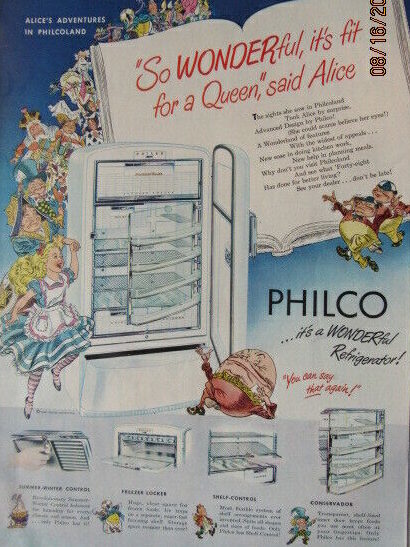
With its pastel-hued backdrop reminiscent of a page torn from a fairy tale and its storybook illustrations, the Philco Refrigerator advertisement evokes a sense of nostalgia and enchantment. This ad, with its whimsical depiction of Alice skipping with happiness next to the open refrigerator door, combines elements of fantasy and modernity to market a household appliance. The use of bright vibrant colors and the presence of Alice and her friends effectively blurs the line between reality and fantasy, suggesting that the modern appliances of the time could transform everyday life into something magical and extraordinary.
This sense of transforming the mundane into the fantastical in the Philco advertisement resonates with themes in Andrzejewski’s “Work, Play, and the Elephants of South Florida’s Leisure Landscape.” Andrzejewski discusses the unique interplay of leisure and labor in 1920s Miami Beach, where elephants were used not only as laborers but also as attractions. This blending of work with entertainment elements mirrors the Philco ad’s fusion of domestic life with elements of fantasy. Just as the elephants added an exotic and leisurely appeal to construction tasks, the Philco advertisement uses ‘Alice in Wonderland’ to instill the everyday act of using a refrigerator with a sense of wonder and delight.
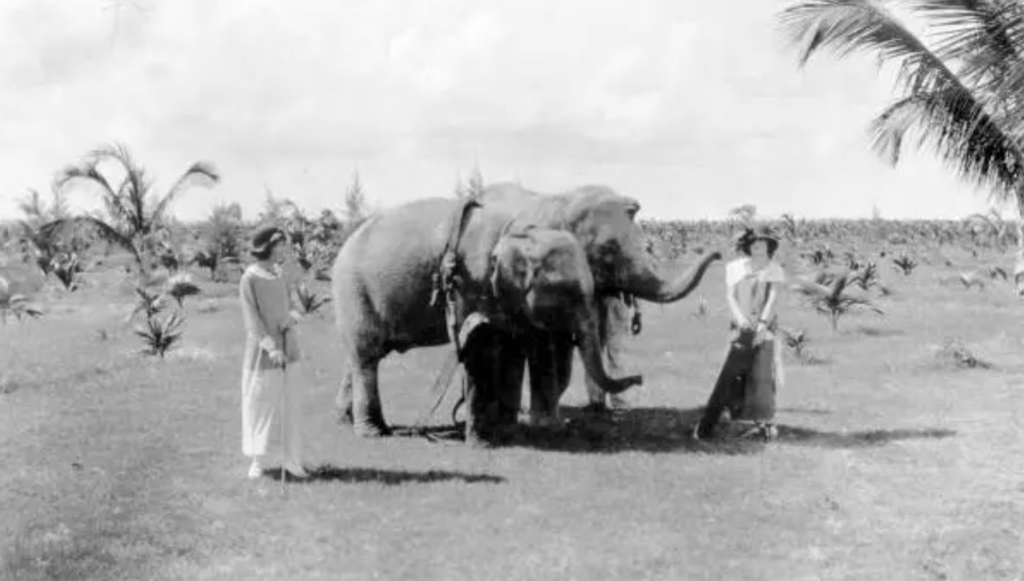
In both cases, there is a strategic use of leisure and fantasy to enhance the appeal of something functional – be it real estate in South Florida or a household appliance. The Philco ad’s portrayal of a refrigerator as a gateway to a whimsical, improved lifestyle parallels how South Florida’s leisure landscape used elephants to transform the ordinary into something extraordinary, thus highlighting a broader trend in American culture where the lines between leisure and everyday life were increasingly blurred. The overall message and tone of both the Philco advertisement and Andrzejewski’s writing reflect a mid-20th-century American society captivated by the possibilities of modernity, where even the most mundane aspects of life could be touched by a sense of playfulness and fantasy. This era saw a cultural shift where the realms of work, leisure, and consumerism began to intertwine in new and imaginative ways.
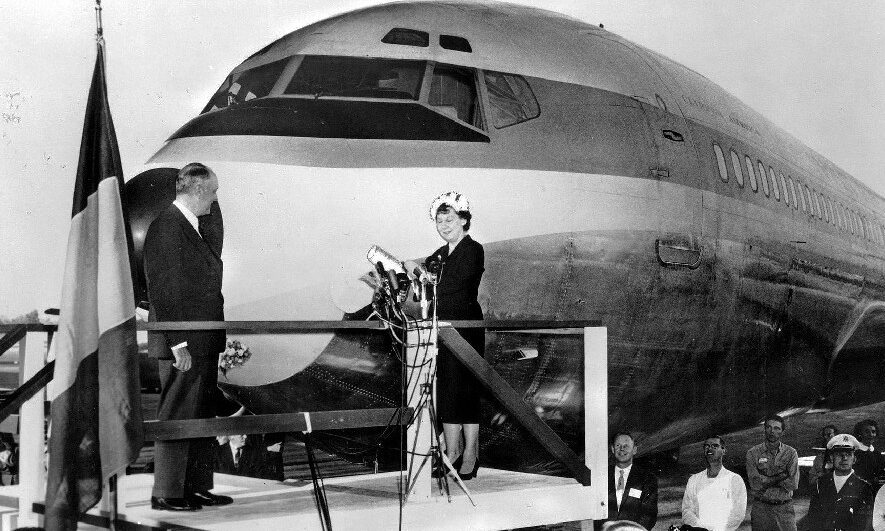
The Philco Refrigerator advertisement, emerging in the prosperous post-World War II era, also epitomizes the intersection of consumerism and the burgeoning Jet Age aesthetic. In this context, the advertisement does more than simply market a refrigerator; it sells a dream of modern living. It leverages the fantasy of “Alice in Wonderland” to transform a mundane appliance into a symbol of enchantment and ease, reflective of the era’s fascination with technology and comfort. This aligns with Vanessa Schwartz’s “Jet Age Aesthetic,” where the allure of jet travel signifies a new era of speed, efficiency, and glamour. Schwartz says “While inside the park… people learned to toggle between the material and virtual worlds, aided by new forms of media and technology” (Schwartz, 9). The Philco advertisement mirrors this sentiment, presenting an appliance as a portal between the practical and the fantastical. It invites consumers to transition from their everyday reality into a more whimsical, technologically advanced lifestyle. Furthermore, the Philco ad, like the Jet Age, promotes the seamless integration of technology into daily life, promising consumers not just a product, but a lifestyle marked by innovation, convenience, and a touch of magic. Both the advertisement and the Jet Age ethos capture a moment in history where the future was ripe with possibilities, and everyday life was on the cusp of transformation through technological advancement.
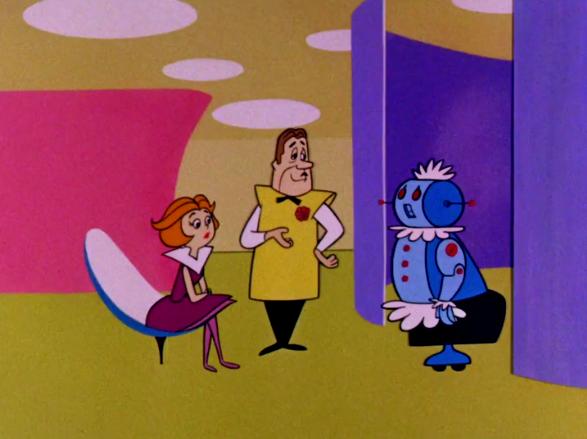
The Philco Refrigerator advertisement’s alignment with the Jet Age aesthetic is further illuminated when compared to media representations of the time, like the “The Jetsons” robot nanny episode. This episode reflects a societal fascination with automated convenience, paralleling the Philco ad’s celebration of technological advancement in the domestic sphere. The company selling robot nannies in “The Jetsons” offered not just a practical solution but a lifestyle choice, emphasizing status and modernity. This mirrors the Philco ad’s approach, where the emphasis is on the transformative power of technology in everyday life, underlining the era’s trend of technology being more about lifestyle enhancement than just practical utility. Both the advertisement and the episode reflect a society enamored with the promises of the Jet Age, valuing innovation and convenience as essential components of modern living.
In conclusion, the Philco Refrigerator advertisement from 1948, featured in Time magazine, serves as a quintessential example of mid-20th-century America’s fascination with the fusion of modernity, technology, and fantasy. This advertisement, through its imaginative integration of Alice from “Alice in Wonderland,” transcends mere marketing to become a cultural artifact, reflecting a society at the crossroads of a technological revolution. It mirrors not only the era’s consumer culture but also a broader societal trend of blurring the lines between the mundane and the magical. This trend is further exemplified in Andrzejewski’s analysis of the leisure landscape of 1920s Miamo Beach, where the utilitarian use of elephants in construction was blended with their role as elements of entertainment and leisure, transforming everyday labor into a whimsical spectacle. The Philco advertisement, with its depiction of a refrigerator as a symbol of enchantment and modern convenience, resonates with the era’s Jet Age aesthetic as described by Vanessa Schwartz. It encapsulates a cultural shift towards integrating technology into daily life, not just for practical purposes, but as a means of lifestyle enhancement and a portal to a more glamorous, efficient existence. This thematic intersection of consumerism, leisure, and technology is further mirrored in contemporary media representations like the robot nanny episode of “The Flintstones” which underscores a societal yearning for automated convenience and modernity.
The key takeaway is that this media piece highlights a pivotal moment in American culture where technology, fantasy, and consumerism converge to redefine the experience of everyday life. The Philco Refrigerator advertisement and its contemporaries not only reflect a society enamored with the promises of modernity but also contribute to shaping the narrative of how we perceive and interact with technology. They underscore an era’s collective imagination, where the boundaries between reality and fantasy were not just blurred but celebrated, heralding a new age of technological integration that continues to influence our relationship with consumer products to this day. This phenomenon, capturing the cultural atmosphere of the mid-20th century, serves as a reminder of the enduring power of advertising not just to sell products, but to encapsulate and propel cultural movements and societal transformations.
Readings
Schwartz, Vanessa R. Jet Age Aesthetic: The Glamour of Media in Motion. Yale University Press, 2020, pgs 57-97.

Leave a Reply